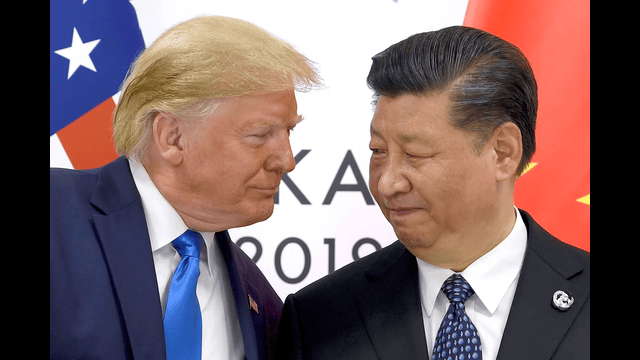
President Donald Trump, left, meets with Chinese President Xi Jinping during a meeting on the sidelines of the G-20 summit.
Tensions between the United States and China are once again in the spotlight as both nations exchange economic jabs and diplomatic warnings. With a potential meeting between U.S. President Donald Trump and Chinese President Xi Jinping expected later this month, the world’s two largest economies appear locked in a heated standoff.
The rivalry, fueled by tariffs, sanctions, and new trade rules, has intensified since mid-September 2025. Here’s a breakdown of the events shaping this uneasy relationship.
Productive Call Raises Hopes
September 19
Trump and Xi held a phone conversation that sparked cautious optimism. Trump described the exchange as “very productive,” while China called it a “candid and in-depth” discussion. The two leaders reportedly agreed to meet in South Korea by late October.
Despite the cordial tone, analysts noted that underlying tensions remained unresolved.
U.S. Tightens Export Controls
September 29
The U.S. Commerce Department announced sweeping new export restrictions on foreign companies linked to blacklisted Chinese firms. The rule now covers affiliates that are at least 50% owned by these entities.
Under Secretary Jeffrey Kessler stated the move would “close loopholes and ensure export controls work as intended.” China condemned the decision, calling it an “abuse of national security” and warning it would harm global trade interests.
Soybean Dispute Adds to Strain
October 1
The agricultural front became another battleground. China delayed soybean purchases from U.S. farmers, prompting Trump to accuse Beijing of using trade leverage. He said soybeans would be “a major topic” at his upcoming meeting with Xi.
China defended its stance, blaming U.S. restrictions for creating trade obstacles.
Port Fee Controversy
October 3
Washington unveiled new port fees for vessels linked to China, set to begin on October 14. The U.S. justified the fees as a measure to revive domestic shipbuilding. Beijing, however, criticized them as “unilateral and discriminatory.”
Blacklisting and Rare Earth Restrictions
October 8–9
The U.S. blacklisted several Chinese companies for allegedly supplying drone parts to Iran. A day later, Beijing retaliated by imposing new restrictions on rare earth exports, citing national security and non-proliferation concerns.
Simultaneously, the U.S. sanctioned Chinese refineries over Iranian oil imports and proposed banning Chinese airlines from flying over Russia on U.S. routes.
Trump’s Tariff Threats Escalate Tensions
October 10
Trump threatened a 100% tariff on Chinese goods, calling China’s actions “sinister and hostile.” He questioned whether his planned meeting with Xi should proceed.
Beijing fired back with retaliatory port fees and launched an antitrust investigation into U.S. chipmaker Qualcomm.
Temporary Diplomatic Calm
October 12
Trump softened his tone, assuring supporters not to “worry about China.” On the same day, Beijing expressed willingness to strengthen “dialogue and exchange” with global partners to stabilize supply chains.
Cooking Oil Becomes a Trade Weapon
October 14
Trump threatened to halt U.S. purchases of Chinese cooking oil, calling China’s soybean boycott an “economically hostile act.”
In response, China restricted business with subsidiaries of South Korean shipbuilder Hanwha Ocean and warned Washington against introducing new trade barriers during ongoing talks.
Air Travel and Economic Talks
October 15–17
Chinese airlines lodged formal complaints against the U.S. order restricting their flights over Russian airspace. Days later, U.S. Treasury Secretary Scott Bessent and Chinese Vice Premier He Lifeng held a video call described as “constructive and in-depth.” Both sides agreed to resume trade negotiations soon.
Hints of Optimism
October 20
Despite weeks of fiery exchanges, Trump expressed confidence in achieving a “fantastic deal” with Xi. Beijing’s foreign ministry acknowledged the importance of “heads-of-state diplomacy,” suggesting the door to dialogue remains open.
A Fragile Future
The past month has underscored the fragile balance in U.S.–China relations. With both countries trading economic blows while keeping communication lines open, the upcoming Trump–Xi meeting could determine whether 2025 ends in reconciliation—or renewed confrontation.