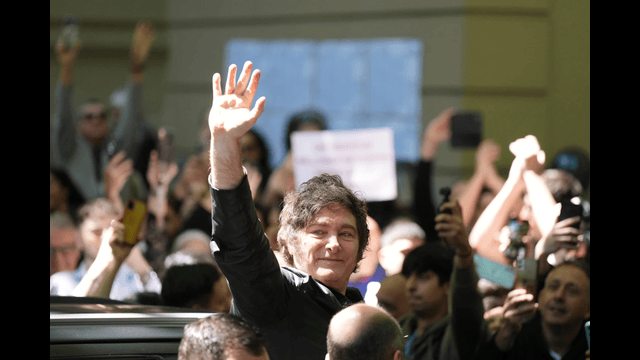
Argentina’s President Javier Milei waves to supporters after voting during legislative midterm elections in Buenos Aires, Argentina, Sunday, Oct. 26, 2025.
Argentina’s libertarian President Javier Milei scored a sweeping victory in the midterm elections, cementing his grip on power and paving the way for his ambitious free-market reforms. The vote, closely watched by Washington, was seen as a major referendum on Milei’s economic agenda and his ties to the Trump administration.
Milei’s Victory Strengthens His Reform Agenda
Milei’s La Libertad Avanza party won over 40% of the national vote, outperforming the left-leaning Peronist opposition, which garnered 31%. The margin surpassed analysts’ expectations and marked a significant shift in Argentina’s political landscape.
The victory grants Milei more influence in Congress, with his party gaining 14 new Senate seats and 64 in the lower house. These additions strengthen his ability to uphold vetoes and block impeachment efforts, ensuring smoother execution of his radical economic overhaul.
At his campaign headquarters, Milei called the results “a turning point” for Argentina.
“The Argentine people have decided to leave behind a century of decline,” he declared. “Today begins the construction of a great Argentina.”
The strong performance also positions him as a frontrunner for reelection in 2027.
U.S. Ties and the $40 Billion Factor
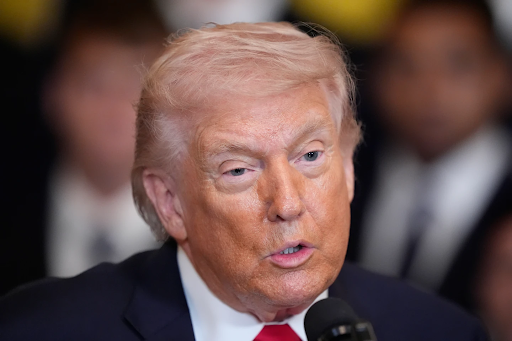
Milei’s political rise has drawn intense attention from Washington and Wall Street. Earlier this month, U.S. President Donald Trump reportedly linked financial aid to Milei’s success, promising up to $40 billion in support — including a $20 billion currency swap and another $20 billion from private banks — if the libertarian leader maintained voter confidence.
Trump’s warning that U.S. assistance could be withdrawn in the event of a Peronist victory added extra tension to the race. Analysts say Milei’s win now reassures investors and may stabilize Argentina’s fragile economy, at least temporarily.
Still, voter enthusiasm was subdued. Despite the high stakes, turnout reached just under 68%, among the lowest since Argentina’s return to democracy in 1983.
Peronism’s Decline and Political Fallout
The Peronist alliance, once Argentina’s dominant political force, suffered a major blow. Internal divisions and public frustration over years of economic turmoil weakened its influence.
The coalition’s failure to present a strong alternative to Milei’s austerity measures further alienated voters. Many Argentines continue to struggle under harsh spending cuts and a shrinking economy, but the opposition’s lack of unity prevented it from capitalizing on public discontent.
Axel Kicillof, Buenos Aires province governor and a leading Peronist figure, criticized the U.S. intervention and warned that foreign aid would primarily benefit investors.
“The U.S. and banks like JP Morgan don’t come here for charity,” Kicillof said. “They come for profit, at the expense of our resources.”
Financial Turmoil and U.S. Rescue
Leading up to the elections, markets reacted nervously. Argentina’s peso and bonds plummeted amid fears of a Peronist comeback. Opposition lawmakers overturned two of Milei’s vetoes, passing spending bills that threatened his fiscal reforms.
In response, Milei drained foreign reserves to stabilize the peso. The U.S. Treasury intervened, providing dollar support and finalizing emergency credit lines — a move seen as direct backing from Washington.
A New Political Map for Argentina
Sunday’s results revealed a shifting electoral map. Milei’s party expanded its reach across provinces traditionally loyal to Peronists. The most striking upset came in Buenos Aires province, home to nearly 40% of Argentina’s electorate. There, La Libertad Avanza narrowly defeated Peronists — a reversal from last month’s 14-point opposition lead.
Milei also gained ground in Santa Fe Province, Argentina’s soybean hub, where his pro-deregulation policies resonated with the powerful agricultural sector.
What Comes Next
With fresh political momentum and backing from the U.S., Milei plans to accelerate tax, labor, and market reforms. Supporters see the victory as a mandate for change; critics fear it will deepen inequality and social unrest.
As Argentina faces a delicate economic recovery, Milei’s challenge will be turning his electoral triumph into lasting stability.
“The people have spoken for freedom and prosperity,” Milei told cheering crowds. “Now begins Argentina’s new chapter.”