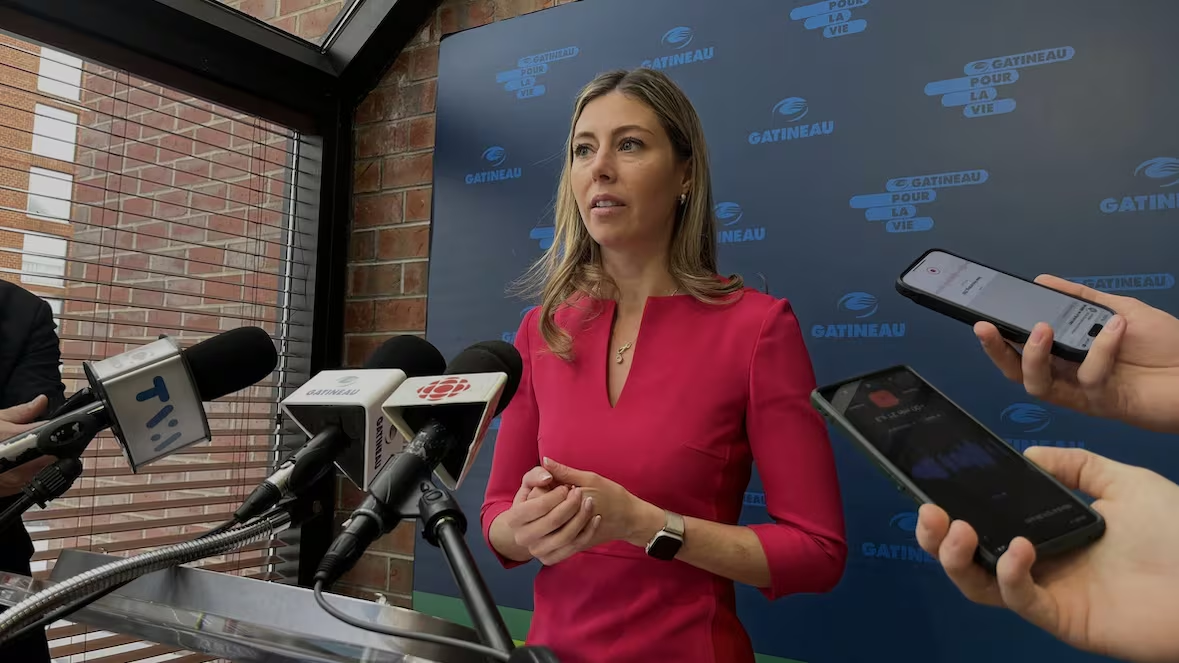
Maude Marquis-Bissonnette, pictured earlier in the campaign, is projected to win another term as the mayor of Gatineau, Quebec, according to early results. CBC
Residents of Gatineau, Quebec, have chosen to keep Maude Marquis-Bissonnette as their mayor. The leader of the Action Gatineau party secured her second victory in just under two years, following a tightly contested race that drew strong voter interest.
As of late Sunday night, Marquis-Bissonnette earned 38,153 votes, representing 50.9 per cent of the total. Her main challenger, former city councillor Mario Aubé, finished close behind with 35,440 votes, or 47.3 per cent.
Speaking to reporters, Aubé confirmed he had called Marquis-Bissonnette to congratulate her. “The people of Gatineau have made their choice, and we must respect it,” he said.
Independent candidate Rémi Bergeron came in a distant third.
A Short but Eventful First Term
Marquis-Bissonnette first won the mayor’s seat about 17 months ago, following the resignation of former mayor France Bélisle. The byelection gave her a chance to prove herself in a city facing major growth challenges and infrastructure needs.
During her new campaign, Marquis-Bissonnette focused on long-term investments in public transit, affordable housing, and environmental sustainability. She promised to create 1,500 new housing units to help address the city’s growing affordability crisis.
“I want Gatineau to be a place where people can live, work, and build their future,” she said during one of her campaign stops.
Key Issues in the Race
While housing and transportation were top concerns, taxes also played a big role in the race. Both Marquis-Bissonnette and Aubé promised to control municipal taxes and fees. Aubé said he decided to run because he felt the city needed a stronger voice for fiscal responsibility.
Marquis-Bissonnette countered that careful spending must go hand in hand with investment. She argued that balancing growth, affordability, and quality of life was key to Gatineau’s success.
Election Day Challenges
Election day was not without its hiccups. Several polling stations across Gatineau experienced technical problems, causing delays early in the day. As a result, officials extended voting hours until 8:30 p.m. to ensure all residents had a chance to cast their ballots.
Véronique Denis, the city’s chief electoral officer, confirmed that the glitches were resolved by evening and thanked voters for their patience.
Looking Ahead
Marquis-Bissonnette’s re-election marks a significant moment for Gatineau, a city balancing rapid growth with calls for better public services. Her renewed mandate gives her a clear opportunity to continue the work she began during her short first term.
She has promised to keep dialogue open with citizens, invest responsibly, and make Gatineau more sustainable. Her next steps will likely focus on housing development and improving the city’s transit network — two of her core campaign commitments.
With her win, Marquis-Bissonnette cements her place as a rising figure in Quebec municipal politics and one of Gatineau’s most determined leaders in recent years.