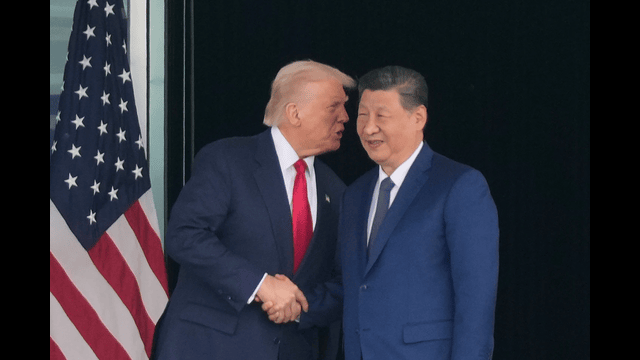
President Trump and Chinese Prime Minister Xi Jinping shake hands after their US-China Summit.
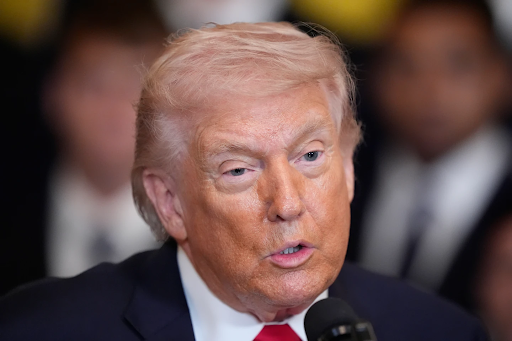
When Donald Trump announced on Truth Social that “The G2 WILL BE CONVENING SHORTLY!”, he reignited a long-dormant phrase in global diplomacy. The remark, made just before his meeting with Chinese President Xi Jinping in South Korea on October 30, hints at a possible shift in how Washington views its relationship with Beijing.
The term “G2,” or “Group of Two,” dates back to 2005 when American economist C. Fred Bergsten proposed it as a framework for cooperation between the world’s two largest economies. But it also carries decades of political and strategic tension.
The Return of a Loaded Term
“G2” symbolizes a balance of global power — something China has long sought as it rose from regional dominance to global influence. Trump’s decision to revive the phrase has pleased some in Beijing but rattled many in Washington’s allied capitals.
Neil Thomas from the Asia Society Policy Institute explains that the term suggests both nations are equals on the world stage — an idea that unsettles countries like Japan, Australia, and India.
China’s History of Opposition to ‘Containment’
To understand Beijing’s reaction, it’s important to recall its historical resistance to Western containment. Since the early 20th century, China has opposed efforts by global powers to limit its influence. After World War II, the U.S.-led containment strategy further deepened that sentiment.
In the early 2000s, Chinese diplomacy actively challenged this structure, seeking to reshape the global order. The Belt and Road Initiative became a modern expression of that ambition, aiming to expand China’s reach and redefine global influence.
Trump’s “Everlasting Peace” Message
Following his meeting with Xi, Trump described the talks as “great for both countries,” predicting “everlasting peace and success.” His Defense Secretary, Pete Hegseth, echoed the “G2” terminology in an X post after speaking with China’s Defense Minister, signaling that the idea might become part of the administration’s messaging.
However, not everyone shares Trump’s optimism. Mira Rapp-Hooper, a former U.S. National Security Council official, warned that the G2 rhetoric could raise alarms among allies who fear being sidelined as Washington and Beijing strike direct deals.
China’s Enthusiastic Reaction
Chinese commentators were quick to celebrate Trump’s language. Nationalist bloggers hailed it as recognition that the U.S. no longer dominates global power unilaterally. One popular blogger, Housha Yueguang, wrote that “Trump’s G2 means the U.S. has accepted a bipolar world shared with China.”
At a press briefing, Chinese Foreign Ministry spokesperson Guo Jiakun maintained a balanced tone, saying both nations could “jointly shoulder responsibilities as major countries” and continue working toward “an equal and orderly multipolar world.”
Meanwhile, Chinese scholar Zhao Minghao clarified that G2 does not mean the two powers will “co-rule” the world. Instead, he said, it reflects a willingness to increase communication and coordination.
Why the U.S. Rejected G2 Before
When Bergsten first proposed the G2 concept two decades ago, it seemed a logical step. Both nations were rapidly growing economies that needed collaboration to solve global economic challenges. But after the 2008 financial crisis, the idea faded as political and strategic differences deepened.
The term resurfaced briefly during the Obama administration, when some officials viewed it as a path for cooperative problem-solving. However, Washington ultimately distanced itself from the concept. Many allies saw it as the U.S. granting China too much say in shaping Asia’s future without their input.
As Rapp-Hooper explained, G2 “plays very poorly” in allied nations that fear their interests could be overlooked. Former U.S. diplomat Kurt Campbell added that China’s past use of the G2 concept made regional neighbors feel insecure and marginalized.
A Diplomatic Flashpoint Returns
Trump’s revival of the term may be an attempt to reset global narratives or simply signal open dialogue. But as history shows, even a two-letter phrase like “G2” can carry immense geopolitical weight. Whether it leads to constructive cooperation or renewed mistrust will depend on what follows behind closed doors.