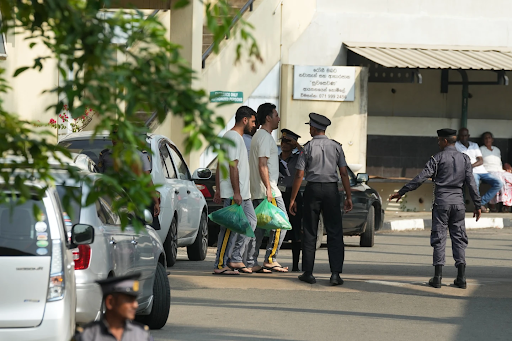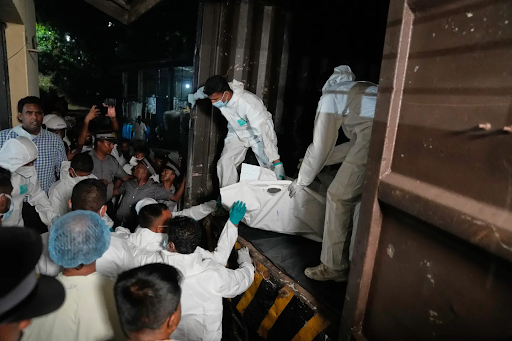
Indian nationals believed to work at the scam centers in Myanmar, board a plant at Thailand airport.
India has begun bringing home hundreds of its citizens who fled a notorious cybercrime center in Myanmar. The first group of Indians, stranded in Thailand after escaping the illegal operation, boarded Indian Air Force (IAF) planes on Thursday.
These individuals had been working at KK Park, a massive cyberscam compound near Myanmar’s border city of Myawaddy. The site was raided in mid-October by the Myanmar military as part of a crackdown on cross-border online fraud and illegal gambling.
First Batch of Indians Flown Home
An IAF transport aircraft departed from Thailand carrying around 270 Indians back to India. Another aircraft was scheduled to follow later in the day.
According to Maj. Gen. Maitree Chupreecha, commander of Thailand’s Naresuan Task Force, a total of 465 Indians will be repatriated in two phases. The remaining group is expected to fly home next Monday.
This marks India’s second major repatriation mission this year. In March, 549 Indian nationals were rescued after a similar crackdown on scam centers along the Myanmar–Thailand border.
Thousands Flee Myanmar Cybercrime Zone
The latest rescue comes after Myanmar’s army stormed KK Park, a compound allegedly run by organized criminal networks. Following the raid, over 1,500 people from 28 different nations fled the area and sought refuge in Thailand’s Mae Sot town.
Thai authorities established temporary shelters and processing facilities for those rescued. Besides Indians, the victims included nationals from China, Vietnam, the Philippines, Ethiopia, and Kenya.
Southeast Asia’s Expanding Cybercrime Crisis
Southeast Asia has emerged as a global hub for online scams. Criminal groups across Myanmar, Cambodia, and Laos operate large-scale fraud rings that target victims worldwide.
Workers are often lured with false job offers — typically promising roles in IT or digital marketing — only to be trafficked into forced labor. Many end up trapped inside guarded compounds, forced to run romance scams, cryptocurrency frauds, or illegal gambling operations.
The KK Park raid exposed how deeply entrenched these networks are, with human trafficking forming a major part of their operations.
Myanmar’s Ongoing Struggle to Contain Cybercrime
State media in Myanmar claimed the KK Park raid was part of a broader campaign launched in early September to dismantle online fraud networks. Witnesses reported that parts of the facility were destroyed by explosions during the operation.
However, independent outlets such as The Irrawaddy suggest that scam operations in the Myawaddy area continue, raising doubts about the effectiveness of the crackdown.
Global Spotlight on Cybercrime Networks
International concern over cybercrime in Southeast Asia has intensified. Last month, the United States and Britain imposed sanctions on leaders of a massive Cambodian scam ring. The gang’s alleged mastermind was also indicted by a U.S. federal court in New York.
The issue has sparked outrage in other countries as well. In South Korea, the death of a young man who was reportedly deceived into joining a scam operation in Cambodia triggered nationwide protests and calls for stricter enforcement.
A Step Toward Justice and Safety
For India, this repatriation marks another major step in rescuing citizens trapped in cross-border cybercrime networks. While bringing the victims home offers relief to their families, it also underscores a larger global problem — one that blends cybercrime, human trafficking, and organized fraud into a single, deadly enterprise.
As the rescued Indians return home, the operation highlights the urgent need for stronger international cooperation to dismantle these cybercrime hubs and protect vulnerable job seekers worldwide.