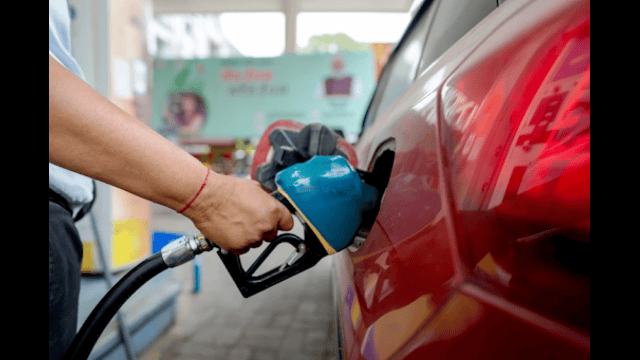
An Indian man fills petrol at a fuel pump in Prayagraj, in the northern Indian state of Uttar Pradesh, May 5, 2025.
India’s commitment to ethanol blending has taken center stage at the COP30 climate summit, where nations are rallying behind the global biofuel initiative. While India celebrates early success in its ethanol program, concerns over vehicle mileage, engine health, and crop usage are adding complexity to its green energy narrative.
India’s Early Biofuel Achievement
Earlier this year, India announced it had achieved its 20% ethanol blending target—five years ahead of schedule. This milestone places India alongside Brazil, Japan, and Italy under the Belem 4x Initiative, which aims to quadruple the use of sustainable fuels worldwide by 2035.
At COP30, Brazil’s climate secretary, Mauricio Lyrio, said 19 countries have already endorsed the pledge. “Commitments like this gain traction over time,” he said, noting that global support reflects growing alignment on clean fuel adoption.
India’s Ethanol Journey: Success and Side Effects
India’s rapid shift to ethanol is being closely watched by other nations as a model of aggressive climate action. The government claims ethanol blending has cut carbon emissions by 74 billion kilograms—equivalent to planting 300 million trees—and saved $12 billion in oil imports over the past decade.
But the transition isn’t without challenges. Most Indian fuel pumps now sell E20, or 20% ethanol-blended gasoline, while unblended fuel costs nearly twice as much. Drivers are reporting reduced mileage and issues with older engines not designed for higher ethanol content.
“I support the move for cleaner air,” said Vijay Ramakrishnan, a businessman from Chennai. “But the drop in mileage is hurting my pocket. I drive 100 kilometers daily, and fuel costs are rising.”
Automobile YouTuber Amit Khare said many followers have echoed similar complaints. “E5 is the best, E10 is manageable, but E20 is problematic for several users,” he said.
Farmers Caught in the Fuel Transition
India’s ethanol expansion has transformed agricultural dynamics. Farmers, especially in Punjab, say they need clearer guidance on which crops the government will prioritize for ethanol.
Farmer Ramandeep Mann said many shifted to corn cultivation last year, expecting strong demand from ethanol producers. But government allocations of rice to fuel makers caused corn prices to fall. “We support climate goals,” Mann said, “but the government must protect farmer incomes first.”
Ethanol in India was once primarily derived from sugarcane. Today, a growing share comes from grains like corn and rice, raising questions about food-versus-fuel balance.
Ramya Natarajan from the Center for Study of Science, Technology and Policy (CSTEP) warned that increased ethanol blending could lead to large-scale land shifts. “With E20 or higher blends, more farmland will be diverted from food to fuel,” she said.
Experts Call for a Balanced Approach
Climate experts emphasize that biofuels made from waste or non-edible vegetation have the lowest carbon footprint. But when crops are grown specifically for ethanol, fertilizer use and transportation emissions can offset the climate benefits.
Purva Jain, energy specialist at the Institute for Energy Economics and Financial Analysis, said India’s ethanol strategy is a key part of reducing oil dependence and supporting rural economies. Yet, she believes electric vehicles powered by solar energy could deliver cleaner and more efficient results.
“Land used for solar EV charging generates higher returns than land used to grow fuel crops,” Jain said.
Meanwhile, C.K. Jain, president of the Grain Ethanol Manufacturers Association, urged the government to increase blending targets to sustain the industry. “If blending doesn’t rise, ethanol producers will face severe financial strain,” he warned.
Finding the Middle Ground
Experts are calling for moderation. Natarajan suggested that maintaining a 10% ethanol blend (E10) could be a practical compromise—enough to reduce emissions without straining agriculture or vehicle systems.
Khare agreed, saying consumers should have choices. “Bring E20 or E85 for compatible vehicles, but keep lower blends for older ones,” he said.
As the world embraces biofuels through the COP30 pledge, India’s ethanol journey highlights both the promise and pitfalls of green transitions—balancing clean energy goals, economic realities, and the everyday needs of citizens.