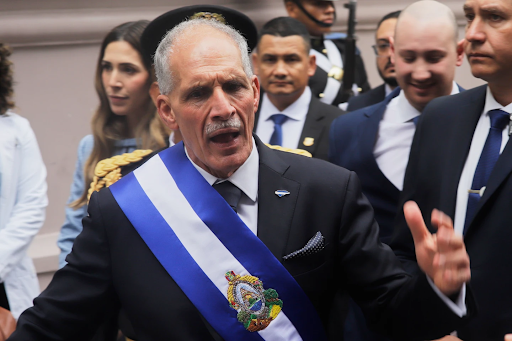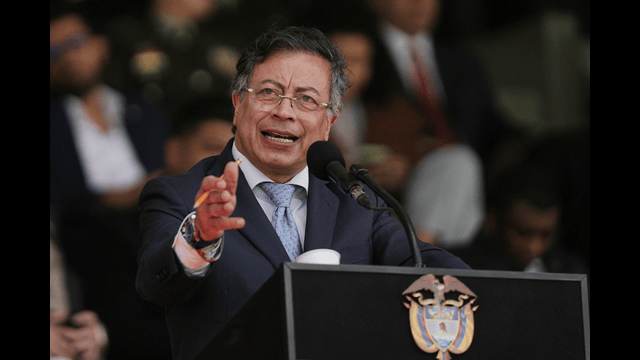
Colombian President Gustavo Petro speaks during the swearing-in ceremony.
Colombian President Gustavo Petro has ordered an immediate suspension of intelligence sharing with the United States, escalating tensions between the two longtime allies. The move follows a series of U.S. military strikes on suspected drug vessels in the Caribbean, which Colombia has condemned as violations of human rights.
Petro Orders Halt to Security Cooperation
In a message posted on X (formerly Twitter) on Tuesday, Petro directed Colombia’s military to end communications and agreements with U.S. security agencies.
He stated that cooperation would remain suspended until the Trump administration stops targeting speedboats allegedly linked to drug trafficking. Critics, however, have described these actions as extrajudicial executions.
“The fight against drugs must respect the human rights of the Caribbean people,” Petro wrote. He emphasized that Colombia would not participate in any campaign that disregards civilian safety.
The White House has not yet responded to Petro’s announcement.
U.S. Strikes Leave Dozens Dead
According to U.S. government figures, at least 75 people have been killed in American military strikes on vessels in international waters since August.
Initially concentrated near Venezuela’s coast, the operations have now expanded into the eastern Pacific, with targets near Mexico.
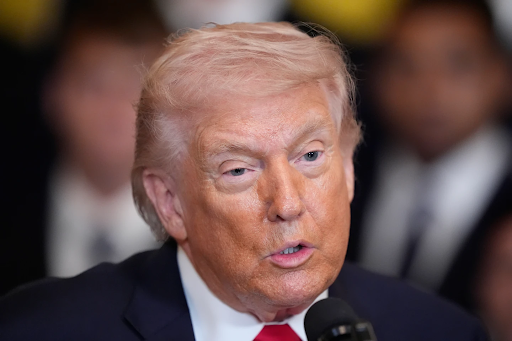
Petro has urged the International Criminal Court (ICC) to investigate former U.S. President Donald Trump for alleged war crimes, claiming that the strikes have killed civilians from Venezuela, Ecuador, Colombia, and Trinidad and Tobago.
“No One Should Be Sentenced to Death at Sea”
Petro, a long-standing critic of U.S. anti-narcotics policy, condemned the strikes as a violation of due process and human rights.
Speaking at a summit of Latin American and European Union leaders in Bogotá, Petro recalled meeting the family of a Colombian fisherman allegedly killed in one of the strikes.
“He may have been carrying fish or cocaine,” Petro said, “but he had not been sentenced to death. There was no need to murder him.”
He reiterated that Colombia’s drug policy should focus on dismantling major traffickers and financial networks, rather than punishing small-scale farmers or civilians caught in crossfire.
Washington Responds with Sanctions
Relations between Bogotá and Washington have worsened in recent months. In October, the Trump administration imposed financial sanctions on Petro and several of his family members, accusing them of involvement in the global drug trade.
“President Petro has allowed drug cartels to flourish,” said U.S. Treasury Secretary Scott Bessent, defending the sanctions. “President Trump is taking strong action to protect our nation and to stop the flow of drugs.”
The U.S. government has also criticized Petro’s refusal to extradite rebel leaders accused of drug trafficking, claiming his administration is too lenient on criminal groups.
Military Tensions Rise in the Caribbean
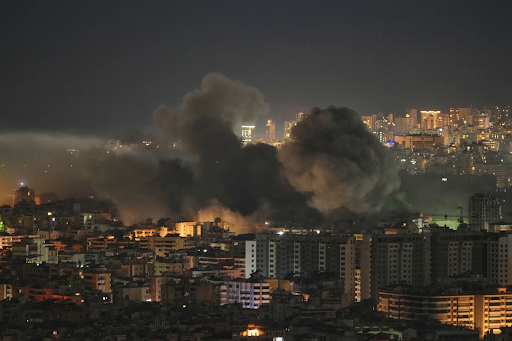
The dispute comes as the U.S. expands its naval presence in the Caribbean. The deployment includes eight warships, a submarine, fighter jets, and Marines, with the USS Gerald Ford aircraft carrier expected to arrive soon.
Washington insists the buildup is part of its anti-drug operations, but regional leaders fear a broader military agenda.
Venezuela’s government has condemned the deployment as a threat to its sovereignty, suggesting that the U.S. may be preparing for strikes against President Nicolás Maduro’s administration.
In response, Venezuelan Defense Minister Vladimir Padrino López announced nationwide military readiness drills to defend national airspace. Standing beside a missile system in Caracas, he declared that troops, militias, and police forces would be mobilized to safeguard the country.
A Deepening Rift
Petro’s decision marks a significant shift in Colombia-U.S. relations, once defined by close cooperation against narcotics. His stance highlights a growing divide over how the war on drugs should be conducted — through military force or human rights-centered diplomacy.
As tensions rise across the Caribbean, the suspension of intelligence sharing underscores a new phase of geopolitical strain between Washington and Bogotá, with ripple effects likely to be felt throughout Latin America.