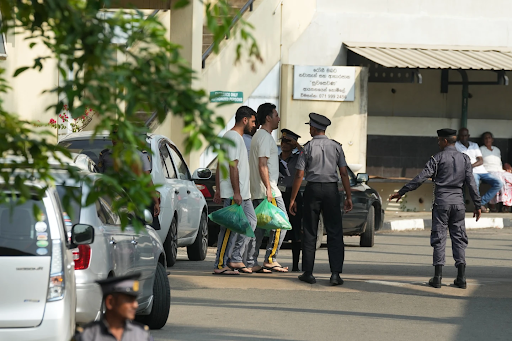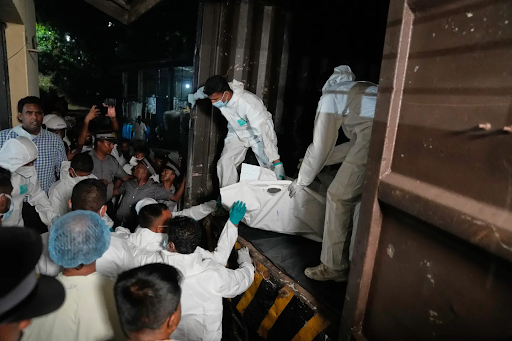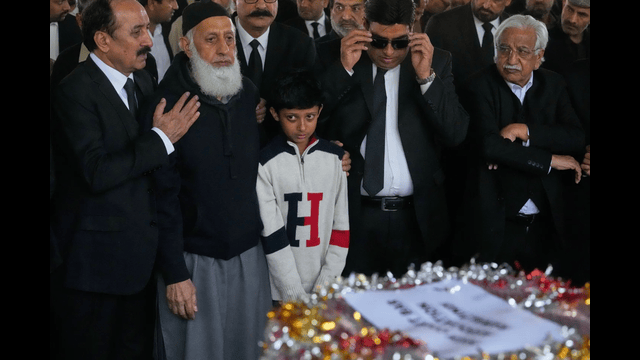
Mourners comfort Yahya Zubair, son of lawyer Zubair Aslam Ghumman, who was killed in Tuesday’s suicide bombing outside the gates of a district court, during a funeral prayer, in Islamabad, Pakistan, Wednesday, Nov. 12, 2025.
Pakistan’s Prime Minister Shehbaz Sharif extended an offer for peace talks to Afghanistan’s Taliban government on Wednesday, calling for cooperation after a series of deadly militant attacks strained already fragile relations between the two countries.
The peace gesture came a week after negotiations in Istanbul collapsed, raising fears that the fragile Qatar- and Turkey-brokered ceasefire could unravel and lead to fresh border clashes.
Sharif Calls for Regional Peace
In a televised address to parliament, Sharif expressed grief over the suicide bombing in Islamabad that killed 12 people and injured 27 others a day earlier. Despite tensions, he emphasized Pakistan’s commitment to regional peace and urged Kabul to act against militant networks operating from its territory.
“Let us sit together with sincerity, rein in terrorism, and work for peace and prosperity,” Sharif said. He added that Pakistan had only one request in recent talks — that Afghanistan restrain the militants threatening both nations.
Sharif warned that promises without action would not lead to stability. “Afghanistan should realize that what benefits us, benefits them,” he said, pressing for renewed dialogue.
Growing Militancy Threatens Stability
The prime minister’s appeal followed a string of militant assaults, including the suicide blast at Islamabad’s district court. The bombing highlighted Pakistan’s struggle to contain growing militancy despite repeated security operations.
Until recently, Islamabad was considered one of Pakistan’s safer regions, but the attack has renewed concerns that extremist groups can still strike at the heart of the capital.
On Wednesday, police and forensic teams searched the sealed blast site for evidence as families gathered to bury victims. Most of the wounded had been released from hospitals, but grief and fear continued to grip the city.
Pakistan Accuses Afghan-Backed Militants
Interior Minister Mohsin Naqvi blamed “Indian-backed elements and Afghan Taliban proxies” linked to the Pakistani Taliban (TTP) for the court bombing. He provided no evidence but said investigations were underway.
Both India and the Taliban government in Kabul denied the allegations. The Afghan regime has long rejected Islamabad’s claims that it shelters TTP militants, though Pakistan insists that cross-border insurgents are operating from Afghan soil.
While the TTP denied involvement, a splinter faction called Jamaat-ul-Ahrar initially claimed responsibility before retracting the statement. The attack drew international condemnation, with Pakistan’s defense minister warning it was a “message” showing militants’ reach deep inside the country.
Attack on Military Cadet College
A day before Sharif’s speech, another attack shook the northwestern city of Wana, where four militants targeted an army-run cadet college.
Security forces said all four attackers were killed, including a suicide car bomber who rammed the college gate. Troops quickly secured the campus, rescuing over 600 people, including 525 cadets and staff.
Officials said the attackers might have been attempting a repeat of the 2014 Peshawar school massacre, which killed 154 people, mostly children. No group has claimed responsibility for the latest assault.
Political Moves Amid Crisis
As the country mourned, Pakistan’s parliament approved a bill promoting Army Chief Asim Munir to the new position of Chief of Defense Forces. The opposition boycotted the vote, claiming it undermined democracy, while the government defended the move as necessary for better coordination among military branches.
Rising Tensions with Kabul
Tensions between Pakistan and Afghanistan have escalated since Kabul accused Islamabad of drone strikes on October 9 that killed several people in the Afghan capital. The strikes triggered cross-border clashes that left dozens dead before Qatar brokered a ceasefire on October 19.
However, two subsequent rounds of peace talks in Istanbul ended without progress after Afghanistan refused to give written assurances that its territory wouldn’t be used for attacks against Pakistan.
The TTP, though distinct from the Afghan Taliban, has gained strength since the Taliban’s 2021 takeover of Afghanistan. As a result, Pakistan’s security challenges have deepened.
Regional Shifts and Diplomatic Challenges
While Pakistan’s relations with Kabul and New Delhi worsen, India and Afghanistan have strengthened ties. Indian Foreign Secretary Vikram Misri met Afghan Foreign Minister Mawlawi Amir Khan Muttaqi in September. India has also upgraded its technical mission in Kabul to a full embassy, marking renewed diplomatic engagement with the Taliban regime.
As Pakistan faces rising militancy and diplomatic isolation, Sharif’s renewed call for peace talks signals an urgent effort to stabilize relations and prevent the collapse of regional security.