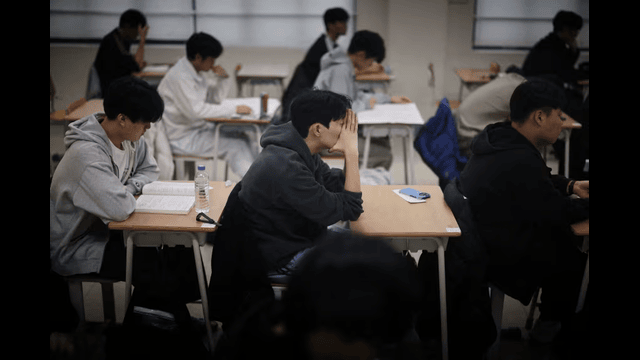
Students gathered outside an exam hall in Seoul on November 13, 2025, as they prepared to begin South Korea’s annual college entrance test. Reuters
South Korea slowed its daily life on Thursday as more than half a million students sat for the nation’s toughest university entrance exam. Police teams guided students through traffic. Families waited outside schools. Streets felt quieter than usual. The country treated the exam like a national event.
Students Fill Test Rooms
A total of 554,174 people registered for this year’s exam. This marked a 6% rise from last year. Officials noted the highest turnout since 2019. Many students were born in 2007. Families welcomed a surge in births that year because many believed the time brought good luck.
The test held huge weight for students. A strong score could open doors to South Korea’s top universities. Many teenagers spent years preparing for this moment. Many parents saw this day as a turning point for their children.
Flights Stop for Exam Silence
South Korea stopped all flights for 35 minutes to protect test conditions. Planes at every airport stayed grounded from 1:05 p.m. to 1:40 p.m. This included Incheon International Airport. Officials wanted complete silence for the listening section of the English exam.
The move affected 140 flights. This included 65 international arrivals and departures. Flight trackers showed planes circling while they waited. The Transport Ministry also restricted aircraft from flying below 3,000 metres. The skies remained unusually still during the test window.
Workplaces Adjust to Exam Rush
Financial markets opened an hour late. Many offices followed that schedule. The delay helped reduce rush-hour traffic. Students reached their test sites with fewer delays. Families appreciated the effort. Many said the day felt calmer than normal.
Outside one exam centre, a mother expressed her thoughts. “This exam has been a goal for nearly 20 years and also a new beginning,” said Yeseon Kim. She waited quietly while her daughter wrote the test inside.
A Year Marked by Demographic Shifts
The large cohort of students highlighted a rare pattern in the country’s population trends. South Korea faces rapid aging and low birthrates. The country recorded a birthrate of 0.75 in 2024. This stood among the lowest in the world. Many families chose not to have more children. Rising costs and intense academic pressure influenced that choice.
The 2007 rise in births provided a brief pause in a long decline. About 496,000 babies were born that year. Many of them now filled this year’s exam halls.
High Stakes and Heavy Pressure
Students sat for nearly nine hours. They worked through multiple sections. Many said the day felt overwhelming. Others felt proud to reach this point. Teachers, police, and volunteers guided them with care. The country understood the stakes. Success in the exam shaped university choices and future careers.
South Korea ended the day with relief. Families gathered students and headed home. Life returned to normal after hours of tension and hope.