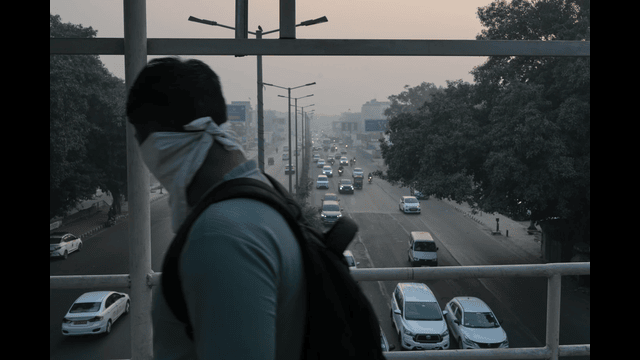
A man covers his face with a handkerchief as a shield from the air pollution on a smog-filled morning in New Delhi, India, Tuesday, Nov. 18, 2025.
A thick blanket of winter smog has smothered New Delhi for nearly two months, leaving millions battling toxic air every single day. Residents say they want only one basic right — the right to breathe clean air. But despite repeated interventions, the New Delhi smog crisis continues to worsen, turning the city into a gray, choking haze.
Government Measures Fail to Clear New Delhi Smog
The National Capital Region, home to more than 46 million people, is trapped under severe pollution with little relief in sight. Even as Indian leaders join global climate talks in Brazil, there is no visible improvement on the ground in New Delhi.
Attempts to curb emissions — from shutting down industries to limiting vehicle movement — have barely dented the toxic layer. Even cloud seeding, one of the more controversial anti-smog strategies, has shown minimal impact.
The result is a growing public health emergency, with doctors reporting surges in breathing issues, allergies and chronic respiratory distress.
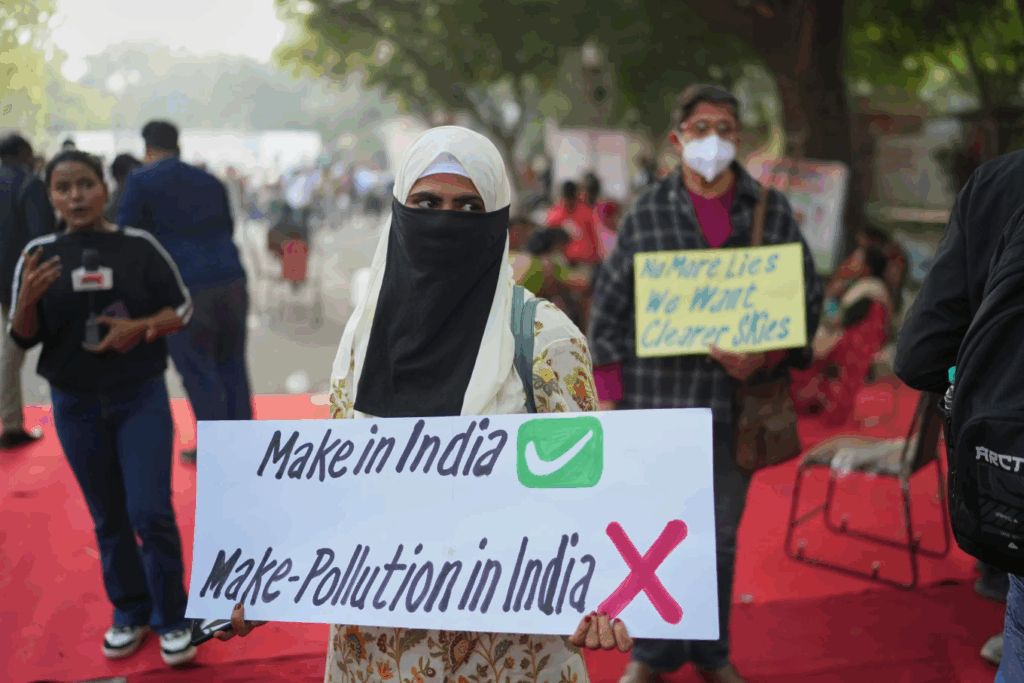
People participate in a protest against lack of action to control air pollution in New Delhi, India, Tuesday, Nov. 18, 2025
Morning: Smog Disrupts Daily Routines
Between 7 a.m. and 9 a.m., the day begins with familiar scenes — street cleaners sweeping roads, office workers waiting at bus stops and early risers heading to parks.
But the smog changes everything.
Health officials warn people to avoid outdoor activities during peak pollution hours. Morning walkers have abandoned their routines, choosing to stay indoors to dodge coughing fits and burning eyes. Even short outdoor exposure feels risky in the dense New Delhi winter smog.
Midmorning: Traffic and Dust Worsen Pollution
From 11 a.m. to noon, the daily rush takes over. Highways choke with cars, buses and scooters, each adding exhaust fumes to the toxic cloud lingering above.
Authorities have tried spraying roads with water cannons to trap dust particles. But the relief is temporary and limited to a few central areas — a small intervention against a massive problem.
Afternoon: Protests Against New Delhi Smog Intensify
By 2 p.m. to 3 p.m., frustration spills onto the streets. Residents, especially on weekends, gather for peaceful protests demanding firm action against the rising smog levels.
Many wear gas masks and carry stark messages: “Help us breathe.”
These demonstrations reflect the growing anger of a population tired of empty promises and worsening air.
Evening: Reduced Visibility Adds to Commuter Risks
Between 5 p.m. and 7 p.m., the city battles another traffic surge. Visibility drops sharply, making driving more dangerous.
Even leisure activities — shopping or visiting landmarks like India Gate — become reminders of the pollution. Buildings just a few meters away often appear blurred through the gray haze, emphasizing how deeply the New Delhi smog crisis affects daily life.
Night: No Relief Indoors Either
From 9 p.m. to midnight, the city finally quiets down. But the struggle continues indoors.
Air purifiers run nonstop, yet residents still complain of itchy throats, wheezing and headaches. Many say the machines can’t filter out the sheer volume of pollutants seeping into their homes.
Fifty-four-year-old teacher Renuka Jasra describes the past weeks as unbearable. Her breathing has worsened so much that she has needed medical help.
Night walkers also suffer. “Even masks don’t seem to work,” said 35-year-old Akshay Savoor. “The burning smell comes through even when masked up.”
A City Held Hostage by Its Air
The photos emerging from the capital show more than smog — they reveal the harsh reality of life in one of the world’s most polluted cities.
The New Delhi winter smog crisis has become a daily battle for clean air, affecting mornings, nights and every moment in between.
Until stronger and more effective action is taken, millions will continue navigating a city where even breathing feels like a struggle.