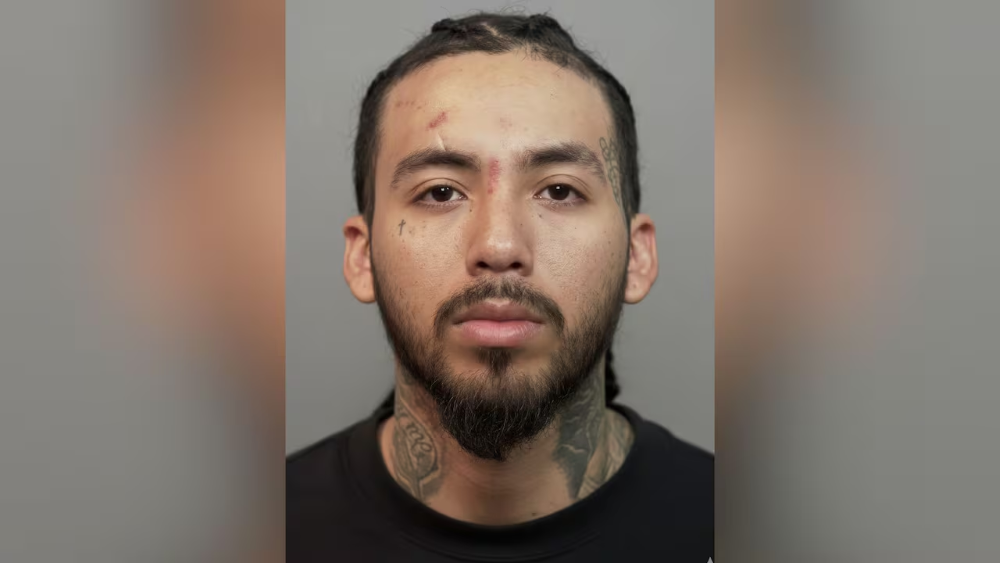
Dellen Millard, shown here, was found guilty of first-degree murder in Tim Bosma’s 2016 killing, along with Oakville’s Mark Smich. The two were also convicted of first-degree murder in Laura Babcock’s 2017 death. Toronto Police Service
Serial killer Dellen Millard now sits in a medium-security prison in Ontario after officials approved his transfer from maximum security. His move follows a similar transfer granted to his accomplice, Mark Smich, in 2021. Both men were convicted in the murders of Tim Bosma and Laura Babcock, and Millard later in the killing of his father, Wayne.
The families of the victims say they cannot understand why either man would receive reduced security status. They learned of Millard’s transfer this fall and say the decision reopened deep wounds.
In a joint statement, Bosma’s widow Sharlene and his parents said they felt disgusted. “If a three-time convicted 1st-degree murderer is rewarded for ‘good behaviour’ in the Canadian penal system and moved to a lower security prison, who then is filling the maximum security prisons?” they said. “Such a move by our ‘justice’ system is an abhorrent transgression.”
Families Say Trauma Resurfaced
Laura Babcock’s mother, Linda, says the news brought her family back to the darkest moments of the trials. “We’re right back to where we were at the start,” she said. She believes people who commit violent crimes should serve their full time in maximum security.
Millard and Smich were convicted of Bosma’s murder in 2016 and Babcock’s in 2017. Millard later received another conviction for murdering his father in 2018. In 2023, he also faced a conviction for assault causing bodily harm after a stabbing inside prison.
Despite this history, the Correctional Service of Canada says it cannot confirm specific details about inmate transfers unless related to public safety. A spokesperson said the service continues to engage with victims’ families throughout an offender’s sentence. But the families involved in this case say they felt ignored.
“Corrections Canada disregarded the feedback provided by our families,” Bosma’s relatives said. They questioned why the system forces them to relive old trauma if their concerns carry no weight.
Experts Question the Decision
Toronto defence lawyer Ryan Handlarski says a transfer can motivate inmates to adjust their behaviour. Still, he believes the move raises questions. “If you’re involved in a stabbing you’re not a model inmate,” he said. “So for me it’s really hard to understand, and I have to say, I agree with the families.”
Canada’s maximum-security prisons house inmates who present serious safety risks or need the highest levels of supervision. Medium-security prisons offer more movement and more privileges. The difference between the two, Handlarski says, is obvious even to visitors.
CSC Defends Its Process
The Correctional Service of Canada says it bases its decisions on structured assessments, psychological input, escape-risk evaluations and the professional judgment of trained staff. The service also reviews inmate classifications at least every two years.
CSC spokesperson Esther Mailhot said, “Public safety remains our paramount consideration.” She also noted that inmates may return to higher security if required.
Millard and Smich can apply for day parole in 2036 and for full parole in 2039, but the CSC stresses that parole eligibility does not guarantee release.
For the victims’ families, the transfer brings no comfort. “Their quality of life has improved,” Linda Babcock said. “Ours hasn’t.”