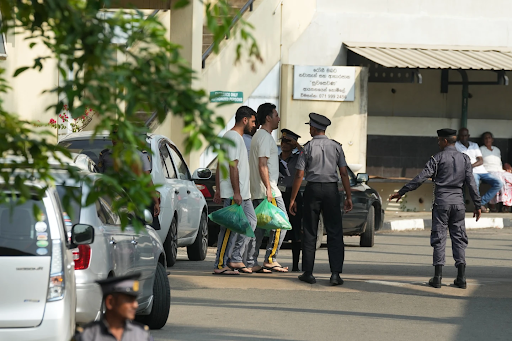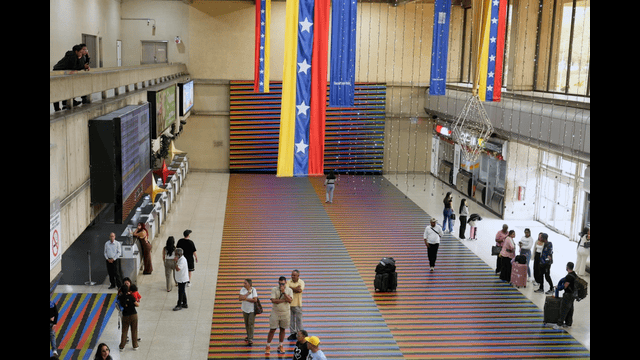
Travelers wait in the main hall of the Simon Bolivar Maiquetia International Airport in Maiquetia, Venezuela, Sunday, Nov. 23, 2025, after several international airlines canceled flights following a warning from the U.S. Federal Aviation Administration about a hazardous situation in Venezuelan airspace.
International airlines halted flights to Venezuela on Sunday after the FAA issued a security warning about flying through the country’s airspace. The alert mentioned escalating military activity and unspecified threats that could endanger aircraft at any altitude, including those taking off, landing, or parked on the ground.
Growing Airline Concerns Over Venezuela Airspace
The warning triggered a swift response from global carriers. According to Marisela de Loaiza, president of Venezuela’s Airlines Association, six airlines suspended all flights indefinitely. The list includes TAP, LATAM, Avianca, Iberia, Gol, and Caribbean Airlines.
Turkish Airlines also paused services from November 24 to 28 as risks intensified across the region.
Their suspensions underline the growing anxiety over Venezuela’s airspace, which has seen rising military operations and political tension.
FAA Flags Unspecified but “Potentially Dangerous” Threats
The FAA advisory, released Friday, did not describe the exact nature of the threats. It only noted that they “could pose a potential risk to aircraft at all altitudes.”
Such wording signals high uncertainty and a potentially unstable environment for commercial pilots. Aviation authorities often issue these alerts only when intelligence suggests an active or unpredictable threat.
The FAA’s move adds to the growing chorus of global concerns around flying in or near Venezuela, a country currently entangled in political confrontation and heightened military presence.
Colombia Calls for Open Air Travel
Amid the cancellations, Colombian President Gustavo Petro criticized the isolation of Venezuela. Writing on X, he insisted that all Latin American countries must remain connected through regular flights.
He warned that blocking flights effectively restricts people, describing such isolation as “a crime against humanity.”
His comments emphasized the wider regional implications of the FAA alert and ongoing political pressure on Caracas.
U.S. Military Presence Escalates Near Venezuela
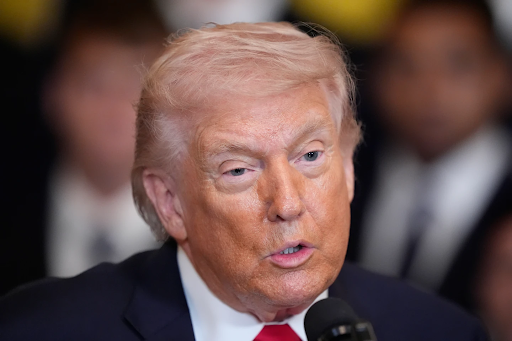
The tension around Venezuela's airspace coincides with intensifying pressure from the Trump administration on President Nicolás Maduro.
The U.S. has flown bomber aircraft close to the Venezuelan coastline, often as part of simulated attack exercises. Additionally, the USS Gerald R. Ford aircraft carrier and several destroyers were deployed to the Caribbean — forming the largest U.S. naval presence in the region in decades.
Washington does not recognize Maduro as Venezuela’s legitimate leader and has indicted him on narcoterrorism charges. This political standoff has spilled into the aviation world, creating uncertainty for airlines operating in or near the country.
U.S. Anti-Drug Operations Add to Regional Tensions
Beyond military displays, the Trump administration has launched a broader effort against drug trafficking in the Caribbean and eastern Pacific.
A series of strikes on small boats suspected of smuggling drugs to the U.S. has resulted in over 80 deaths since early September. These operations have only intensified regional instability and contributed to concerns about flying through nearby airspace.
Disruption Likely to Continue
With major airlines suspending operations and the FAA warning still active, air travel to Venezuela faces an uncertain future.
The combination of political tension, military buildup and aviation risks creates an environment where airlines may avoid the region for an extended period.
For travelers and cargo operators, the cancellations underscore how geopolitics can reshape aviation routes overnight. The situation around Venezuela serves as a stark reminder that airspace safety depends as much on stability on the ground as on conditions in the sky.