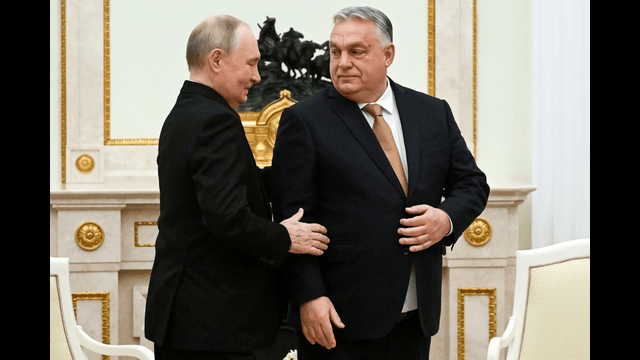
Russian President Vladimir Putin with Hungarian Prime Minister Viktor Orban.
Hungarian Prime Minister Viktor Orbán met Russian President Vladimir Putin in Moscow on Friday, reaffirming Hungary’s intention to deepen energy cooperation with Russia despite ongoing pressure from the European Union. The meeting highlighted Orbán’s continued divergence from EU policy as the war in Ukraine approaches its fourth year.
Hungary Breaks From EU Line on Russia
Orbán’s visit to the Kremlin marks his second trip to Moscow in just over a year, underlining his unique position within the EU. He is widely seen as Putin’s closest ally among European leaders and one of the few still purchasing large volumes of Russian fossil fuels.
While EU member states push to reduce energy reliance on Russia, Orbán insists Hungary will not abandon Russian oil and gas.
“We have important areas of cooperation, and we haven’t given up on any of them,” Orbán said. He emphasized that Russian energy remains central to Hungary’s present and future supply.
This stance continues to frustrate Hungary’s EU and NATO partners, who accuse Moscow of violating international law and endangering regional security. Orbán has repeatedly called for an end to the Ukraine conflict, but has not defined how Ukraine’s borders or sovereignty would be protected under his vision.
Putin Praises Orbán’s “Balanced Position”
During the talks, Putin noted Orbán’s “balanced position” on the war in Ukraine. Discussions lasted nearly four hours, according to the Kremlin.
The meeting underscored the growing diplomatic gap between Hungary and other EU states, many of which have sought to isolate the Kremlin since the 2022 invasion.
Orbán Pursues Energy Deals After Trump Sanctions Exemption
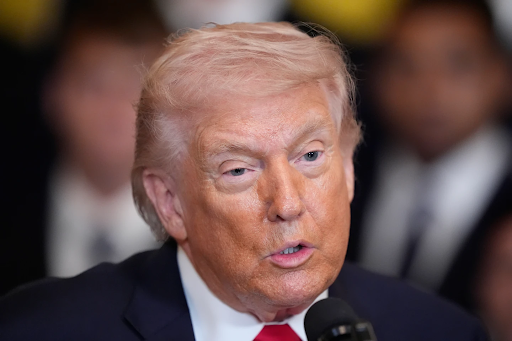
Orbán’s Moscow trip follows his recent meeting with U.S. President Donald Trump, where he secured an exemption from American sanctions targeting Russian energy giants Lukoil and Rosneft.
With the exemption in place, Orbán stated that Hungary now needed “only oil and gas” directly from Russia to secure affordable energy for the coming winter and next year.
He has long argued that abandoning Russian energy would devastate Hungary’s economy, though many economists dispute this claim. While Europe has steadily reduced its reliance on Russian energy supplies, Hungary has increased them and resisted the EU’s plan to phase out Russian fossil fuels entirely by 2027.
Trump’s Peace Plan and Moscow’s Reaction
The Trump administration recently unveiled a 28-point plan to end the war in Ukraine. The proposal is widely viewed as favorable to Russia, prompting concerns among European leaders.
Ukrainian President Volodymyr Zelenskyy quickly engaged with U.S. officials, while European governments rushed to influence negotiations.
Trump announced that envoy Steve Witkoff will travel to Moscow next week to meet Putin. Army Secretary Dan Driscoll will meet Ukrainian representatives separately.
Kremlin spokesman Dmitry Peskov confirmed that Witkoff will meet Putin “in the first half of next week.” Peskov also said Russia had received revised parameters of the proposed peace plan during recent U.S.-Ukraine talks in Geneva.
Ukrainian Drone Strikes Hit Russian Targets
As diplomatic talks continued, the conflict on the ground intensified. Russia reported intercepting 136 Ukrainian drones overnight across several regions, including Crimea. Damage to homes and cars was confirmed in the Rostov and Voronezh regions.
Ukraine’s military claimed responsibility for striking an oil refinery in Saratov, causing explosions and fires. It also conducted aerial attacks on Russian air defense units, drone depots, and fuel-storage sites in occupied territories.
Later on Friday, Ukraine’s Air Force detected several Russian missile launches targeting the Khmelnytskyi region, including at least one Kinzhal missile.
Russia Launches New Attacks on Kyiv and Dnipro
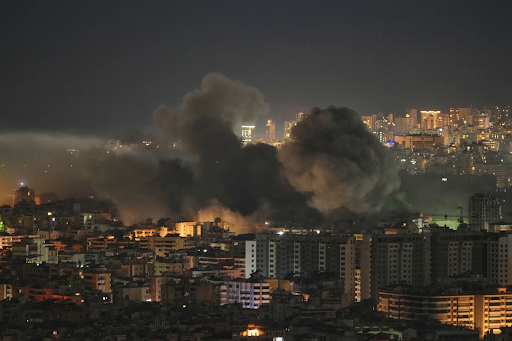
Hours before a new round of peace negotiations, Russia launched fresh strikes on Kyiv and Dnipro early Saturday.
Residential buildings in Kyiv’s Shevchenkivskyi, Solomianskyi, and Darnytskyi districts were damaged. Four people were injured, officials confirmed. Explosions were also reported in Dnipro, though details remained unclear.
Ukrainian negotiators are scheduled to meet U.S. officials in America this weekend. A U.S. delegation will then head to Moscow next week for further talks with Putin, signaling intensifying diplomatic activity despite ongoing hostilities.