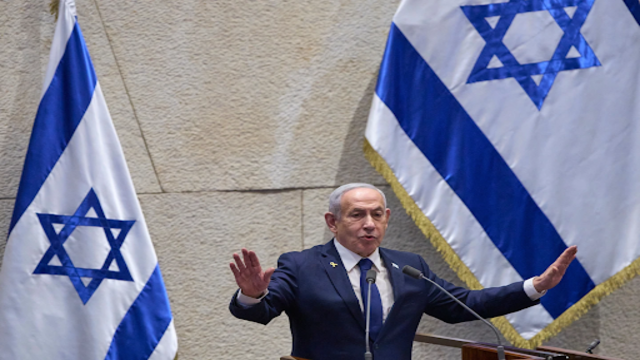
Israel’s Prime Minister Benjamin Netanyahu addresses lawmakers in the Knesset, Israel’s parliament, in Jerusalem, Monday, Nov. 10, 2025. Associated Press
Israeli Prime Minister Benjamin Netanyahu has formally requested a pardon from President Isaac Herzog, seeking to end a corruption trial that has divided Israel for years. The move has stirred intense political debate and raised fresh concerns about the future of democratic norms in the country.
Netanyahu Seeks Pardon to End Deepening Crisis
Netanyahu’s office confirmed on Sunday that a pardon request was submitted to the legal department of the president’s office. Officials described it as an “extraordinary request” with major legal and political consequences.
In his statement, Netanyahu said the trial has “torn the country apart” and that ending it would promote national unity during a period of regional upheaval.
Ongoing Corruption Trial at the Center of the Storm
Netanyahu is the only sitting Israeli prime minister ever to stand trial. He faces charges of bribery, fraud, and breach of trust in three separate cases involving wealthy associates.
He denies all accusations, calling them a politically motivated witch hunt orchestrated by the media, police, and judiciary.
Despite being on trial, he has not been convicted of any charges.
Trump’s Push for a Netanyahu Pardon
Netanyahu’s request follows public support from former U.S. President Donald Trump, who urged Israel to pardon Netanyahu during a recent speech to parliament. Trump also sent a letter to President Herzog earlier this month, calling the case “unjustified prosecution.”
Israeli media reported protests outside Herzog’s residence after the pardon request became public. Demonstrators placed a pile of bananas outside his home, accusing the government of turning Israel into a “banana republic.”
Netanyahu Says Trial Hinders His Leadership
In a video message, Netanyahu said court appearances three times a week disrupt his ability to lead the country.
He argued that the trial’s continuation “deepens national rifts” and that closing the case would help Israel heal after years of political division.
Case Delays and Legal Complexity
Netanyahu has testified several times in the past year, though proceedings have repeatedly paused due to conflicts, including the aftermath of the October 7, 2023 Hamas-led attacks.
His pardon request includes a detailed legal letter from his lawyer and a personal appeal. Both documents will be reviewed by the Justice Ministry before reaching the legal adviser to the president.
However, legal experts say the request cannot stop the trial.
Former Justice Ministry director Emi Palmor stated that a pardon before conviction is “impossible under normal circumstances.”
Experts note that while the president has wide discretion in granting pardons, preconviction pardons are extremely rare and typically considered harmful to the rule of law.
Critics Warn of Damage to Democracy
Opposition leader Yair Lapid rejected the pardon request, stating that Netanyahu must admit guilt, show remorse, and retire from politics before any discussion of clemency.
Advocacy groups, including the Movement for Quality Government in Israel, argued that pardoning a sitting prime minister accused of serious crimes would undermine equality before the law.
Netanyahu’s History of Attacking the Legal System
Netanyahu once demanded the resignation of former Prime Minister Ehud Olmert over corruption allegations, saying a leader mired in scandal lacked the mandate to govern. Olmert resigned in 2008 and later served prison time.
Since facing charges himself, Netanyahu has taken a defiant stance, presenting himself as a victim of a “deep state” conspiracy. After forming his government in late 2022, he launched a controversial judicial overhaul that triggered massive protests and widened national divisions.
Critics say the crisis emboldened Israel’s enemies and contributed to instability ahead of Hamas’s 2023 attack.
Supporters Say a Pardon Could Unite the Nation
Despite backlash, some Israelis support Netanyahu’s appeal.
Jerusalem resident Lior Gal said Netanyahu “did the right thing,” arguing that a pardon would allow the country to move forward as a united people.
What Happens Next?
The president’s legal team will begin reviewing the request, though experts believe granting a pardon before conviction would be unprecedented and politically explosive.
As the corruption trial continues and political tensions rise, Netanyahu’s pardon request has become a defining moment—one that could reshape Israel’s legal and political landscape for years to come.