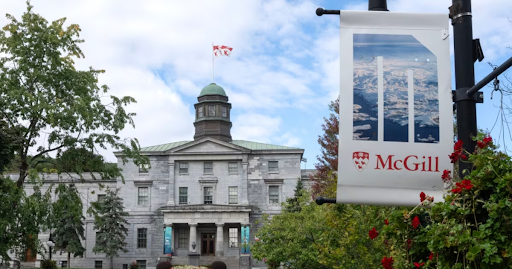
McGill University, Canada. Credit: CTV
University students and professors across Canada face a difficult new reality as schools reduce programs and spending to cope with severe financial pressure. The latest decisions hit English-language institutions in Quebec the hardest, where new federal and provincial rules have reduced revenue and left schools searching for savings.
At McGill University, the impact became clear earlier this month when leaders announced they would cut two dozen varsity and competitive teams for the 2026–27 season.
Athletes React to Major Losses
Members of the track team say they never expected such a sudden decision. Co-captain Rebecca Warcholak described the news as “an absolute gut punch.”
“We felt largely like it was out of the blue. We don’t really understand why it happened,” she said. “A lot of us came here for the program, for the prestige of McGill University, to run with this name on our singlet.”
The news travelled quickly through the sports community. Athletics Canada Head Coach Glenroy Gilbert called the cancellation shocking.
“This is at a world class facility, so this is a blow and a shock,” he said. “I am sure the athletes this is impacting are not feeling good about it right now.”
Alumni from around the world, including Olympic champion Bruni Surin, have joined a public campaign urging the university to reverse the cuts. An online petition has gathered thousands of signatures.
McGill says financial pressure leaves them no choice. “Simply put, our unit can no longer effectively manage or support the same number of activities while maintaining the standards of excellence expected at McGill,” the university said in a statement.
Policy Shifts Add More Strain
Federal plans to reduce student visas from 306,000 this year to 155,000 in 2026 have already reduced revenue at many schools. Quebec also introduced new rules that limit the number of international and out-of-province students. These changes hit English-language universities particularly hard because they rely more heavily on those enrolments.
Concordia University fought the new rules in court and spent $780,000 on legal fees. It won parts of the case this spring. “We felt we had no other choice but to legally challenge the measures,” the university said in a statement. The court ruled that the rules for out-of-province students and French-language requirements were “unreasonable.”
Even with that win, Concordia now faces a 7.2 per cent cut across all areas for the 2025–26 budget. A hiring freeze is in place, and contracts for 63 faculty members will not be renewed. Many sabbaticals have been cancelled.
Faculty Raise Concerns
English professor Stephen Yeager has taught at Concordia since 2009. He says the cuts do not match the savings the university claims they need.
“You’ve ripped off all the Band-Aids and there has been a huge impact for almost no savings,” he said. He worries that decisions made in the name of cost-cutting may weaken programs and reduce the quality of education.
“This is across Canada and the world,” he said. “There is a tendency to cut the budget in ways that affect the quality of the education that is offered to students without enough regard… to the long term impact on the health of the university.”
Yeager says schools must work closely with students to understand their priorities. “I would try to find out what they want to pay their tuition dollars for,” he said. He believes strong programs help students grow and that Canada still offers one of the best education systems in the world. He urges leaders to protect that strength.