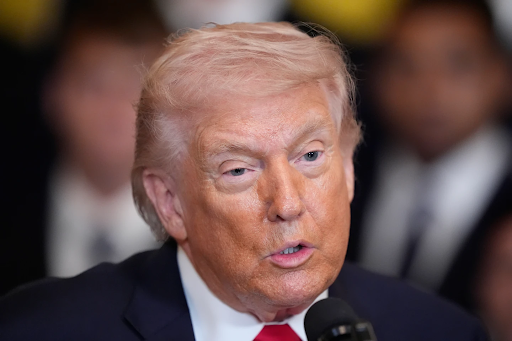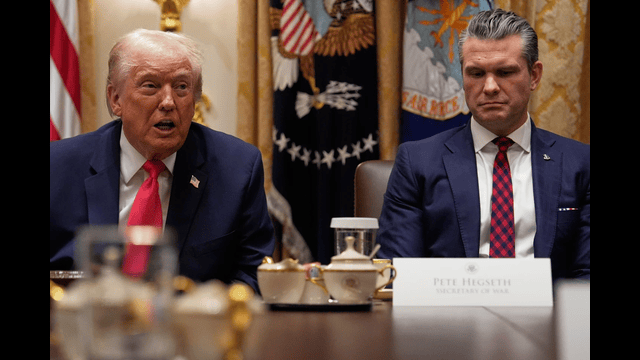
President Donald Trump speaks during a Cabinet meeting at the White House, Tuesday, Dec. 2, 2025, in Washington, as Secretary of Defense Pete Hegseth looks on.
Former President Donald Trump ignited a new wave of controversy on Tuesday after declaring that he does not want Somali immigrants in the United States. He claimed Somalis rely too heavily on American social programs and provide little benefit to the country. His remarks targeted an entire immigrant community, without distinguishing between refugees, legal residents, or U.S. citizens of Somali origin.
The comments marked yet another attack on the Somali diaspora, which has built communities across Minnesota and several other states since the 1990s.
Trump Links Somali Community to Recent Security Concerns
Trump’s latest remarks came days after his administration halted all asylum decisions. The pause followed the shooting of two National Guard soldiers in Washington. The suspect in that incident is originally from Afghanistan, yet Trump used the moment to raise broader questions about immigrants from other nations, including Somalia.
During a Cabinet meeting, Trump said Somalis “contribute nothing” and added, “I don’t want them in our country.” He went further, saying, “Their country is no good for a reason. Your country stinks and we don’t want them in our country.”
His comments echoed years of criticism aimed at Rep. Ilhan Omar, a Minnesota Democrat who arrived in the U.S. as a Somali refugee in 1995. Trump intensified his attacks last week after conservative activist Christopher Rufo published unverified claims that stolen funds from Minnesota programs were being funneled to al-Shabab, an extremist group in Somalia.
Vow to End Temporary Protections for Somalis
Trump also pledged to terminate Temporary Protected Status (TPS) for Somali immigrants living in Minnesota. The promise sparked immediate concern within Minnesota’s Somali community, many of whom fear the policy could separate families or expose long-time residents to deportation.
However, immigration experts and state leaders stated that the president may not have the legal authority to enforce his directive in the way he described. They also stressed that TPS applies only to a small group—just 705 Somalis nationwide, according to an August report prepared for Congress.
Escalating Rhetoric Against Rep. Ilhan Omar
Trump renewed his attacks on Rep. Omar, using harsh language against her and her supporters. “Ilhan Omar is garbage. She’s garbage. Her friends are garbage,” he said.
Omar responded on social media, saying, “His obsession with me is creepy. I hope he gets the help he desperately needs.”
Trump Claims Somalis “Don’t Work” and “Complain”
Trump added to his criticism by claiming Somali immigrants do not contribute to American society. “These aren’t people that work… These are people that do nothing but complain,” he said, suggesting they do not share the drive to “make this place great.”
His remarks deepened fears among Somali Americans, many of whom have long faced discrimination, misinformation, and political targeting.
Minnesota Leaders Reject Trump’s Claims
Minnesota officials pushed back immediately. Minneapolis Mayor Jacob Frey condemned Trump’s remarks as “wrong,” emphasizing the positive contributions of Somali immigrants.
“They have started businesses and created jobs. They have added to the cultural fabric of what Minneapolis is,” Frey said. He added that Trump’s rhetoric “villainizes an entire group” and “violates the moral fabric” of what Americans stand for.
State lawmakers, immigration advocates, and community leaders echoed those concerns. Many said Trump’s comments deepen divides and risk fostering suspicion toward a community that has been part of Minnesota’s identity for decades.
A Continual Flashpoint
The Somali community, one of the largest immigrant groups in Minnesota, has frequently found itself at the center of Trump’s political messaging. Observers say his recent statements reflect a broader pattern of using immigration as a campaign issue.
For many Somali families, Tuesday’s remarks added new layers of uncertainty—reviving old fears while raising questions about future policy direction.