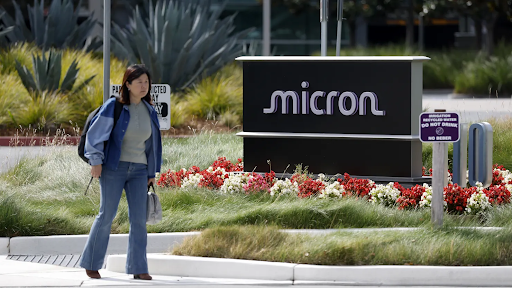
A person walks by a sign for Micron Technology headquarters in San Jose, California, on June 25, 2025.
Micron Technology has announced a major strategic shift. The company will exit the consumer memory market to prioritize skyrocketing demand from the AI chip sector, marking one of the most significant business pivots in the semiconductor industry this year.
AI Boom Forces a Strategic Reset
Micron said the explosive growth of AI-driven data centers has created historic pressure on global memory supplies. According to Micron’s Chief Business Officer Sumit Sadana, the company can no longer serve both segments without compromising output and support.
“The AI-driven growth in the data center has led to a surge in demand for memory and storage,” Sadana said. He added that moving away from the Crucial consumer business allows Micron to focus on “larger, strategic customers in faster-growing segments.”
The decision highlights a clear industry trend: the rapid expansion of AI infrastructure is consuming massive quantities of advanced memory, leaving limited supply for consumer products.
AI Chips Create Global Memory Shortage
Companies like Nvidia, Advanced Micro Devices (AMD) and Google are driving this surge. Their latest AI chips require extraordinary amounts of high-bandwidth memory (HBM).
- Nvidia’s GB200 uses 192GB per graphics processor.
- Google’s Ironwood TPU also operates with 192GB of HBM.
- AMD’s MI350 chip packs an even higher 288GB of memory.
These numbers dwarf consumer computing needs, where most laptops use 16GB or less. With AI models expanding rapidly, manufacturers are racing to secure memory supply, pushing companies like Micron to focus on enterprise and cloud-scale buyers.
End of Crucial: What Consumers Lose
Micron’s Crucial brand, popular among PC builders and hobbyists, sold memory modules and SSDs widely used for laptops, desktops, and custom rigs. The discontinuation means consumers will have fewer U.S.-based suppliers for plug-and-play memory upgrades.
Crucial’s shutdown also reduces competition in the traditional memory market, where Micron, Samsung, and SK Hynix have long been dominant players. SK Hynix currently leads as Nvidia’s primary memory supplier, making Micron’s shift even more significant.
AI Market Becomes Micron’s Priority
Micron’s cloud memory business grew 213% year-over-year in its most recent quarter — a growth rate far exceeding its consumer division. This increase underscores why the company is reshaping its priorities around AI, cloud computing, and high-performance servers.
Micron also serves AMD, whose AI chips demand more memory bandwidth than most competitors. This partnership positions Micron as a key player in the fast-moving AI industry.
Wall Street Reacts to Micron’s Pivot
Micron shares have risen roughly 175% this year, driven by AI enthusiasm and tightening memory supply. The stock dipped 3% on Wednesday after the announcement but remains one of the strongest performers in the semiconductor sector.
Analysts remain cautiously optimistic. Goldman Sachs raised its price target from $180 to $205, citing continued “pricing momentum” in the memory market. They expect Micron to outperform forecasts when it reports quarterly earnings in two weeks.
What Happens to Employees?
Micron has not confirmed whether the exit from consumer memory will lead to layoffs. A company spokesperson declined to comment further.
The company said it plans to redeploy employees into other open roles wherever possible to reduce workforce impact.
A New Phase for the Memory Industry
Micron’s shift away from consumer memory marks a turning point in the global semiconductor landscape. The AI infrastructure boom is reshaping supply chains, redirecting resources, and redefining priorities for major chipmakers.As demand for high-bandwidth memory accelerates, Micron is positioning itself at the center of the AI revolution — even if it means leaving behind a long-standing consumer business.