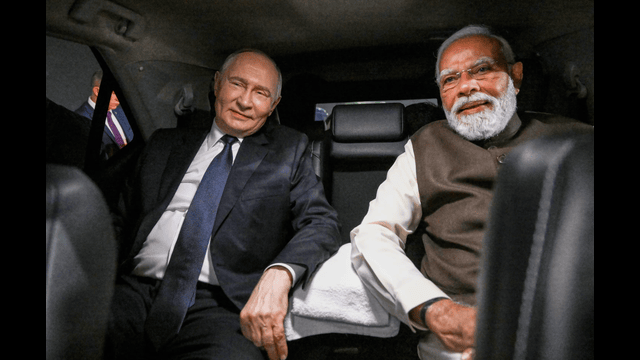
Russian President Vladimir Putin, and Indian Prime Minister Narendra Modi sit inside a limousine after arriving at the Palam Air Base in New Delhi, India, on Thursday, Dec. 4, 2025.
Russian President Vladimir Putin signaled Thursday that several parts of the U.S. proposal to end the Ukraine war are unacceptable to Moscow. His comments suggest that a final agreement is still far from reach, despite Washington’s most aggressive diplomatic push since the full-scale invasion began nearly four years ago.
US Peace Effort Faces Tough Resistance
U.S. President Donald Trump has accelerated negotiations, sending special envoy Steve Witkoff and adviser Jared Kushner to Moscow for high-level discussions. Their Kremlin meeting with Putin lasted five hours, underscoring the complexity of the process.
Yet the talks hit a familiar obstacle — whether Ukraine must concede territory and how Kyiv can be protected from future Russian aggression.
A follow-up meeting between the U.S. delegation and Ukrainian officials was planned for Thursday evening, though it remained unconfirmed. The neutral venue, the Shell Bay Club in Florida, highlighted the confidential nature of the discussions.
Putin Calls Some US Proposals “Unacceptable”
Putin described the U.S. plan as detailed and specific but admitted that key components could not be accepted. He said the proposal, originally 28 points, had been reduced to 27 and split into four separate packages.
“We went through almost every point,” Putin said. “Some we can discuss. Others we cannot agree to.”
He added that revealing which points were unacceptable would be “premature,” as it could undermine Trump’s peace process.
The Russian leader insisted that Moscow would pursue its objectives in Ukraine, including full control of the Donetsk region. According to Putin, either Russia will take the area by force, or Ukrainian troops will eventually retreat.
Trump Says Putin Wants a Deal
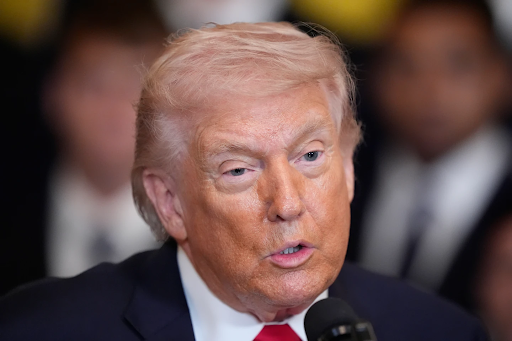
President Trump said Witkoff and Kushner believed Putin is ready to negotiate.
“Their impression was that he’d like to make a deal,” Trump noted, emphasizing the need for continued discussions.
Putin praised the U.S. initiative, acknowledging that “achieving consensus among conflicting parties is no easy task.”
However, European leaders remain skeptical. Many feel excluded as Washington engages directly with Moscow and Kyiv, leaving the EU on the sidelines.
Europe Seeks Its Own Role
French President Emmanuel Macron met with China’s Xi Jinping in Beijing, urging Beijing to use its influence on Moscow. Xi avoided endorsing a ceasefire call but said China “supports all efforts that work toward peace.”
European leaders worry that Russia may be using diplomacy as a tactic while continuing military actions inside Ukraine.
Russian Attacks Continue Despite Negotiations
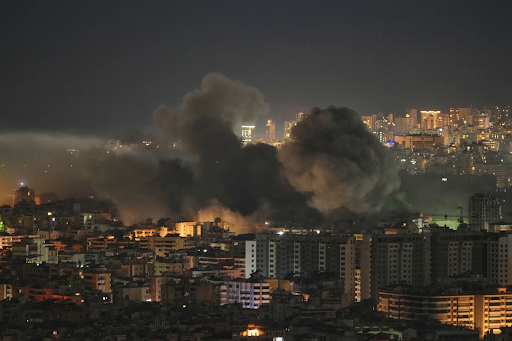
Even as peace talks unfold, Russian strikes on Ukraine intensified overnight. Two ballistic missiles and 138 drones targeted civilian and energy infrastructure.
A missile attack on Kryvyi Rih wounded six people, including a three-year-old girl, and damaged more than 40 buildings. In Kherson, a six-year-old girl died from injuries sustained during artillery shelling.
The Kherson Thermal Power Plant, supplying heat to over 40,000 residents, was forced to shut down after repeated Russian strikes. Emergency heating centers are being set up throughout the city.
In Odesa, drone attacks injured six more people and damaged power facilities.
Meanwhile, Russian-installed authorities said two men were killed in a Ukrainian drone strike in occupied Kherson, with a 68-year-old woman wounded.
A Peace Deal Still Uncertain
Despite signs of engagement, the gulf between U.S. proposals and the Kremlin’s territorial demands remains wide. While Trump’s team describes Putin as open to negotiation, ongoing attacks and firm statements from Moscow paint a different picture.
With the war approaching its fourth year, the path to peace appears fraught with geopolitical tension, clashing priorities, and hard limits on both sides’ willingness to compromise.