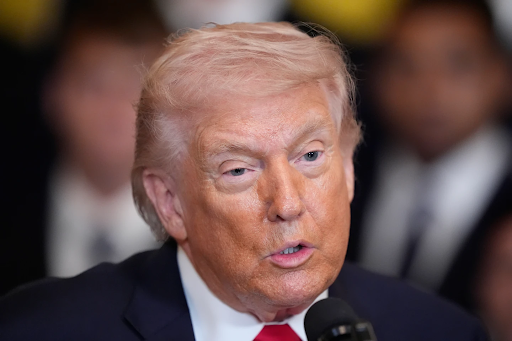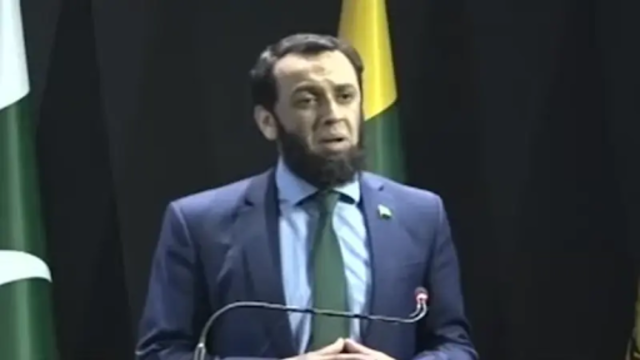
Attaullah Tarar, Federal Minister of Pakistan, rejected online claims linking the country. Associated Press
Pakistan on Wednesday rejected online claims linking the country to the deadly Bondi Beach shootings in Australia, calling them false and coordinated. The government said the misinformation spread rapidly after the attack and unfairly blamed Pakistan without evidence.
The shooting, which occurred during Jewish Hanukkah celebrations, killed 15 people and shocked Australia. Pakistan said it condemned the violence immediately and expressed solidarity with the victims and their families.
Pakistan Alleges Organized Online Disinformation
Pakistan’s Information Minister Attaullah Tarar said the country became a target of a deliberate online disinformation campaign. Speaking in Islamabad, he accused “hostile countries,” including India, of pushing false narratives on social media platforms.
Tarar said misleading posts appeared within hours of the attack. These posts falsely claimed one attacker was a Pakistani national. According to him, the claims spread widely and were amplified by some media outlets without verification.
False Identity Sparks Confusion
The controversy centered on the name Naveed Akram. Online posts claimed a suspect with that name was from Pakistan. Tarar said this information was completely inaccurate.
He explained the confusion arose due to mistaken identity. A Pakistani man living in Sydney shares the same name as one of the suspects. That individual later released a video denying any connection to the attack.
“He has become a victim of a malicious and organized campaign,” Tarar said.
Official Findings Clarify Attacker Background
Tarar cited subsequent investigations to counter the claims. He said Indian police confirmed one attacker, Sajid Akram, was an Indian national from Hyderabad. Sajid held an Indian passport, authorities said.
The second attacker, identified as Sajid’s 24-year-old son Naveed Akram, was born in Australia. Officials confirmed he was not a Pakistani citizen.
Despite these findings, Tarar said false reports continued circulating online, damaging Pakistan’s international image.
Pakistan Expresses Solidarity With Australia
Pakistan emphasized its long history of suffering from terrorism. Tarar said this gives the country a deep understanding of Australia’s grief.
“As Pakistan has suffered from terrorism for a long time, we fully understand the pain of the Australian people,” Tarar wrote on X. He added that Pakistan stood in complete solidarity with Australia.
He criticized some international media outlets for rushing to publish unverified claims linking the attack to Pakistan. “There was neither evidence nor verification,” he said.
Calls for Apologies and Accountability
Tarar urged media organizations that reported the false claims to issue public apologies. He said Pakistan had not yet decided whether it would pursue legal action over the misinformation.
“The assertion was later proven completely false,” Tarar said, stressing the need for responsible journalism during sensitive situations.
There was no immediate response from India’s Ministry of External Affairs regarding Pakistan’s allegations.
Tensions Add to the Fallout
The episode unfolded against the backdrop of long-standing tensions between Pakistan and India. The two nuclear-armed neighbors have fought three wars since 1947, mostly over the disputed Kashmir region.
Relations remain fragile despite a recent ceasefire brokered by U.S. President Donald Trump, which helped ease tensions after the countries came close to conflict in May.
Disinformation Risks After Global Tragedies
Pakistan said the Bondi Beach case highlights how quickly disinformation spreads after major attacks. Officials warned that false claims not only harm countries but also distract from justice for victims.
Tarar concluded by urging global media and social platforms to verify facts before assigning blame. “Truth matters most in moments of tragedy,” he said.