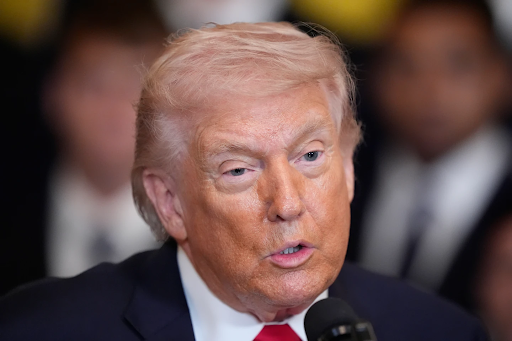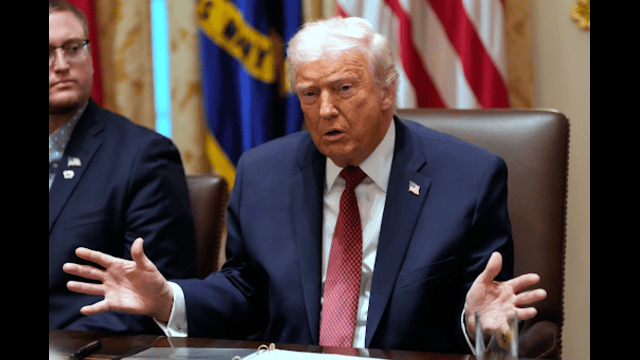
President Donald Trump speaks during a roundtable on farm subsidies in the Cabinet Room of the White House, Monday, Dec. 8, 2025, in Washington.
Farmers across the United States are now learning how much federal support they can expect under the Trump farm aid package.
The $12 billion assistance plan was announced earlier this month to offset losses from trade disruptions.
On Wednesday, the U.S. Department of Agriculture released detailed payment rates per acre.
These figures apply to major row crops grown nationwide.
The announcement came later than many farmers expected.
Most producers had already met bankers, finalized loans, and ordered seed and fertilizer.
Despite the delay, USDA officials say payments should reach farmers by the end of February.
The administration believes the aid will offer short-term financial relief.
Trade war fallout hits soybean farmers hardest
Soybean growers remain among the most affected by the U.S.-China trade conflict.
China halted purchases of American soybeans after tariffs were announced earlier this year.
China is the world’s largest soybean buyer.
The sudden loss of that market caused prices to fall sharply.
Under the Trump farm aid plan, soybean farmers will receive $30.88 per acre.
Corn growers will receive $44.36 per acre.
Sorghum farmers, also impacted by China’s withdrawal, will get $48.11 per acre.
The USDA calculated these rates using production cost formulas.
Officials say the payments are designed to help farmers survive market disruptions.
The administration expects demand to recover as trade agreements take effect.
Farmers say aid helps, but markets matter more
Many farmers say the aid offers temporary relief, not a long-term solution.
Rising costs for fertilizer, seed, fuel, and labor continue to strain margins.
Some agricultural groups fear thousands of farms could shut down.
Others believe many farmers still have enough equity to endure.
Kentucky soybean farmer Caleb Ragland called the aid “a Band-Aid on a deep wound.”
He stressed the need for stronger market competition.
“We need buyers, not bailouts,” Ragland said.
He urged policymakers to focus on sustainable trade opportunities.
Corn growers call for broader demand
National Corn Growers Association President Jed Bower echoed similar concerns.
He said corn farmers face years of low prices and high input costs.
While welcoming the Trump farm aid, Bower urged action beyond subsidies.
He emphasized expanding domestic and international markets.
More demand for ethanol, animal feed, and exports could stabilize farm incomes.
Long-term certainty matters more than short-term checks, he said.
Agriculture Secretary Brooke Rollins agreed with that goal.
She promised continued efforts to open new markets and strengthen safety nets.
Soybean leaders seek additional support
Minnesota Soybean Growers Association President Darin Johnson said expectations were higher.
He noted the soybean payment rate fell short of hopes.
Still, Johnson acknowledged the aid would help many producers.
He added that further assistance might be needed if markets stay weak.
Despite trade disruptions, most farmers remain loyal supporters of Trump.
They back his broader policies and expect better trade deals eventually.
China purchases lift cautious optimism
The Trump farm aid package totals $11 billion for row crop farmers.
Eligible crops include corn, soybeans, wheat, sorghum, and others.
Another $1 billion is reserved for specialty crops and sugar.
Details for those payments have not been released.
Optimism grew after Trump met Chinese President Xi Jinping in October.
The White House said China pledged major soybean purchases.
Officials claim Beijing promised 12 million metric tons by year’s end.
An additional 25 million metric tons annually were discussed.
As of December 18, China had purchased about 6 million metric tons.
USDA reports show at least 600,000 more tons bought afterward.
China has not formally confirmed the full commitment.
However, its embassy said agricultural trade is proceeding steadily.
Sorghum exports show signs of recovery
Sorghum producers have also seen renewed buying interest.
Over one million metric tons were sold in recent weeks.
China has traditionally been the largest sorghum buyer.
More than half of the U.S. crop is exported each year.
Tim Lust of the National Sorghum Producers called the trend encouraging.
He said export momentum matters as much as aid payments.
Payment limits and farm size realities
Trump farm aid payments are capped at $155,000 per farm or entity.
Only operations earning under $900,000 in adjusted gross income qualify.
During Trump’s first term, some large farms bypassed payment limits.
They collected millions through legal loopholes.
The USDA reports an average farm size of 466 acres nationwide.
However, many operations are far larger due to consolidation over time.
As aid rolls out, farmers continue balancing short-term relief with long-term uncertainty.
For many, market access remains the real measure of success.