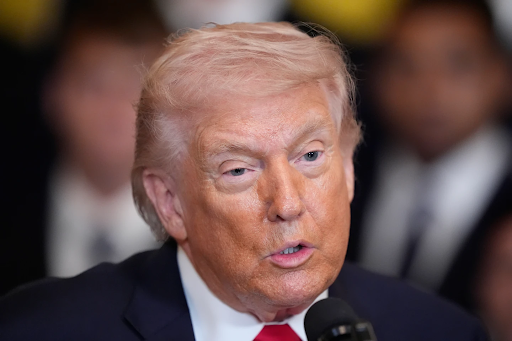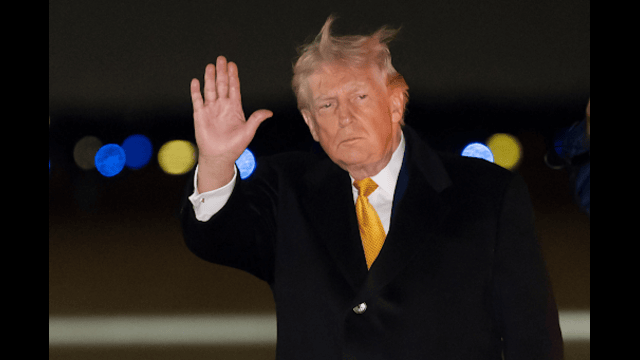
President Donald Trump waves as he arrives on Air Force One, Sunday, Jun 4, 2026.
The US capture of Maduro has sent shockwaves across Latin America.
It has thrilled Donald Trump’s allies.
It has alarmed his critics.
And it has revived old fears of American interventionism in the region.
President Donald Trump announced Nicolás Maduro’s capture with striking confidence.
Standing before reporters, he framed the operation as a turning point.
He said American dominance in the Western Hemisphere was unquestionable again.
Hours later, Maduro was escorted through a US Drug Enforcement Administration facility in New York.
The images spread fast.
So did the political fallout.
The US capture of Maduro capped months of escalating pressure on Caracas.
It also exposed how deeply divided Latin America has become under Trump’s renewed leadership.
A New Doctrine Takes Shape
Since returning to office, Trump has moved aggressively across the region.
He renamed the Gulf of Mexico as the Gulf of America.
He authorized boat strikes against alleged drug traffickers.
He ordered a naval blockade on Venezuelan oil exports.
The US capture of Maduro fits into this broader strategy.
Trump calls it the “Donroe Doctrine.”
The idea echoes the 19th-century Monroe Doctrine.
It emphasizes US dominance in its hemisphere.
Through tariffs, sanctions, and force, Washington has applied pressure.
The goals are clear.
Stop drug trafficking.
Curb migration.
Secure strategic resources.
Limit Chinese and Russian influence.
Analysts say the approach is reshaping regional politics.
“It’s a show of power across Latin America,” said one Washington-based expert.
Right-Wing Leaders Applaud the US Capture of Maduro
The reaction from conservative leaders was swift and enthusiastic.
Argentine President Javier Milei praised the operation.
He framed it as a battle between freedom and dictatorship.
In Ecuador, President Daniel Noboa warned Chavista movements across the continent.
He said their political structure would collapse.
In Chile, President-elect José Antonio Kast welcomed the news.
He called the US capture of Maduro a win for regional stability.
Across South America, right-wing leaders highlighted ideological alignment with Trump.
They see Maduro’s fall as validation of their hardline positions.
Left-Wing Governments Sound the Alarm
The tone was very different on the left.
Several presidents expressed serious concern.
Brazil’s Luiz Inácio Lula da Silva called the raid dangerous.
He warned it set a troubling precedent.
Mexico’s Claudia Sheinbaum said it threatened regional stability.
Chile’s Gabriel Boric said it violated international law.
Colombia’s Gustavo Petro described it as an attack on sovereignty.
All four leaders have clashed with Trump before.
Each has faced pressure or threats from Washington.
The US capture of Maduro deepened their unease.
Painful Memories Resurface
For many in Latin America, history looms large.
US interventions have left deep scars.
From early 20th-century occupations to Cold War dictatorships, memories endure.
Lula said the operation recalled the darkest chapters of regional interference.
Street protests erupted in some countries.
Even some Trump allies reacted cautiously.
El Salvador’s President Nayib Bukele stayed unusually quiet.
He shared a mocking meme about Maduro.
But he avoided public celebration.
In Bolivia, President Rodrigo Paz offered guarded approval.
He said Maduro’s removal reflected the Venezuelan people’s will.
But he stressed the importance of respecting votes.
Questions Over Venezuela’s Democratic Future
Those statements quickly lost relevance.
Trump later announced cooperation with Maduro’s vice president, Delcy Rodríguez.
The Venezuelan opposition was sidelined.
Former US diplomats raised concerns.
They said Washington appeared to ignore the 2024 election outcome.
When asked about future elections, Trump was vague.
He said the focus was on “getting it fixed.”
The US capture of Maduro, critics argue, replaced one uncertainty with another.
Trump Puts Rivals on Notice
The message did not stop with Venezuela.
Trump issued fresh warnings across the region.
He suggested Cuba’s government was close to collapse.
He criticized Mexico’s handling of cartels.
He attacked Colombia’s president with personal accusations.
Trump made his position clear.
Latin America must align or face pressure.
“It’s our hemisphere,” he told reporters.
The US capture of Maduro has become more than a single event.
It is a defining moment.
One that reveals a region transformed, divided, and bracing for what comes next.