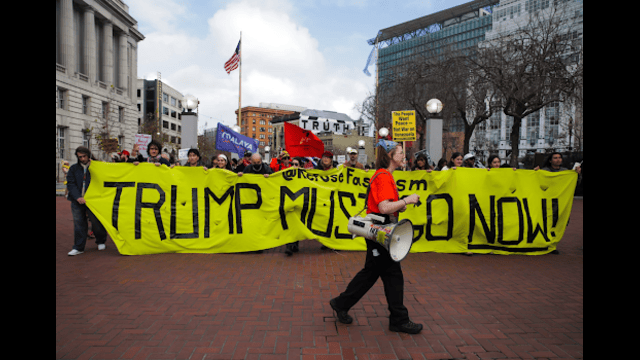
Protestors hold a banner stating “Trump Must Go Now” as they gather outside the UN Plaza during a demonstration against the U.S. bombing of Venezuela and seizure of Venezuelan President Nicolás Maduro, in San Francisco on Saturday, Jan. 3, 2026.
The United States has intensified its pressure campaign in Venezuela after the dramatic removal of Nicolás Maduro from power.
Washington now signals that economic leverage, not direct governance, will define its next steps.
Still, President Donald Trump’s remarks suggest a far more assertive posture.
Senior officials sought Sunday to clarify America’s intentions amid global concern over another prolonged intervention.
At the center of the debate lies an oil embargo, political transition, and competing messages from Washington.
Rubio Frames Oil Embargo as Primary Leverage
Secretary of State Marco Rubio said the US will not manage Venezuela’s daily governance.
Instead, he emphasized enforcement of an existing oil embargo on the country.
Rubio described the oil quarantine as a pressure tool already targeting sanctioned tankers.
He said the embargo would remain until Venezuela delivers clear policy changes.
Those changes include reforming the oil sector to benefit citizens.
They also include halting alleged drug trafficking networks.
Rubio said this form of control explains Trump’s repeated references to US authority.
He stressed that the strategy avoids nation-building or long-term occupation.
“This is not Iraq or Afghanistan,” Rubio said.
He called the mission specific to the Western Hemisphere.
Trump Reiterates US Control Over Venezuela
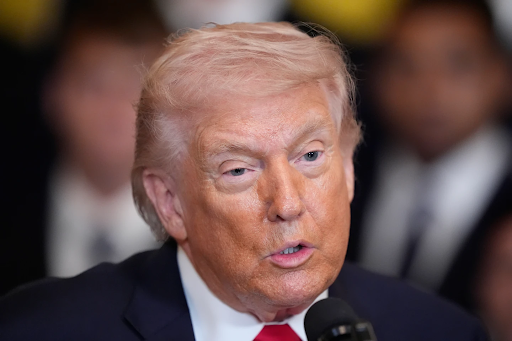
President Trump struck a sharper tone while traveling aboard Air Force One.
He insisted the United States is “in charge” of Venezuela for now.
Trump said Washington would “run it and fix it” until stability returns.
He did not outline a governance structure or timeline.
He also questioned opposition leader María Corina Machado’s ability to lead.
Trump said she lacks sufficient support and respect.
His remarks triggered concern among Democrats and parts of his Republican base.
Many fear echoes of past US-led interventions.
Interim Leader Signals Shift in Tone
Venezuela’s interim president, Delcy Rodríguez, adopted a noticeably softer stance Sunday.
She invited the US to cooperate under international law.
Rodríguez called for respectful relations and shared development goals.
Her message contrasted sharply with earlier defiant statements.
Just days earlier, she labeled the US operation an atrocity.
She demanded Maduro’s release and condemned armed aggression.
Trump had warned Rodríguez of severe consequences if she resisted US demands.
Later, he said she was now “cooperating.”
Military Action and Regional Fallout
Maduro was seized during a late-night operation in Caracas.
US forces extracted him and his wife from a military base.
The couple faces US charges tied to narco-terrorism conspiracy.
Maduro is scheduled to appear in federal court in Manhattan Monday.
Cuba reported that 32 of its security officers died during the operation.
Trump acknowledged Cuban casualties but said no Americans were killed.
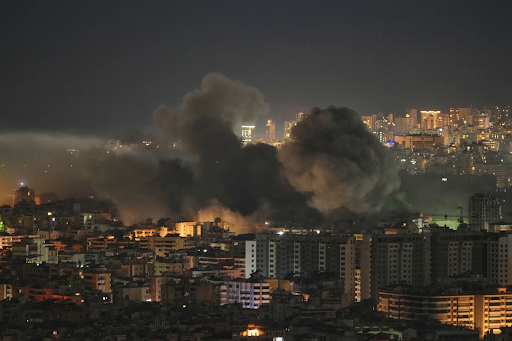
Explosions and aircraft activity rattled military sites and ports.
Smoke rose over Caracas and La Guaira, alarming residents.
Legal and Political Questions Grow
Legal experts questioned the operation’s legality under international law.
The action occurred without congressional authorization.
Scholars also raised concerns over previous US strikes on suspected drug vessels.
Some argue those actions stretched legal boundaries.
The Justice Department renewed indictments against Maduro and his wife.
Prosecutors allege Venezuela operated as a narco-trafficking state.
The US continues to reject Maduro’s legitimacy as president.
Quiet Streets, Uncertain Future
Despite the upheaval, Venezuela’s government machinery kept running.
Ministers stayed in office over the weekend.
Caracas appeared unusually quiet on Sunday.
Businesses, gas stations, and shops remained closed.
Maduro’s son has not appeared publicly since the operation.
He previously denounced his father’s capture online.
The National Assembly is set to convene soon.
The ruling party will retain legislative control.
As the oil embargo tightens, Venezuela’s next chapter remains uncertain