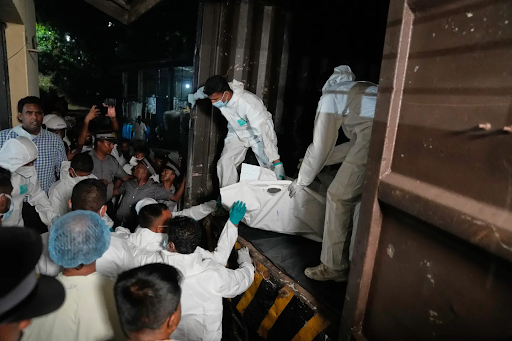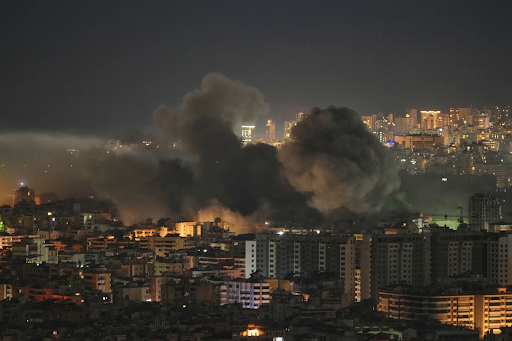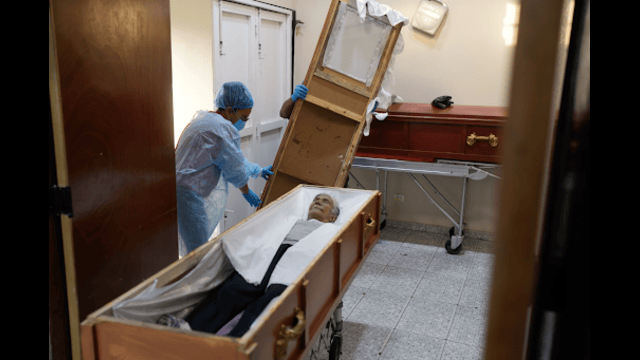
Funeral workers prepare the body of Rosa Elena Gonzalez, 80, who died after her apartment was hit during a U.S. strike to capture President Nicolas Maduro, in Catia La Mar, Venezuela, Sunday, Jan. 4, 2026.
The Venezuelan government moved quickly to project stability and independence after the dramatic arrest of Nicolás Maduro.
Officials stressed that Venezuela is functioning without foreign control, despite mounting pressure from the United States.
The weekend operation shocked the nation and reshaped its political landscape overnight.
Venezuelan Government Projects Authority After Power Shift
Lawmakers aligned with the ruling party gathered in Caracas for a scheduled National Assembly swearing-in.
The new legislative term will run until 2031.
The event was designed to signal continuity amid political upheaval.
Delcy Rodríguez, Maduro’s former vice president, was sworn in as interim president.
She took the oath administered by her brother, Jorge Rodríguez, who retained his post as Assembly speaker.
Rodríguez acknowledged public pain while condemning what she described as foreign military aggression.
She raised her right hand and promised to defend national sovereignty.
Her message focused on unity and institutional order.
Maduro Arrest Sparks Strong Reaction in National Assembly
Speeches inside the Assembly centered on Maduro’s capture by U.S. forces.
Lawmakers framed the arrest as a dangerous global precedent.
Nicolás Maduro Guerra, the former leader’s son, made his first public appearance since the arrest.
He warned that abducting a head of state threatens international stability.
He argued that Venezuela today could be any nation tomorrow.
Maduro Guerra demanded his father’s return to Venezuela.
He also called for global solidarity against foreign intervention.
He rejected allegations naming him as a co-conspirator in the U.S. indictment.
Maduro Pleads Not Guilty in US Court
As lawmakers convened, Maduro appeared in a New York courtroom.
He faced narco-terrorism and drug trafficking charges.
Maduro pleaded not guilty and declared himself innocent.
U.S. authorities captured Maduro and Cilia Flores during a military operation Saturday.
They were detained at their residence on a military base.
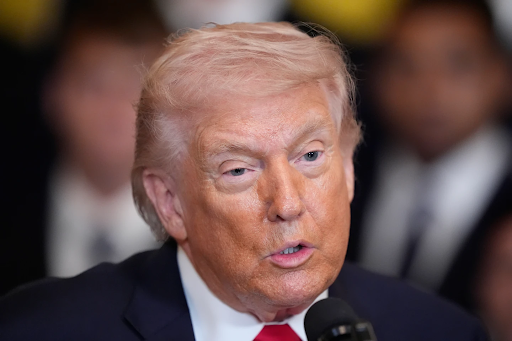
President Donald Trump said the United States would temporarily “run” Venezuela.
However, Secretary of State Marco Rubio later softened that message.
He said Washington would not manage daily governance.
Rubio emphasized enforcement of an existing oil quarantine instead.
Oil Pressure and Shifting US-Venezuela Tone
Rubio described oil sanctions as leverage for policy reforms.
He said changes were expected in oil management and drug enforcement.
The comments highlighted Washington’s economic pressure strategy.
Rodríguez later adopted a more conciliatory tone.
She said Venezuela seeks respectful relations with the United States.
Her remarks marked a shift from earlier defiance.
She invited cooperation based on international law and shared development.
The statement followed Trump’s warning of serious consequences if demands were ignored.
Legal Uncertainty Around Interim Presidency
Venezuela’s Supreme Court appointed Rodríguez as interim president.
The constitution requires elections within 30 days if a president is permanently unavailable.
The court ruled Maduro’s absence was temporary.
Under this interpretation, the vice president may govern for 90 days.
That period can extend to six months with legislative approval.
The court did not clarify any final deadline.
This omission fueled speculation about prolonged rule.
Rodríguez also has strong backing from the military.
The armed forces remain key power brokers in Venezuela.
Calls for Maduro’s Return and Diplomatic Signals
Before the oath, lawmaker Grecia Colmenares pledged loyalty to Maduro.
She vowed to work for his return alongside Cilia Flores.
Her speech echoed emotional appeals heard across the chamber.
Meanwhile, Washington signaled possible diplomatic changes.
A State Department official confirmed early planning to reopen the U.S. embassy.
Preparations are underway if Trump approves diplomats’ return to Caracas.
For now, the Venezuelan government continues asserting independence from US control.
Its message is clear, despite uncertainty at home and abroad.