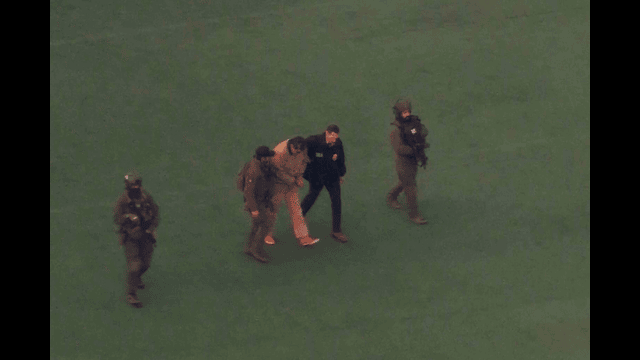
This image taken from video shows Venezuelan President Nicolas Maduro being escorted to board a helicopter for transport to Manhattan Federal Court, Monday, Jan. 5, 2026, in New York
Nicolás Maduro stood before a federal judge in Manhattan and rejected every accusation against him.
The Venezuelan leader described himself as a kidnapped president, not a criminal defendant.
His court appearance followed a dramatic U.S. military operation in Caracas.
Maduro, 63, pleaded not guilty to sweeping drug trafficking charges.
He insisted he remains Venezuela’s constitutional president.
U.S. prosecutors, however, presented him as the centerpiece of a massive narcotics conspiracy.
“I Was Captured,” Maduro Tells the Court
Speaking through an interpreter, Maduro said he was forcibly taken from his home.
“I was captured,” he told the court, before the judge interrupted him.
Later, when asked to enter a plea, Maduro was firm.
“I am innocent. I am not guilty,” he said.
U.S. District Judge Alvin Hellerstein limited his remarks.
The judge said legal arguments would come later.
He first confirmed the defendant’s identity.
Maduro acknowledged his full name for the record.
High-Security Arraignment in Manhattan
Maduro arrived under heavy security early Monday.
Authorities flew him by helicopter from Brooklyn to Manhattan.
An armored vehicle then transported him to the courthouse.
Maduro and his wife, Cilia Flores, entered the courtroom in shackles.
Both wore jail-issued clothing and translation headsets.
Flores also pleaded not guilty to the charges.
As Maduro exited, a man in the gallery shouted accusations at him.
The moment highlighted the deep divisions surrounding his rule.
A Historic Prosecution With Global Stakes
The case marks one of the rare prosecutions of a foreign leader in U.S. history.
Maduro will receive standard criminal rights, including a jury trial.
Yet the geopolitical implications make the case extraordinary.
Maduro repeatedly claimed unlawful abduction by U.S. forces.
His lawyer, Barry Pollack, said the arrest violated international law.
Pollack argued Maduro deserves head-of-state immunity.
The U.S. government rejects that claim.
Washington does not recognize Maduro as Venezuela’s legitimate president.
His disputed 2024 reelection weakened his international standing.
Drug Trafficking Charges and Severe Allegations
A 25-page indictment outlines extensive drug trafficking charges.
Prosecutors accuse Maduro of collaborating with powerful drug cartels.
They allege he helped move thousands of tons of cocaine into the U.S.
The indictment also includes violent accusations.
It claims Maduro ordered kidnappings, beatings, and murders.
Prosecutors say these acts protected his trafficking network.
If convicted, Maduro and Flores could face life imprisonment.
Injuries, Protests, and Courtroom Tension
Flores appeared in court with visible head bandages.
Her lawyer said she suffered significant injuries during her capture.
Outside the courthouse, protesters gathered on both sides.
Some demanded Maduro’s release.
Others supported U.S. intervention in Venezuela.
Inside, a former Venezuelan prisoner confronted Maduro verbally.
As marshals escorted him away, Maduro responded sharply.
“I am a kidnapped president. I am a prisoner of war,” he said.
U.S. Policy and Venezuela’s Political Shift
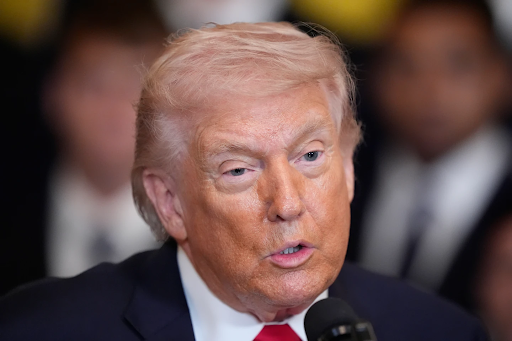
President Donald Trump defended the operation publicly.
He said the U.S. would temporarily “run” Venezuela.
Trump argued the move would stabilize the country.
Secretary of State Marco Rubio took a softer tone.
He said the U.S. would not manage daily governance.
Rubio emphasized enforcing existing oil restrictions instead.
Oil, Power, and International Alarm
Trump suggested Maduro’s removal could boost oil exports.
Markets reacted cautiously, with oil prices rising modestly.
Experts cite years of neglect in Venezuela’s energy sector.
Venezuela’s interim leader, Delcy Rodríguez, demanded Maduro’s return.
She later signaled openness to dialogue with Washington.
Rodríguez was sworn in by her brother, Assembly leader Jorge Rodríguez.
Maduro’s son warned of dangerous global consequences.
He said abducting leaders threatens international stability.
The United Nations Security Council met in emergency session.
U.N. officials warned the U.S. action may breach international law.
They also highlighted Venezuela’s ongoing humanitarian crisis.