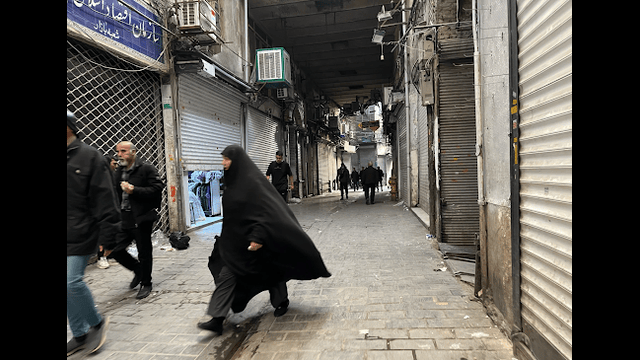
People walk as shops closed during protests in Tehran’s centuries-old main bazaar, Iran, Tuesday, Jan 6, 2026.
Iran is facing fresh protests at home.
Yet public attention has shifted far beyond its borders.
The trigger is the U.S. military raid in Venezuela.
Over the weekend, U.S. forces seized Venezuelan President Nicolás Maduro.
Maduro is a long-time ally of Tehran.
His detention sent shockwaves through Iran’s political and public discourse.
Iranian state media reacted instantly.
Headlines condemned Washington’s action.
Officials framed it as an attack on sovereignty.
On the streets, the reaction felt different.
People asked quieter, unsettling questions.
Could Iran be next?
Growing Fear Inside Iran
The U.S. action in Venezuela revived deep fears in Iran.
Many now wonder if a similar mission could target Tehran’s leadership.
The concern extends to Supreme Leader Ayatollah Ali Khamenei.
Khamenei is 86 years old.
He remains the ultimate authority in Iran.
Reports suggest he has gone into hiding for protection.
These fears are not emerging in isolation.
They follow last year’s intense 12-day war with Israel.
That conflict left deep scars on Iran’s security establishment.
Israel killed senior military commanders and nuclear scientists.
The U.S. later bombed Iranian nuclear enrichment sites.
Trust in deterrence has eroded since then.
Israel Looms Large
Many Iranians believe Israel could strike again.
They see Washington as a silent partner.
The Venezuela raid reinforced that perception.
“God bless our leader, we should be careful too,” said Saeed Seyyedi, a Tehran teacher.
He fears the U.S. could act against Iran directly.
Oil, Israel, and global conflicts fuel his concerns.
He also cited regional tensions.
These include Hezbollah and drug trafficking accusations.
Washington has long accused Hezbollah of funding itself through smuggling.
The group has denied those claims repeatedly.
Alarming Claims on State Media
Iranian state television escalated the anxiety.
An analyst claimed the U.S. and Israel planned kidnappings during last year’s war.
No evidence was presented.
Such claims are unusual, even by Iranian media standards.
The timing raised eyebrows across Tehran.
On Sunday night, warnings became more personal.
Ayatollah Mohammad Ali Javedan spoke during prayers at Tehran University.
He claimed Khamenei’s life could be in danger.
“Please pray,” he urged worshippers.
The statement spread quickly across social media.
Why Iran Is Different
Despite fears, analysts stress key differences.
Iran is far larger than Venezuela.
Its military and security apparatus is far stronger.
History also weighs heavily on Washington.
Operation Eagle Claw still haunts U.S. planners.
That 1980 mission failed to rescue American hostages in Tehran.
Iran’s internal politics add another layer.
Hard-liners dominate the Revolutionary Guard.
They answer directly to Khamenei.
Any foreign raid could spark retaliation.
Experts warn of assassinations and cyberattacks.
Shipping routes in the Middle East could also be targeted.
Most importantly, Iran still holds fissile nuclear material.
That reality raises the stakes dramatically.
Calculating the Costs
Farzin Nadimi of the Washington Institute offered a blunt assessment.
Iran is not Venezuela, he said.
The political and military costs would be immense.
Any decision would require long-term planning.
The “day after” could be far more dangerous.
Global Reactions Intensify
The Venezuela raid triggered reactions worldwide.
Israeli opposition leader Yair Lapid issued a warning to Tehran.
He urged Iran’s leaders to watch events closely.
Prime Minister Benjamin Netanyahu struck a different tone.
He highlighted protests inside Iran.
He suggested Iranians may be reclaiming their future.
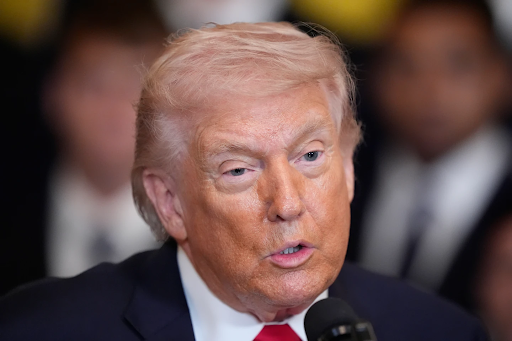
Former U.S. President Donald Trump added fuel.
He warned Iran against killing peaceful protesters.
He promised U.S. intervention if violence escalated.
Iran’s Foreign Ministry rejected those remarks.
It called them incitement to violence and terrorism.
A Dangerous Precedent
Some U.S. politicians openly linked Venezuela to Iran.
Representative Marjorie Taylor Greene made the connection explicit.
She warned of future regime-change wars.
Senator Lindsey Graham went further.
He appeared wearing a “Make Iran Great Again” hat.
The image spread rapidly online.
Even Saudi Arabia weighed in indirectly.
A leading Saudi editor called Maduro’s seizure a brutal message.
He suggested Iran’s leadership felt its impact deeply.
For Iran, the Venezuela raid changed the conversation.
Protests continue at home.
But fear now shapes the national mood.