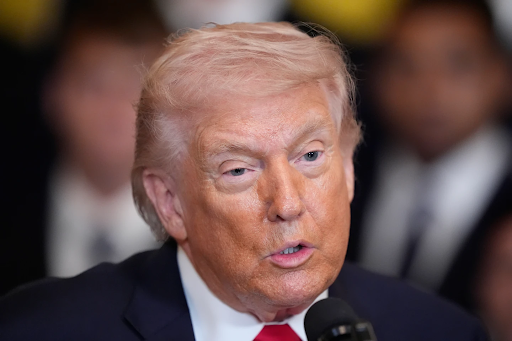
Mexican President Claudia Sheinbaum presents a new security strategy against violence for Michoacan state, at the National Palace, in Mexico City, Nov. 9, 2025.
Mexico’s homicide rate showed a notable decline in 2025, according to government officials.
Authorities presented the drop as proof that a revamped security strategy is delivering results.
However, independent analysts urged caution, warning that the full picture of violence remains unclear.
Speaking at her daily news briefing, President Claudia Sheinbaum highlighted the improved Mexico homicide rate.
Officials said the country recorded 17.5 murders per 100,000 people in 2025.
That figure marks the lowest level since 2016.
Numbers Show a Significant Drop
The current Mexico homicide rate contrasts sharply with earlier years.
In 2018, the rate stood at 29 killings per 100,000 residents.
That year marked the deadliest point in two decades.
Sheinbaum said homicides fell by 40 percent between September 2024 and December 2025.
She took office in October 2024.
According to her office, the decline equals 34 fewer murders every day.
Sheinbaum called the progress historic.
She stressed that the Mexico homicide rate is now at its lowest in nearly ten years.
Strategy Shift Under New Leadership
The president credited improved coordination for the decline.
She pointed to closer work between security forces and prosecutors.
State governors and justice institutions were also included.
After assuming office, Sheinbaum adjusted Mexico’s security policy.
She moved away from the previous “hugs, not bullets” approach.
That strategy was championed by former President Andrés Manuel López Obrador.
The new focus emphasizes intelligence gathering.
Interagency cooperation now plays a central role.
The shift also came amid pressure from the United States.
Data Gaps Raise Questions
Despite official optimism, key data remains unavailable.
Mexico’s public security secretariat has not released full 2025 homicide figures.
The national statistics agency has also not published its annual report yet.
That agency relies on death certificates.
Its data is often viewed as more reliable.
However, it usually comes with a long delay.
Analysts say these gaps complicate assessments of the Mexico homicide rate.
Experts Urge Caution
Lisa Sánchez, director of Mexico United Against Crime, acknowledged the decline.
Still, she warned against drawing firm conclusions.
She said the methods used to compile figures remain unclear.
Sánchez also pointed to a troubling trend.
The number of missing persons continues to rise.
Official records now list more than 133,000 missing people.
Clandestine graves are still being discovered across the country.
Some deaths may never enter homicide statistics.
Possible Undercounting of Violence
According to Sánchez, some killings may be misclassified.
Others may be recorded as accidents instead of homicides.
Some missing individuals may later be found dead.
These factors could distort the Mexico homicide rate.
They may create an overly positive impression of security gains.
Alternative Explanations Emerge
Security analyst David Saucedo offered another perspective.
He said violence may be declining in certain regions for different reasons.
Criminal groups may have consolidated control.
When rivals are eliminated, open conflict often decreases.
This can temporarily lower murder figures.
However, it does not necessarily mean peace.
Violence Persists in Key States
Despite the reported drop, organized crime remains active.
Several states continue to experience severe violence.
These include Sinaloa, Michoacán, Jalisco, and Guanajuato.
Multiple drug cartels operate in these regions.
Armed clashes and criminal activity persist.
A Cautious Outlook
The falling Mexico homicide rate offers cautious hope.
Yet experts agree the trend needs long-term verification.
Complete data will be crucial for accurate conclusions.
For now, the decline is promising.
But Mexico’s security challenge is far from resolved.