NATO Secretary General Mark Rutte, center, is welcomed by Croatian Prime Minister Andrej Plenkovic, in Zagreb, Croatia, Monday, Jan. 12, 2026.
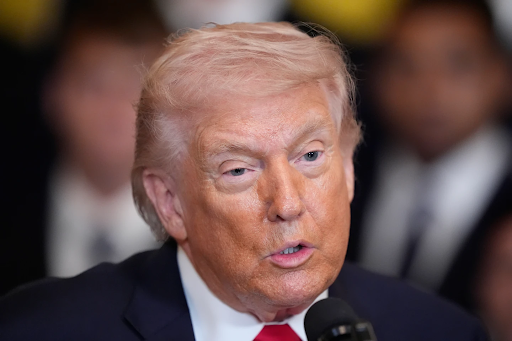
President Donald Trump’s renewed threat to seize Greenland has sent shockwaves through NATO.
The comments have strained relations with U.S. allies and raised serious questions about the alliance’s future.
Trump has openly said the United States will get Greenland “one way or the other.”
The White House has not ruled out the use of force.
Such a move would challenge the very foundations of NATO’s collective security system.
Greenland is not just another island.
It is a semi-autonomous territory within the Danish realm.
Denmark is a NATO member and a long-standing U.S. ally.
Any attempt to annex Greenland would be unprecedented within the alliance.
Danish Prime Minister Mette Frederiksen issued a blunt warning.
She said a military attack on a NATO ally would end cooperation, including NATO itself.
Her remarks highlight how high the stakes have become.
NATO’s origins and core mission
NATO was created in 1949 by 12 countries.
Its goal was to deter the Soviet Union during the Cold War.
The alliance relied heavily on U.S. troops and nuclear deterrence in Europe.
Over time, NATO expanded eastward.
It now has 32 members after Sweden joined in 2024.
The expansion was driven by growing concerns over Russia’s aggression.
Today, NATO officially sees Russia and international terrorism as its main threats.
The alliance is open to European nations that meet its standards.
Every decision, however, must be unanimous.
That consensus rule gives every member a veto.
It also explains why NATO often moves slowly during crises.
The United States has used this power, including blocking Ukraine’s membership bid.
Article 5 and collective defense
At the heart of NATO is Article 5.
It states that an attack on one ally is an attack on all.
This principle underpins NATO’s credibility and deterrence.
Article 5 is a political commitment, not a legal contract.
No court can enforce it.
Its power lies in shared belief and trust.
It has only been invoked once.
That was after the September 11 attacks in 2001.
NATO rallied behind the United States at that time.
Trump has said he supports Article 5.
Yet he has repeatedly questioned defending allies with low defense spending.
The Greenland threat takes that skepticism much further.
Why Greenland creates a NATO dilemma
Article 5 is designed for external threats.
It does not cover conflicts between NATO members.
A U.S.-Denmark clash would fall outside its scope.
There would be no consensus to trigger collective defense.
NATO has no clear mechanism to handle internal military conflict.
This exposes a serious structural weakness.
Denmark could invoke Article 4.
That provision allows consultations when sovereignty feels threatened.
However, Article 4 does not mandate action.
A U.S. attack would almost certainly divide NATO.
A similar split occurred during the 2003 Iraq war.
Allies backed different sides, weakening unity.
It remains unclear which nations would support Washington over Greenland.
The uncertainty alone damages NATO’s cohesion.
The United States and NATO leadership
The United States dominates NATO militarily.
It spends more on defense than all other allies combined.
Its military capabilities far exceed those of any partner.
Without U.S. leadership, NATO becomes significantly weaker.
Few allies could challenge American power directly.
A military confrontation would be unthinkable.
NATO’s civilian headquarters is based in Brussels.
It is led by former Dutch Prime Minister Mark Rutte.
He chairs key meetings and works to build consensus.
One of Rutte’s main roles is keeping the United States engaged.
He has avoided criticizing Trump publicly.
He also downplayed tensions over Greenland.
Rutte stressed the strategic importance of the Arctic.
He pointed to rising Russian and Chinese activity.
He denied that NATO is in crisis.
A fragile moment for NATO
Greenland has become more than a territorial issue.
It is a stress test for NATO’s unity and credibility.
The alliance was built to deter outside threats, not manage internal ones.
If trust between allies erodes, deterrence weakens.
NATO’s strength has always rested on shared commitment.
The Greenland dispute now puts that principle at risk.