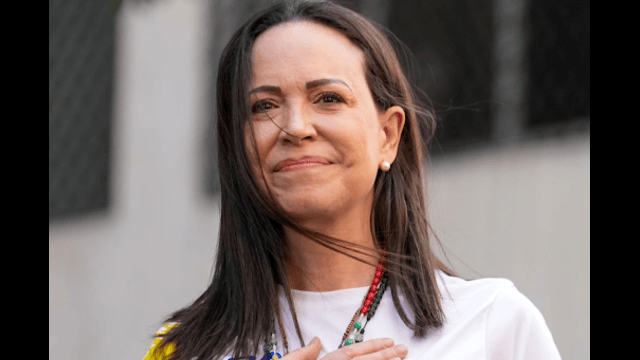
Opposition leader Maria Corina Machado gestures to supporters during a protest against President Nicolas Maduro the day before his inauguration for a third term, in Caracas, Venezuela, Thursday, Jan. 9, 2025.
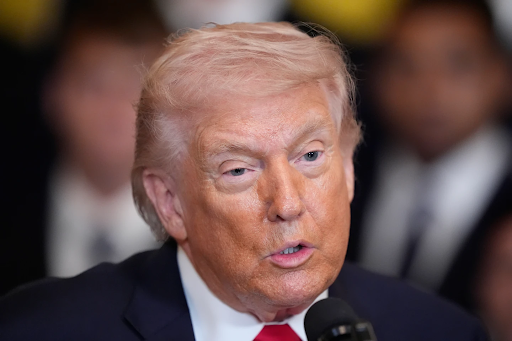
President Donald Trump is set to meet Venezuelan opposition leader María Corina Machado at the White House on Thursday.
The meeting comes at a volatile moment in Venezuela’s political transition after the dramatic removal of Nicolás Maduro.
Less than two weeks ago, U.S. forces captured Maduro and his wife in Caracas.
They were flown to New York to face drug trafficking charges.
The operation shocked Latin America and reshaped Washington’s Venezuela policy overnight.
Machado leads the opposition movement that many observers say won Venezuela’s disputed 2024 election.
Maduro’s government rejected the results and declared victory.
That decision triggered protests and a harsh security crackdown.
Trump’s decision to host Machado follows earlier remarks that cast doubt on her leadership credentials.
“She’s a very nice woman,” Trump told Reuters.
“We’re just going to talk basics.”
Trump Signals Shift in Venezuela Strategy
The White House meeting comes as Trump signals openness toward Venezuela’s interim power structure.
That structure is led by acting President Delcy Rodríguez.
She previously served as Maduro’s vice president.
Trump and his advisers have indicated they can work with Rodríguez for now.
She remains in charge of daily government operations.
Several figures from Maduro’s inner circle also remain in office.
Rodríguez has softened her tone toward Washington in recent weeks.
She has expressed willingness to cooperate with Trump’s “America First” approach in the region.
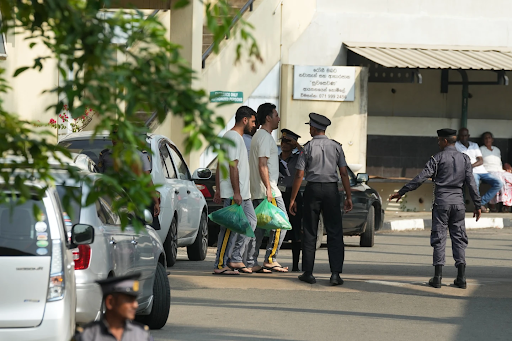
Her government has begun releasing detainees held under Maduro.
Several American prisoners were freed this week.
Officials say the releases followed direct engagement with the Trump administration.
Trump and Rodríguez Hold Direct Talks
Trump confirmed he spoke with Rodríguez earlier this week.
It was their first conversation since Maduro’s ouster.
He described the exchange as productive.
“We had a long call,” Trump told reporters.
“We discussed a lot of things.”
He added that relations with Venezuela were improving.
The endorsement of Rodríguez has sidelined Machado politically.
For years, she was the most visible face of Venezuelan resistance.
She had worked to build ties with Trump-aligned Republicans.
Machado Navigates a Delicate Relationship
Machado had cultivated relationships with figures like Secretary of State Marco Rubio.
She positioned herself as a natural ally of the U.S. right.
The strategy now appears uncertain.
Hours after Maduro’s capture, Trump questioned her domestic support.
He said she lacked respect within Venezuela.
Those comments stunned opposition supporters.
Machado has avoided publicly challenging Trump since then.
She praised him after winning the Nobel Peace Prize last year.
She even offered to share the award with him.
The Nobel Institute rejected that proposal.
Trump had previously expressed interest in the prize himself.
Life in Hiding and a Long Political Fight
Machado’s location has been mostly unknown for over a year.
She went into hiding after a brief detention in Caracas.
Security forces targeted opposition leaders during protests.
She resurfaced briefly in Oslo in December.
Her daughter accepted the Nobel Peace Prize on her behalf.
It was one of her few public appearances.
An industrial engineer by training, Machado entered politics in 2004.
She co-founded Súmate, a civil group pushing democratic reforms.
The organization backed a failed recall referendum against Hugo Chávez.
Authorities later charged Súmate leaders with conspiracy.
Machado remained defiant and politically active.
A Symbol of Defiance Against Chavismo
In 2005, Machado angered Chávez by meeting President George W. Bush.
A photo from the Oval Office became iconic in Venezuela.
Chávez viewed Bush as a sworn enemy.
Nearly two decades later, Machado mobilized millions against Maduro.
The 2024 election became a turning point.
International observers cited credible evidence of opposition victory.
Despite that, Maduro claimed another term.
Protests erupted nationwide.
Security forces responded with mass arrests and force.
As Trump meets Machado, Venezuela’s future remains uncertain.
The meeting underscores shifting alliances in Washington.
It also highlights unresolved questions about democracy after Maduro.