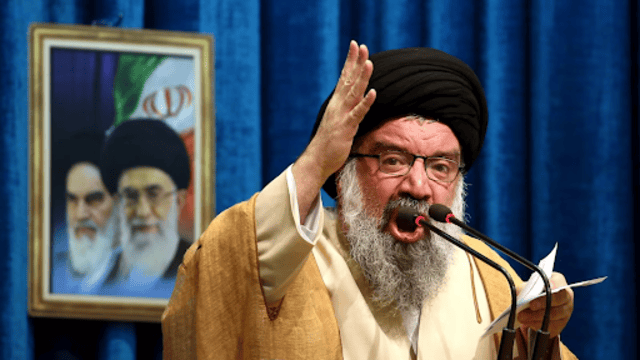
Iranian senior cleric Ahmad Khatami delivers his sermon during Friday prayer ceremony in Tehran, Iran, Friday, Jan. 5, 2018. (AP Photo)
Iran appeared to slip into an uneasy calm on Friday after days of violent unrest, even as a senior hard-line cleric called for the execution of detained protesters and issued a direct warning to U.S. President Donald Trump. The sharp rhetoric underscored the anger within Iran’s ruling establishment following one of the deadliest crackdowns in the country’s recent history.
Streets in Tehran showed no visible signs of fresh demonstrations. Shops reopened, traffic resumed, and daily life appeared to return to the surface-level normality seen before protests erupted late last month. A nationwide internet blackout, however, remained largely in place, limiting communication with the outside world.
Trump Strikes a Softer Tone
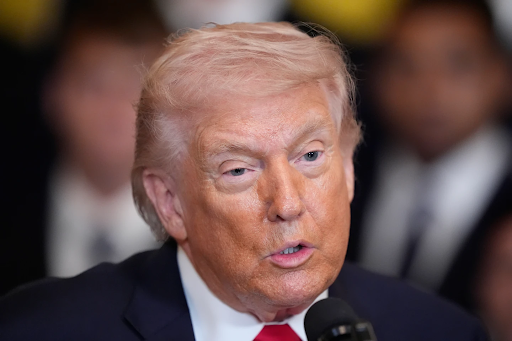
While Iranian officials delivered some of their harshest threats yet, Trump adopted a notably restrained posture. Speaking to reporters in Washington, he thanked Iran’s leadership for not carrying out executions against hundreds of detained demonstrators.
“Iran canceled the hanging of over 800 people,” Trump said, adding that he respected the decision. He did not clarify how the information was confirmed or whom he contacted in Tehran.
Executions and the killing of peaceful protesters have been cited by Trump as red lines for potential U.S. action. His comments suggested a possible step back from military escalation, despite mounting pressure from Iranian hard-liners.
Protests Appear Smothered
The demonstrations began on December 28 over economic hardship and rising prices. They soon evolved into direct challenges to Iran’s theocratic leadership. Security forces responded with overwhelming force.
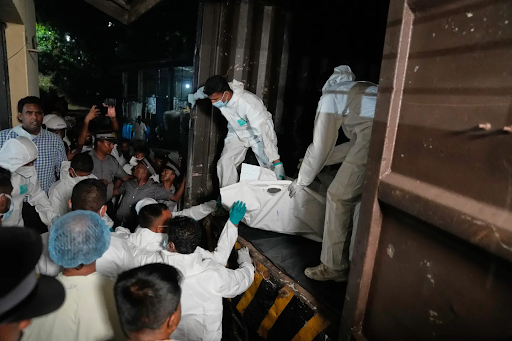
According to the U.S.-based Human Rights Activists News Agency, at least 3,090 people have been killed so far. The group, which relies on a network of sources inside Iran, said the toll continues to rise. Iranian authorities have not released official casualty figures, and the numbers could not be independently verified.
The scale of the violence has few modern parallels in Iran, evoking memories of the turmoil surrounding the 1979 Islamic Revolution.
A street vendor adjusts clothes for sale in downtown Tehran, Iran, Friday, Jan. 16, 2026. (AP Photo)
Hard-Line Cleric Fuels Anger
Against this backdrop, Ayatollah Ahmad Khatami delivered a fiery sermon broadcast on state radio. The senior cleric called for the death penalty for what he described as “armed hypocrites,” prompting chants from worshippers demanding executions.
Khatami accused protesters of acting as agents of Israel and the United States, labeling them “soldiers” of Israeli Prime Minister Benjamin Netanyahu and President Trump. He warned both leaders to expect “hard revenge” from Iran’s system.
“Americans and Zionists should not expect peace,” he declared.
Diplomatic Efforts Behind the Scenes
As tensions flared publicly, quiet diplomatic efforts continued. Russian President Vladimir Putin held separate calls with Iranian President Masoud Pezeshkian and Netanyahu, according to the Kremlin.
Russia, a close ally of Tehran, had previously stayed largely silent on the unrest. Moscow has recently faced setbacks across the region, including shifts in Syria, U.S. and Israeli strikes on Iran, and growing instability tied to the war in Ukraine.
Exiled Royal Urges Protests to Resume
Iran’s exiled Crown Prince Reza Pahlavi renewed his call for continued resistance. Speaking in Washington, he urged the U.S. to follow through on earlier pledges of support for protesters.
“I believe the president is a man of his word,” Pahlavi said, adding that Iranians had no choice but to continue their struggle. He vowed to return to Iran and later called for fresh demonstrations from Saturday through Monday.
Despite backing from monarchist groups abroad, Pahlavi has struggled to gain broad support inside Iran. Still, he continues to present himself as a potential transitional leader should the government collapse.
Damage and Spillover Effects
Iranian authorities released their first official estimates of damage from the unrest. Khatami claimed hundreds of mosques, prayer halls, hospitals, ambulances, and emergency vehicles were damaged, along with homes of senior religious figures.
Outside Iran, anger has not subsided. Thousands of exiled Iranians and supporters have staged protests across Europe.
With the internet still restricted, some Iranians crossed borders simply to communicate. At a crossing in eastern Turkey, travelers said they were temporarily leaving Iran to bypass the blackout.
Others fled the violence altogether. A Turkish businessman returning home described hearing heavy machine-gun fire while sheltering in Tehran.
In a sign of widening instability, a Kurdish separatist group based in Iraq said it carried out attacks on Iran’s Revolutionary Guard in retaliation for the crackdown.
For now, Iran’s streets remain quiet. But the sharp rhetoric, unresolved deaths, and regional tensions suggest the calm may prove fragile.