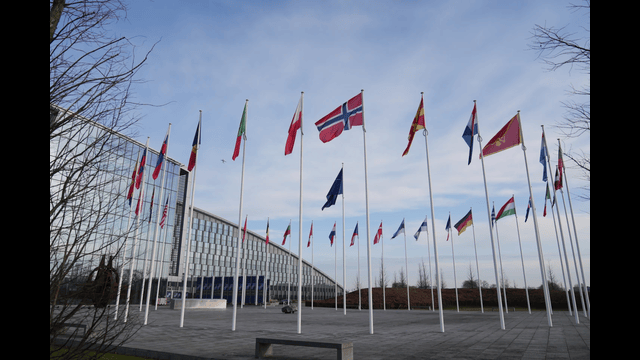
Flags flap in the wind outside NATO headquarters.
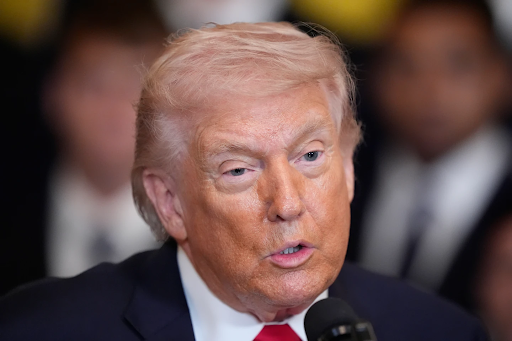
Faith in the trans-Atlantic alliance is weakening one year into Trump 2.0.
European leaders now openly question America’s reliability as a security partner.
Harsh words dominate European capitals after U.S. President Donald Trump threatened tariffs.
The warning targets nations opposing American control of Greenland.
EU leaders describe the move as intimidation, coercion, and political blackmail.
The rhetoric marks a sharp shift since Trump returned to office.
For Europe, the shock runs deeper than trade disputes.
It reflects fear that NATO’s strongest member could pressure an ally’s sovereignty.
Many European officials now see trade retaliation as inevitable.
Some believe the damage to trust may already be irreversible.
Trump 2.0 strains the NATO foundation
Trump’s first term unsettled NATO allies.
His second term has revived those anxieties with greater intensity.
Former NATO Secretary-General Jens Stoltenberg once feared the alliance could collapse.
He recalled Trump threatening to leave a 2018 NATO summit.
Those memories now feel uncomfortably relevant across Europe.
Denmark’s Prime Minister Mette Frederiksen delivered a stark warning.
Any U.S. attempt to annex Greenland would freeze all cooperation.
That freeze, she said, would include NATO itself.
Analysts describe the moment as a political and military crisis.
Some quietly believe America has already stepped back from NATO commitments.
Ukraine war exposes widening trans-Atlantic gaps
In early 2025, Europe waited anxiously for Trump’s Ukraine strategy.
The war was nearing its fourth year.
European leaders feared a Russian victory would threaten their own borders.
Those fears deepened as U.S. support slowed.
Military aid and funding from Washington began drying up.
Europe was told to fill the gap and fund American involvement.
In February, U.S. Defense Secretary Pete Hegseth addressed NATO allies bluntly.
He said Europe must manage its own security challenges.
America, he argued, had priorities elsewhere.
Ukraine’s NATO membership was ruled out.
Territory seized by Russia would not be reclaimed.
Any European force entering Ukraine would lack U.S. protection.
Trump later blamed Ukrainian President Volodymyr Zelenskyy for the invasion.
That stance further strained relations despite diplomatic outreach efforts.
Political signals deepen European unease
The tension extended beyond military policy.
Vice President JD Vance stirred controversy during a Munich visit.
He met leaders of a far-right German party during election campaigning.
Vance claimed Europe’s main threats were internal, not Russian aggression.
He warned that free speech was declining across the continent.
After winning the election, Chancellor Friedrich Merz responded firmly.
He called for urgent and massive defense investments.
Europe, he said, must act quickly amid rising threats.
Europe accelerates security independence under Trump 2.0
European leaders spent months courting Trump in Washington.
They hoped to preserve U.S. engagement.
A proposed 28-point peace plan favored several Russian demands.
The plan was revised.
Talks continue without Russian President Vladimir Putin.
Few expect meaningful progress under current conditions.
Meanwhile, Trump’s global tariff war disrupted allied economies.
Europe responded by strengthening its own defense structures.
The EU launched a multibillion-euro defense fund.
The goal is to buy arms from European manufacturers.
Reducing dependence on U.S. suppliers is now a priority.
Fiscal rules were relaxed to allow higher defense spending.
Funds flowed into Ukraine’s defense industry.
In December, Europe pledged to cover most of Kyiv’s needs for two years.
A new strategic divide
A new U.S. national security strategy further alarmed Europe.
It portrays allies as weak and politically divided.
It also criticizes European migration and free speech policies.
European Council President Antonio Costa warned against U.S. interference.
Merz said the document proves Europe must become more independent.
The European Commission has begun drafting its own security strategy.
It aims to respond to shifting global power dynamics.
Autonomy sits at the heart of the plan.
Greenland becomes a symbol of resolve
Last week, European troops arrived in Greenland.
They came from France, Germany, the U.K., and Nordic allies.
Their presence was small but deeply symbolic.
French President Emmanuel Macron stressed respect for sovereignty.
He said Europe must defend allied territory.
Europe, Macron noted, is questioning long-held assumptions.
Some once-predictable allies now inspire doubt.
For now, nations targeted by Trump’s tariff threats remain united.
They defend sovereignty and territorial integrity.
They warn that tariffs risk a dangerous downward spiral in trans-Atlantic relations.