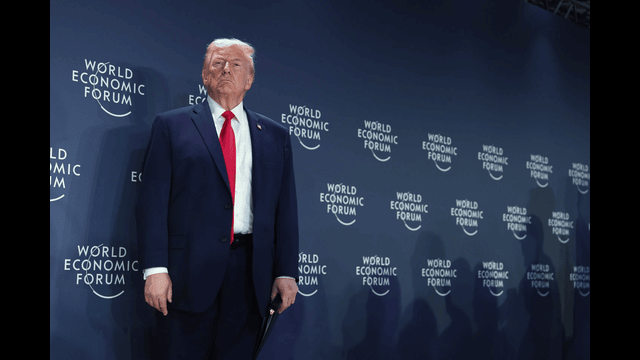
President Donald Trump stands on the stage.
Barely weeks into his presidency, Joe Biden sent a clear message to Europe.
“America is back,” he declared at the 2021 Munich Security Conference.
He promised a restored transatlantic alliance and steady US leadership.
That pledge now appears fragile.
Donald Trump’s second term has revived deep uncertainty across Europe.
His actions have reopened old wounds and created new distrust.
As a result, Trump European threats may outlast his presidency.
Trump European threats unsettle long-standing alliances
For over seven decades, US-European alliances shaped global stability.
They supported German reunification and the Soviet Union’s collapse.
Trump has openly challenged those foundations.
He has scolded European leaders and questioned shared values.
His rhetoric often resembled hostility, not partnership.
Countries were forced to rethink reliance on Washington.
The sharpest episode involved Greenland.
Trump suggested the US should take control of the Danish territory.
He dismissed it as a “piece of ice.”
The remarks alarmed NATO allies and shocked European capitals.
Denmark was labeled “ungrateful,” despite sacrifices in Afghanistan.
Trump even shared private messages from European leaders.
Images of a US flag planted in Greenland circulated online.
At Davos, Trump warned Europe was “not heading in the right direction.”
He added that “sometimes you need a dictator.”
Hours later, he floated a vague Arctic security framework.
Details never followed.
Global confidence in the US weakens
Though Trump later softened his Greenland stance, damage lingered.
America’s global standing appeared uncertain again.
NATO leaders quietly explored strategies excluding the US.
Such moves could limit future diplomatic repair efforts.
Jon Finer, Biden’s former deputy national security adviser, warned of lasting impact.
He said allies now trust the US in four-year increments.
Stability, he argued, may never fully return.
Middle powers chart independent paths
Canada moved quickly to reduce dependence on Washington.
Prime Minister Mark Carney rejected Trump’s annexation rhetoric.
In Davos, he called the rules-based global order an “illusion.”
Carney described the moment as a rupture, not a transition.
He urged middle powers to act together.
After failed tariff talks with Trump, Carney visited Beijing.
Canada struck a deal easing Chinese EV tariffs.
In return, China reduced levies on Canadian exports.
Carney later said ties with China felt more predictable.
The comment underscored growing US credibility concerns.
Meanwhile, the EU signed a trade deal with Mercosur nations.
European leaders framed it as protection against Trump European threats.
EU lawmakers have temporarily delayed ratification.
European leaders break diplomatic taboos
Before Trump’s Davos speech, criticism grew unusually blunt.
French President Emmanuel Macron warned against colonial thinking.
He cautioned of a world sliding toward rulelessness.
Belgian Prime Minister Bart De Wever went further.
He said too many red lines had been crossed.
Backing down now, he argued, would destroy dignity.
Right-wing allies also voiced alarm.
UK politician Nigel Farage called Trump’s approach a historic fracture.
He labeled Greenland threats a hostile act.
In France, Jordan Bardella urged suspending a US tariff deal.
He described Trump’s tactics as commercial blackmail.
US politics deepen allied uncertainty
Republicans in Congress mostly supported Trump or stayed quiet.
House Foreign Affairs Chairman Brian Mast defended tough diplomacy.
He compared the situation to prior US-Panama tensions.
However, dissent emerged from retiring Republicans.
Representative Don Bacon called the Greenland threat absurd.
He said the confrontation was entirely unnecessary.
Democrats pushed for firmer resistance.
California Governor Gavin Newsom mocked diplomatic outreach to Trump.
He warned Europe against appeasement.
Representative Gregory Meeks stressed long-term consequences.
He said trust requires consistent leadership across elections.
Allies, he noted, are still watching and waiting.
Trump European threats have reshaped global expectations.
Repairing that damage may take far longer than one presidency.