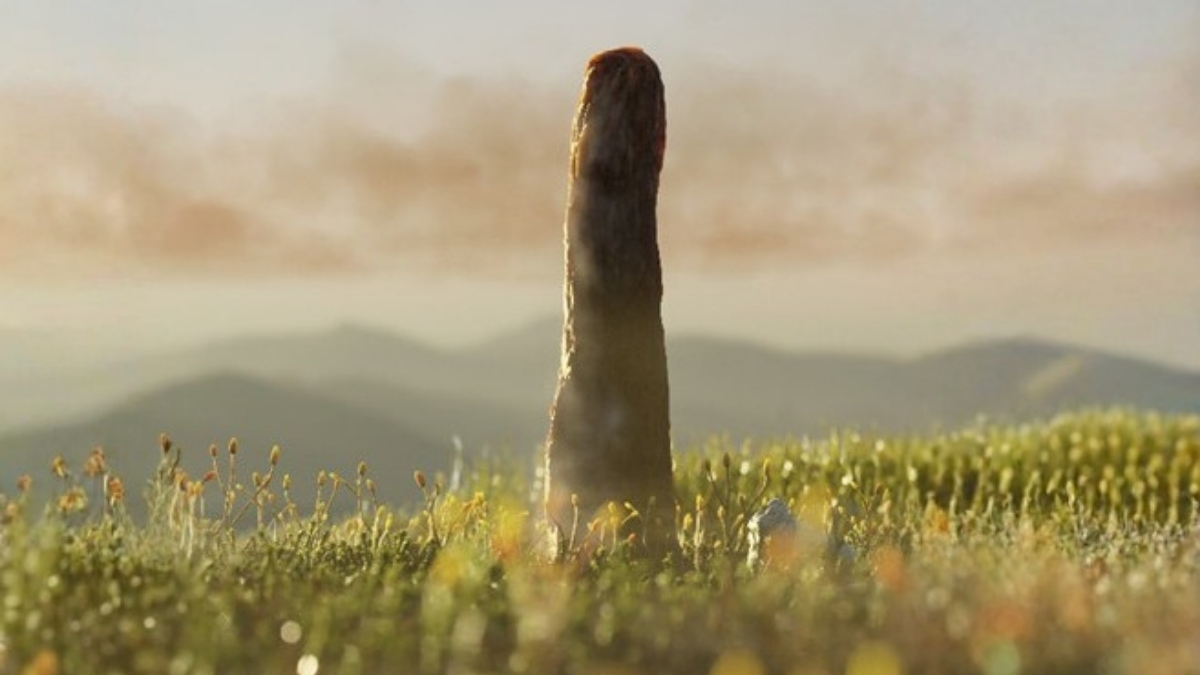
Prototaxites shows no clear similarities to any known form of life studied so far. Science.
For more than a century and a half, scientists have struggled to explain the true nature of massive fossil structures known as Prototaxites. First uncovered over 165 years ago, these towering remains have puzzled experts and sparked debate that continues today. New research now suggests these giants may not belong to any known group of life at all.
A Mystery From Earth’s Distant Past
Around 400 million years ago, during the late Silurian period, Earth looked very different. Wet landscapes supported early plants such as ferns and horsetails, creating scenes that would appear strange today. Rising above them were tall, branchless structures that reached up to eight meters high.
These enormous forms lacked leaves, branches, or clear roots. Their shape alone made classification difficult. Scientists over the years suggested they might be early trees, algae, or even a type of plant that no longer exists.
Early Clues From Canada
Some of the earliest fossils appeared along the shores of Gaspé Bay in Quebec. In the 1850s, geologist John William Dawson believed they came from decaying trees and named them accordingly. While the name remained, doubts soon followed as researchers examined the fossils more closely.
Decades later, scientists questioned whether these giants could be plants at all. Their inner structure did not match known trees or algae, leaving the mystery unresolved.
Fungus Theory Gains, Then Loses, Support
In 2001, a major shift occurred when a paleontologist concluded that Prototaxites likely belonged to an enormous ancient fungus. This idea gained further backing in 2017, when another study reported features similar to parts of modern fungi in a smaller fossil sample.
However, not all researchers agreed. Some raised concerns that the fossil pieces used in those studies may not have come from the same organism. Others noted that living fungi show no structures that truly match what appears in these fossils.
A New Conclusion Emerges
A recent study examined several fossil fragments in detail, looking closely at their inner structure and chemical makeup. Researchers compared the fossils to fungi, plants, algae, animals, and even mixed forms like lichens. One by one, they ruled each option out.
The fossils showed unique features that do not fit any known living group. The team concluded that Prototaxites likely belonged to a completely separate branch of life that vanished long ago.
A Reminder of Life’s Lost Experiments
Scientists still do not know why this group disappeared. Climate shifts, competition, or other changes may have played a role. Without living relatives to study, many questions remain unanswered.
For now, Prototaxites stands as a reminder that life on Earth once experimented with forms that never survived. These towering fossils show that evolution produced far more variety than what exists today—and not all of it endured.