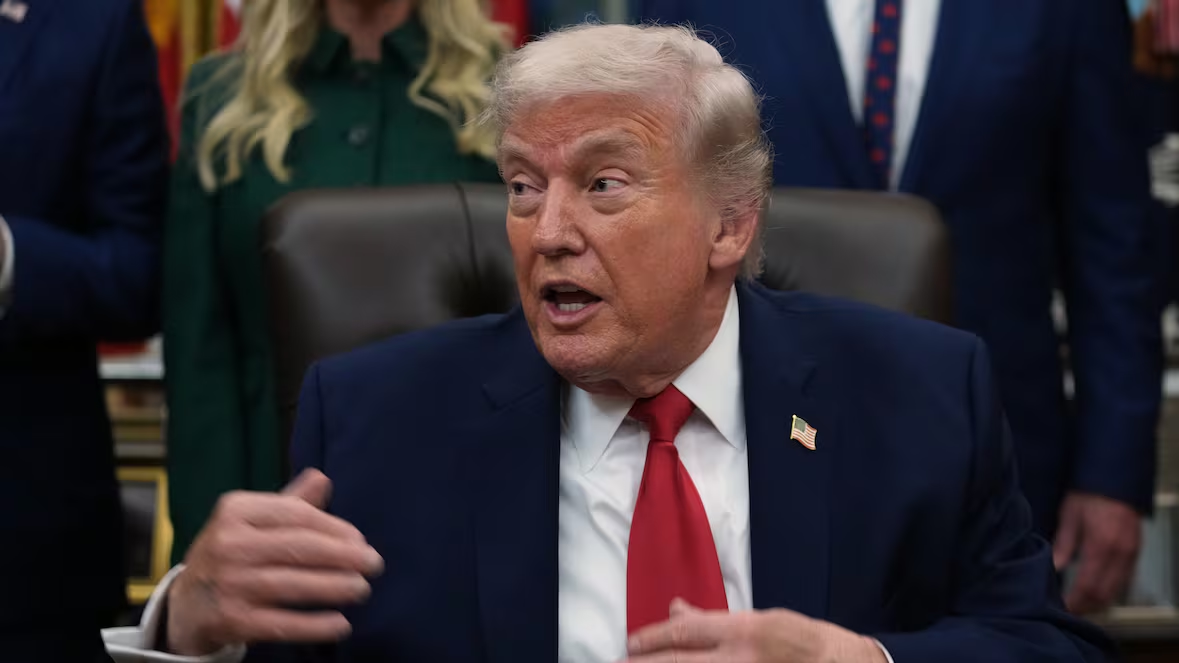
U.S. President Donald Trump speaks from the Oval Office as he warns he may impose a 50 per cent tariff on aircraft built in Canada. Associated Press
Donald Trump escalated trade tensions with Canada by threatening steep penalties on Canadian-made aircraft. He said his administration could impose a 50 per cent tariff and move to “decertify” certain planes built in Canada, including models produced by Bombardier.
Trump made the remarks in a post on his social media platform, claiming Canada blocked the approval of several jets built by the American company Gulfstream Aerospace.
Dispute over aircraft certification
“Based on the fact that Canada has wrongfully, illegally and steadfastly refused to certify the Gulfstream 500, 600, 700 and 800 Jets,” Trump wrote, adding that his administration would respond by decertifying Bombardier aircraft and “all Aircraft made in Canada” until the situation changes.
“Canada is effectively prohibiting the sale of Gulfstream products in Canada through this very same certification process,” he added. Trump also warned that if the issue remains unresolved, he would apply a 50 per cent tariff on all Canadian aircraft sold in the United States.
It remains unclear what Trump meant by “decertifying” Canadian planes. Aircraft certification in the United States falls under the authority of the Federal Aviation Administration, which controls whether planes can fly in U.S. airspace.
Competing claims raise questions
Gulfstream’s own records show that several of its jets have already received certification from Transport Canada, at least in part. Models such as the G450, G350, and G500 appear on the agency’s approval list.
Bombardier and Gulfstream remain major rivals in the business jet market, competing for buyers around the world. Trade friction between the two countries has often placed aircraft makers in the spotlight.
Past disputes resurface
Trump previously targeted Bombardier during his first term, placing tariffs of nearly 300 per cent on the company’s C Series aircraft. That program later moved under Airbus control and now operates as the A220.
Beyond Bombardier, other aircraft builders could also feel the impact. De Havilland Canada and Airbus both run manufacturing operations in Canada and could face tariffs if Trump follows through.
Political tensions deepen
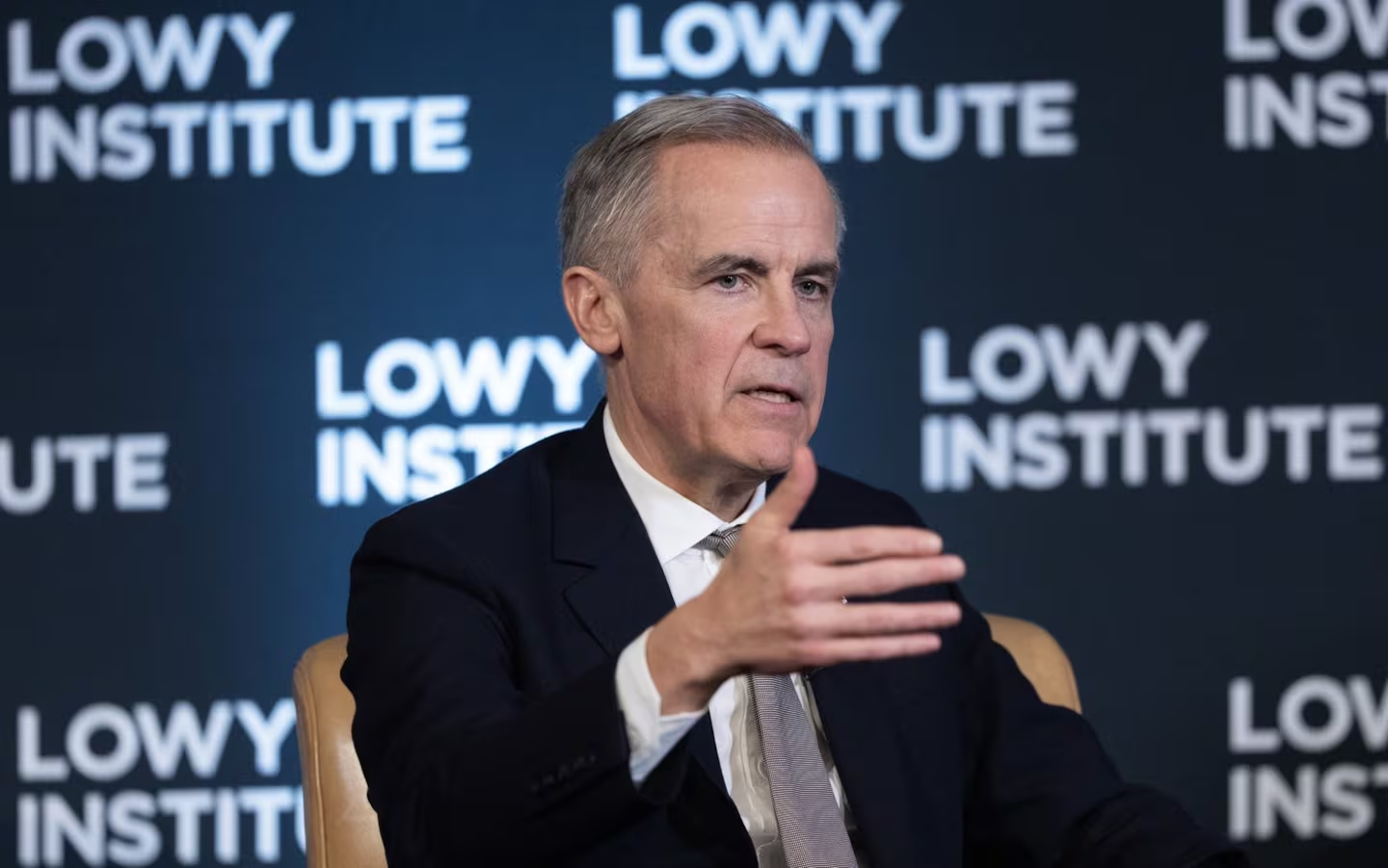
Relations between Ottawa and Washington have remained uneasy since Trump returned to office. He has repeatedly criticized Canada’s trade policies and recently increased his rhetoric toward Prime Minister Mark Carney.
Trump recently warned he could apply a 100 per cent tariff on all Canadian goods if Canada strengthens trade ties with China. He has also referred to Carney as “governor,” a term that previously caused backlash in Canada.
Calls for caution ahead of trade talks
U.S. Treasury Secretary Scott Bessent urged restraint as trade talks approach.
“I would just encourage Prime Minister Carney to do what he thinks is best for the Canadian people,” Bessent said. “I would not pick a fight going into USMCA to score some cheap political points.”
As aviation companies watch closely, industry leaders warn that ongoing trade disputes risk higher costs and uncertainty across North America’s aerospace sector.