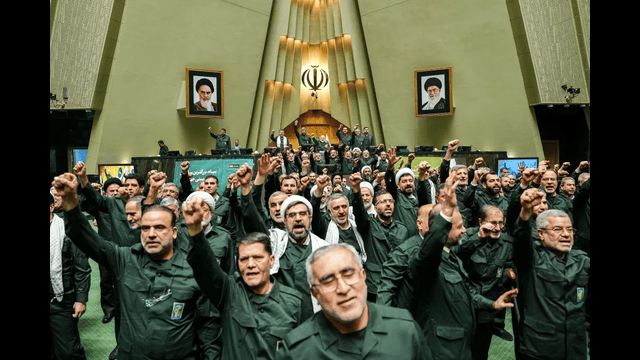
In this handout photo released by the Islamic Consultative Assembly News Agency (ICANA) Iranian lawmakers chant slogans as they wear the Revolutionary Guard’s uniform in a session of parliament, in Tehran, Iran, Sunday, Feb. 1, 2026
Iran’s supreme leader has issued a sharp warning to Washington amid rapidly rising tensions.
He said any US attack on Iran would ignite a wider regional war across the Middle East.
The remarks come as President Donald Trump openly threatens military action against Tehran.
Ayatollah Ali Khamenei made the statement on Sunday in Tehran.
His warning follows a violent crackdown on nationwide protests inside Iran.
At the same time, the United States has increased its naval presence near Iranian waters.
Supreme Leader Issues Direct Threat
Khamenei, 86, delivered his strongest warning yet during a public address.
He spoke as US warships gathered in the Arabian Sea under Trump’s orders.
The USS Abraham Lincoln carrier strike group has taken a central position in the region.
Khamenei accused the United States of long-standing exploitation of Iran.
He claimed Washington is driven by Iran’s oil, gas, and mineral wealth.
According to him, the US seeks control similar to its influence before the 1979 revolution.
“The Americans must know this time the war will spread regionally,” Khamenei said.
He insisted Iran does not seek conflict or aggression.
However, he warned that any attack would trigger a powerful response.
US Response Signals Pressure, Not Retreat
President Trump responded cautiously to Khamenei’s warning.
He emphasized the strength of US naval forces positioned nearby.
Trump also repeated his preference for a negotiated settlement.
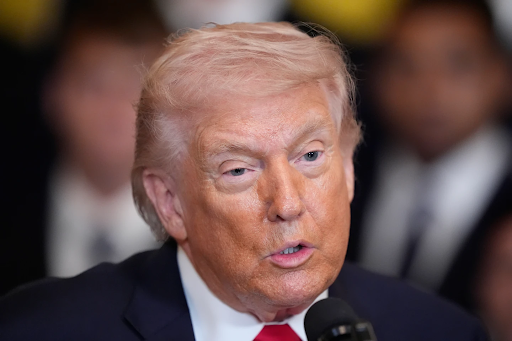
“If we don’t make a deal, then we’ll find out,” Trump told reporters.
He avoided confirming whether military strikes were imminent.
The White House continues to signal pressure while leaving options open.
Protests Deepen Iran Crisis
Khamenei also hardened his tone toward Iran’s domestic protests.
He described the demonstrations as a “coup attempt” against the state.
This marked a shift from earlier remarks acknowledging economic frustrations.
The protests began on December 28.
They were initially sparked by the collapse of Iran’s currency.
Over time, they evolved into a direct challenge to Khamenei’s leadership.
Khamenei accused protesters of targeting key institutions.
He claimed attacks struck police stations, banks, and government buildings.
He also alleged mosques were vandalized and religious texts burned.
Arrests and Death Toll Raise Alarm
Human rights groups report an alarming scale of repression.
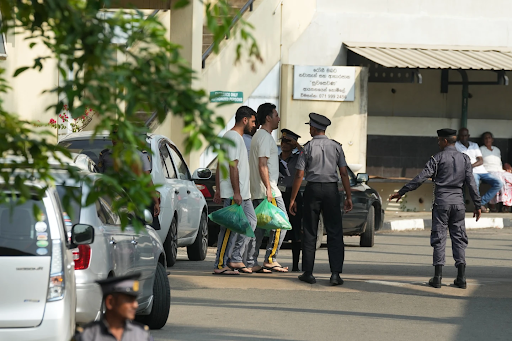
More than 49,500 people have reportedly been detained nationwide.
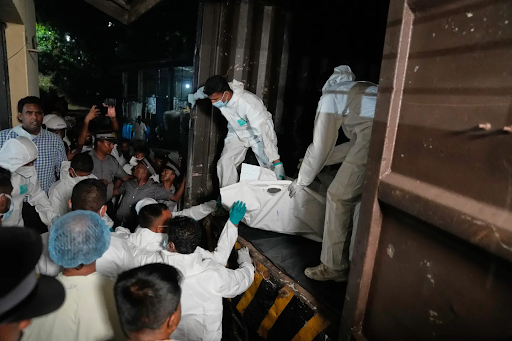
At least 6,700 deaths have been linked to the crackdown.
Most of the victims were reportedly protesters.
Independent verification remains difficult due to internet shutdowns.
Iran has largely cut off digital access across the country.
Iran’s government disputes the figures.
Officials place the death toll near 3,100.
They say many of the dead were security personnel.
Past unrest suggests Iran often underreports casualties.
This crisis appears deadlier than any in decades.
It recalls the violence surrounding the 1979 Islamic Revolution.
Strait of Hormuz Tensions Grow
Iran also announced live-fire military drills this week.
The exercises are planned in the Strait of Hormuz.
This narrow waterway carries one-fifth of global oil trade.
US Central Command issued a warning in response.
It urged Iran not to threaten American forces.
Any disruption to commercial shipping would draw consequences.
Iran Targets European Militaries
Tensions have also spread to Europe.
Iran’s parliament speaker announced a new designation on Sunday.
He said all European Union militaries are now considered terrorist groups.
The move followed an EU decision.
The bloc labeled Iran’s Revolutionary Guard a terrorist organization.
The Guard played a major role in suppressing protests.
Speaker Mohammad Bagher Qalibaf defended the Guard strongly.
He claimed it prevents terrorism from spreading to Europe.
Lawmakers showed support by wearing Guard uniforms in parliament.
Chants of “Death to America” echoed during the session.
“Death to Israel” followed soon after.
Trump Flags Nuclear Concerns
Trump has outlined clear red lines for action.
He warned against killing peaceful protesters.
He also cautioned against mass executions.
The president increasingly raised concerns about Iran’s nuclear program.
The US recently bombed three Iranian nuclear sites.
Satellite images suggest Iran may be hiding remaining activity.
Trump said talks with Iran are ongoing.
“They are seriously talking to us,” he said.
However, he expressed doubts about reaching a final deal.
Region Braces for Uncertainty
Iran US attack regional war fears continue to grow.
Diplomatic efforts remain fragile and uncertain.
The Middle East now waits closely for the next move.