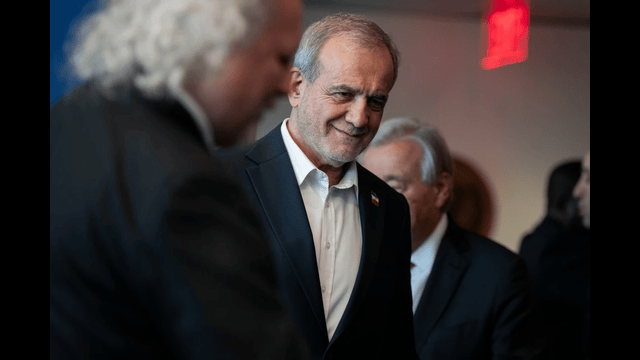
Masoud Pezeshkian, the President of Iran, attends the United Nations General Assembly at United Nations headquarters, on Sept. 25, 2025.
Iran’s president has signaled a possible diplomatic opening with the United States at a sensitive moment.
The statement comes as tensions remain high after a violent crackdown on nationwide protests last month.
It is the clearest indication yet that Tehran may be willing to test dialogue despite deep mistrust.
President Masoud Pezeshkian said he has directed Iran’s foreign minister to explore negotiations.
He emphasized that any engagement must be fair, balanced, and free from threats.
The message suggests a careful but deliberate shift in Iran’s approach.
A Significant Turn for Iran’s Leadership
For weeks, Pezeshkian had warned that unrest had pushed the situation beyond his control.
His latest comments reflect a notable change in tone.
They also indicate possible backing from Supreme Leader Ayatollah Ali Khamenei.
Khamenei had long dismissed direct talks with Washington.
Support from him would be essential for negotiations to move forward.
That backing now appears increasingly likely.
This shift highlights growing concern within Iran’s leadership.
Economic strain and political pressure have intensified.
Diplomacy may now be viewed as a necessary path.
Regional Mediation Efforts Gain Momentum
Several regional governments reportedly encouraged Iran to respond to Washington.
Turkey has been quietly working to facilitate talks.
Discussions could potentially take place there later this week.
U.S. Middle East envoy Steve Witkoff is already traveling in the region.
His presence has fueled speculation about renewed diplomacy.
However, Washington has not officially confirmed any talks.
Despite uncertainty, behind-the-scenes efforts appear active.
Regional players are attempting to lower tensions.
They see dialogue as preferable to further escalation.
Pezeshkian Sets Clear Conditions
Pezeshkian announced his decision on social media.
He posted in both English and Farsi.
The message emphasized dignity, prudence, and mutual respect.
He instructed Foreign Minister Abbas Araghchi to proceed only if conditions allow.
The environment, he said, must be free from threats and unreasonable demands.
Iran would not negotiate under pressure.
These conditions reflect longstanding Iranian concerns.
Officials remain wary of U.S. intentions.
Past negotiations have left deep scars.
Nuclear Program at the Center of Talks
Iran US negotiations would focus primarily on nuclear issues.
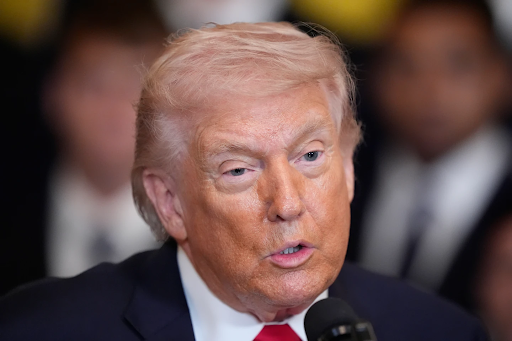
President Donald Trump has made this clear.
He has tied any agreement to Iran’s nuclear program.
Trump previously ordered strikes on Iranian nuclear sites.
Those attacks occurred during a brief conflict sparked by Israel.
They hardened positions on both sides.
Iran has enriched uranium up to 60 percent purity.
This level is close to weapons-grade material.
The International Atomic Energy Agency has repeatedly raised alarms.
Adviser Signals Possible Negotiation Structure
Ali Shamkhani, a senior adviser to Khamenei, offered further insight.
He suggested talks would begin indirectly.
Direct negotiations could follow if progress is possible.
Direct Iran US negotiations remain politically sensitive.
Reformists support engagement.
Hardliners continue to oppose it strongly.
Shamkhani stressed that talks would remain limited in scope.
Only nuclear issues would be discussed.
Broader security matters would be excluded.
Disputes Over Inspections and Uranium Stockpiles
Iran has resisted IAEA requests to inspect bombed sites.
Officials cite safety risks at damaged facilities.
Some enriched uranium may remain buried under debris.
As a result, the true size of Iran’s stockpile is unclear.
This uncertainty complicates verification efforts.
It also fuels concern in Western capitals.
Iran insists it does not seek nuclear weapons.
Officials say they are willing to offer assurances.
However, they expect concessions in return.
Washington Keeps Its Options Open
Witkoff is expected to meet Israeli leaders this week.
He will later travel to the United Arab Emirates.
Regional security discussions remain high on the agenda.
Trump said talks with Iran are ongoing.
He expressed preference for a negotiated deal.
At the same time, he warned of serious consequences if talks fail.
For now, Iran US negotiations remain uncertain.
Yet the latest signals suggest diplomacy is no longer off the table.