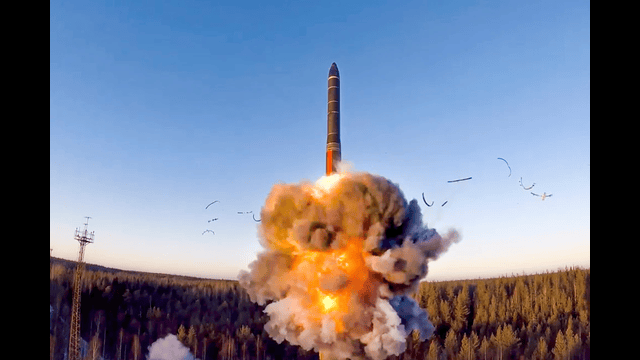
This photo, taken from a video distributed on Dec 9, 2020, by the Russian Defence Ministry Press Service, shows a rocket launch as part of a ground-based intercontinental ballistic missile test at the Plesetsk facility in northwestern Russia.
The last remaining nuclear arms control agreement between the United States and Russia has expired.
With its end, all limits on the world’s two largest nuclear arsenals are gone.
This marks the first time in over 50 years without formal restrictions.
Experts warn the moment could trigger a dangerous nuclear arms race.
New START Treaty Comes to an End
The New START Treaty officially expired on Thursday.
It was the final pillar of US-Russia nuclear arms control.
No replacement agreement is currently in place.
The treaty capped nuclear weapons on both sides.
It also provided transparency through inspections and data sharing.
Those safeguards are now gone.
What the New START Treaty Controlled
Signed in 2010, New START limited deployed nuclear forces.
Each side could hold only 1,550 nuclear warheads.
Missiles and bombers were capped at 700 units.
The agreement was signed by Barack Obama and Dmitry Medvedev.
It was initially set to expire in 2021.
Both sides agreed to extend it for five years.
Inspections Stopped Years Ago
New START relied heavily on on-site inspections.
These checks ensured compliance and built trust.
Inspections stopped in 2020 due to the COVID-19 pandemic.
They never resumed after that pause.
Tensions between Washington and Moscow continued to rise.
The lack of inspections weakened confidence in the pact.
Russia Suspended Participation in 2023
In February 2023, Russia suspended its participation.
President Vladimir Putin cited security concerns.
He said U.S. inspections were unacceptable during the Ukraine conflict.
Putin accused Washington and NATO of seeking Russia’s defeat.
Despite suspending participation, Russia pledged restraint.
Moscow said it would still respect treaty limits.
Putin’s Last-Minute Extension Offer
Last year, Putin offered a temporary solution.
He proposed following New START limits for one more year.
The aim was to allow time for fresh negotiations.
Putin warned that expiration would destabilize global security.
He said it could fuel nuclear weapons proliferation.
The United States did not accept the proposal.
Trump Remained Noncommittal
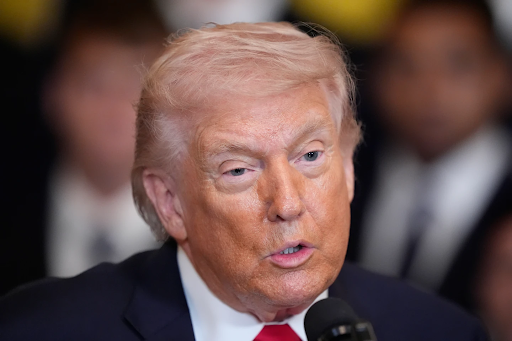
U.S. President Donald Trump avoided committing to an extension.
Washington offered no formal response to Moscow’s proposal.
The silence deepened uncertainty around the treaty’s future.
With no agreement reached, the clock ran out.
The treaty expired without a successor.
Both nations are now unrestricted.
Russia Signals Strategic Caution
Putin discussed the treaty’s expiration with China’s leader Xi Jinping.
The conversation took place ahead of the deadline.
Kremlin officials confirmed the talks.
A senior adviser said Russia would act responsibly.
Decisions will be based on security assessments.
Moscow claims it is free to choose its next steps.
Moscow Declares Freedom of Action
Russia’s Foreign Ministry released a late-night statement.
It said treaty obligations no longer apply.
This includes limits and mutual declarations.
The statement stressed equal freedom for both sides.
It also signaled a potential policy shift.
Observers fear rapid military expansion.
A Long History of Lost Treaties
New START followed decades of arms reduction agreements.
Earlier treaties helped curb Cold War nuclear competition.
Most have now collapsed or expired.
With New START gone, no binding limits remain.
Diplomats warn trust will be harder to rebuild.
The risk of escalation has increased sharply.
Global Anxiety Grows
The treaty’s end has alarmed security experts worldwide.
Many fear a return to unchecked nuclear rivalry.
Calls for renewed dialogue are growing louder.
For now, uncertainty defines the nuclear landscape.
The world waits to see what comes next.