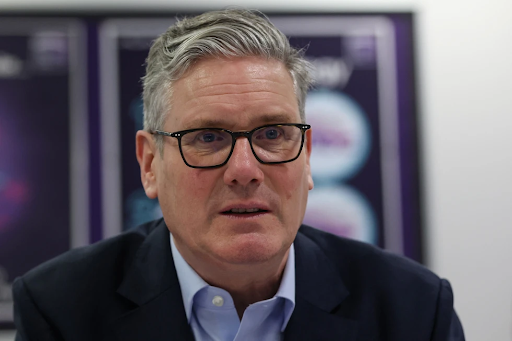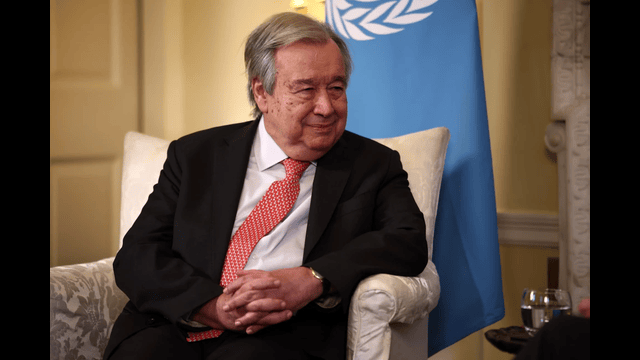
UN Secretary General António Guterres is welcomed by Britain’s Prime Minister Keir Starmer to 10 Downing Street, London, Friday, Jan. 16, 2026.
The United Nations is awaiting confirmation on how much of its unpaid contributions the United States plans to settle.
Officials also want clarity on the timing of any payments, as financial pressure on the organization continues to intensify.
U.N. leaders say the uncertainty comes at a critical moment for the world body.
Without reliable funding, core operations could face serious disruption within months.
Mounting Pressure on UN Finances
U.N. Secretary-General Antonio Guterres recently warned of an impending financial crisis.
He said the organization risks severe instability unless overdue payments are addressed quickly.
His message was directed at all member states, but it carried a clear signal to Washington.
The United States remains the UN’s largest contributor and its biggest debtor.
According to UN officials, cash reserves for the regular operating budget may be depleted by July.
Such a scenario could limit basic administrative and diplomatic functions across the organization.
Breaking Down the US UN Dues
The scale of the US UN dues is significant by any measure.
The United States currently owes $2.196 billion to the UN’s regular budget.
That total includes $767 million due for the current year alone.
In addition, the US owes roughly $1.8 billion for UN peacekeeping operations worldwide.
Officials say those peacekeeping arrears are expected to increase further.
Together, these unpaid contributions account for the vast majority of the UN’s budget shortfall.
Signals From Washington
The US Mission to the United Nations has acknowledged the growing concern.
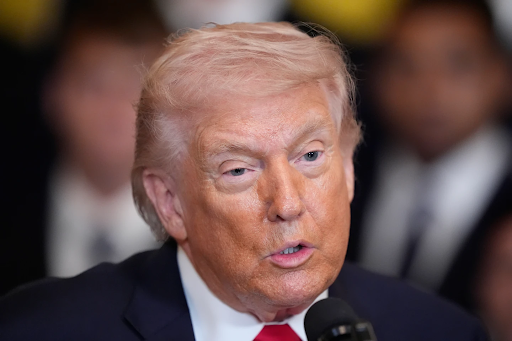
Ambassador Mike Waltz said the Trump administration plans a substantial initial payment.
He described the move as a down payment toward clearing outstanding arrears.
However, the final amount and exact payment schedule remain undecided.
His comments were first reported by Reuters and later confirmed by US officials.
The statement offered some reassurance but stopped short of concrete commitments.
Ongoing Talks Behind the Scenes
UN spokesman Stephane Dujarric said discussions with US officials are ongoing.
He confirmed that Guterres has been in contact with Ambassador Waltz for an extended period.
The UN’s financial controller is also engaged in parallel talks with American counterparts.
Despite this, the organization is still waiting for firm details.
“We’re waiting to see exactly when payments will be made and in what amount,” Dujarric said.
Until then, budget planning remains constrained by uncertainty.
A History of Strained Relations
President Donald Trump has repeatedly criticized the United Nations.
He has argued that the organization has failed to fulfill its intended role.
In 2025, the US did not make any payments to the UN.
The administration also withdrew from several UN agencies during that period.
These included the World Health Organization and UNESCO.
Funding was also cut from dozens of other UN-affiliated programs.
US Accounts for Majority of Arrears
UN officials say the United States is responsible for 95 percent of unpaid regular budget dues.
This imbalance has amplified the financial strain across the organization.
Venezuela ranks second among countries behind on mandatory payments.
It owes approximately $38 million to the UN’s regular budget.
Due to prolonged arrears, Venezuela has lost its General Assembly voting rights.
The loss followed two consecutive years of missed payments.
Compliance Among Other Nations
Despite the challenges, many member states remain current on their obligations.
Nearly 60 countries paid their annual dues by the February 8 deadline.
UN officials say timely payments are essential for stability.
They also stress that shared responsibility underpins the organization’s effectiveness.
Uncertain Road Ahead
For now, the UN continues operating under financial constraints.
Much depends on how the US resolves its outstanding UN dues.
Clear commitments could stabilize operations and ease growing concern.
Until then, the organization remains in a delicate holding pattern.