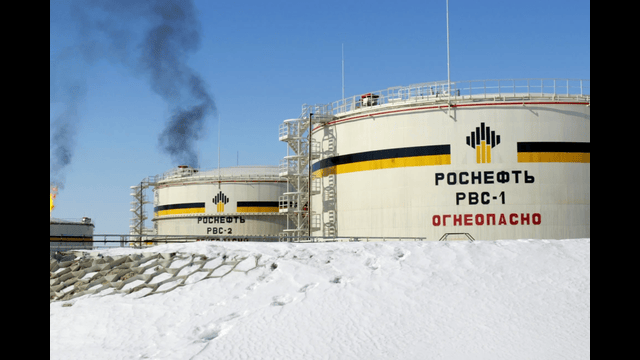
Reservoirs seen at Priboskoye oil field near Nefteygansk, in western Siberia, Russia, on April 5, 2006.
For years, Russia's oil exports have propped up the country’s finances during the war in Ukraine.
As the invasion nears its fourth anniversary, that crucial income stream is shrinking rapidly.
New sanctions, trade pressure, and tougher enforcement are combining to squeeze Moscow’s energy earnings.
The sudden decline marks one of the weakest periods for Russian oil revenues in years.
It is forcing the Kremlin to rethink how it funds both the war and the wider economy.
Sanctions Begin to Bite Harder
Fresh measures from the United States and the European Union are central to the downturn.
In November, Washington sanctioned Russia’s two largest oil producers, Rosneft and Lukoil.
Any company buying or shipping their oil now risks losing access to the U.S. banking system.
That threat has made many traders and shippers far more cautious.
Multinational firms are increasingly unwilling to handle Russian crude, even at discounted prices.
The European Union added further pressure in January.
It began banning fuels refined from Russian crude, even if processed outside Russia.
This closed a major loophole that previously allowed Russian oil to reach Europe indirectly.
A Shift Beyond the Oil Price Cap
These steps go beyond the earlier G7 oil price cap.
That policy aimed to limit profits without disrupting global energy markets.
While it initially reduced revenues, Russia adapted by redirecting exports to Asia.
Moscow also relied on a “shadow fleet” of older tankers operating beyond Western oversight.
For a time, this strategy helped stabilize Russia oil exports and government income.
Now, enforcement has intensified.
Western allies have sanctioned hundreds of individual tankers linked to Russian oil.
Shipping, insurance, and payment channels have become harder and more expensive to secure.
India Feels Growing Pressure
India has been one of Russia’s largest remaining oil customers.
However, U.S. tariff pressure has complicated that relationship in recent weeks.
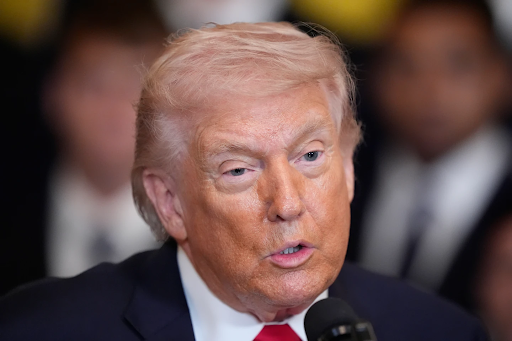
President Donald Trump linked lower tariffs to reduced Indian purchases of Russian crude.
While New Delhi has not publicly confirmed a policy shift, imports have declined.
Shipments fell from about two million barrels per day in October to 1.3 million in December.
Analysts believe India is unlikely to fully disengage but may continue trimming volumes.
Discounts Deepen as Risks Rise
Buyers now demand steep discounts to offset sanctions risks and payment hurdles.
In December, Russian Urals crude traded roughly $25 per barrel below Brent.
That pushed prices below $38 per barrel, far under global benchmarks.
Because Russian oil taxes depend heavily on prices, state revenues fell sharply.
January oil and gas tax income dropped to its lowest level since the pandemic.
Experts say the decline reflects a cascading effect across crude and refined products.
Tankers Pile Up at Sea
Reluctance to accept deliveries has created another costly problem.
An estimated 125 million barrels of Russian oil are now sitting on tankers offshore.
This floating surplus has driven daily tanker rates above $125,000.
Higher shipping costs further erode profits from Russia oil exports.
They also discourage buyers already wary of sanctions exposure.
A War Economy Under Strain
Energy pressure is hitting as Russia’s broader economy slows.
War-driven growth has lost momentum, while labor shortages limit expansion.
Economic growth barely registered in the third quarter.
Forecasts for this year are well below recent levels.
Lower growth means weaker tax receipts, adding stress to the federal budget.
How the Kremlin Is Responding
To plug the gaps, the Kremlin is raising taxes and increasing domestic borrowing.
Value-added tax has risen, along with duties on imports and consumer goods.
State banks are lending more to cover budget shortfalls.
Russia still has reserves to rely on for now.
However, higher taxes risk slowing growth further, while borrowing fuels inflation.
Analysts say prolonged pressure could eventually influence Moscow’s war strategy.
For the moment, Russia oil exports no longer offer the financial shield they once did.