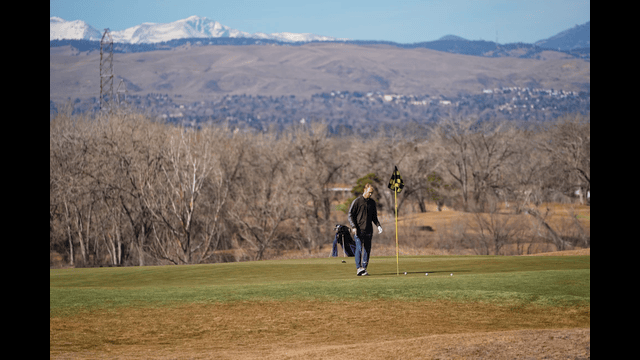
With little snow covering the mountain backdrop, a lone golfer putts out on a green on the Broken Tee Golf Course, Friday, Feb. 6, 2026, in Sheridan, Colo.
A historic snow drought is gripping much of the western United States, raising alarms about water security, wildfire risks, and economic strain.
Unusually warm temperatures and scarce snowfall are reshaping the region’s winter, leaving scientists deeply concerned about the months ahead.
Across the West, snow cover and snow depth have fallen to levels rarely seen in modern records.
Researchers say the combination of persistent warmth and low precipitation is accelerating the crisis.
Unprecedented Snow Loss Across the West
Snow typically blankets about 460,000 square miles of the western United States by this time of year.
This winter, that figure has dropped to roughly 155,000 square miles, according to federal data.
The reduced coverage is roughly the size of California alone.
That shortfall highlights how dramatic the snow drought has become.
Mark Serreze, director of the National Snow and Ice Data Center, called the pattern unusually persistent.
After nearly four decades in Colorado, he said he has never witnessed a winter like this.
Record Warmth Driving the Snow Drought
The snow drought is not only about lack of storms.
Scientists say extreme warmth is the dominant factor.
At least 67 weather stations across the West recorded their warmest December through early February on record.
Since December 1, more than 8,500 daily high temperature records have been tied or broken.
These temperatures are preventing snow from accumulating at lower and mid elevations.
Much of the precipitation that does fall is arriving as rain instead of snow.
Snowpack Levels Hit Historic Lows
Snowpack, which measures how much water is stored in mountain snow, has plunged sharply.
Oregon’s snowpack is not only at a record low but sits 30 percent below its previous record.
Colorado and Utah are also reporting their lowest statewide snowpack since the early 1980s.
A dry January compounded the problem, delivering half of normal precipitation or less.
California is in relatively better shape.
Heavy December rains helped offset some losses, though scientists caution conditions remain fragile.
Colorado River Basin Faces Growing Risk
The snow drought has placed the Upper Colorado River Basin under intense strain.
This basin supplies water to millions across the West.
Normally, melting mountain snow provides a steady flow into rivers during spring and summer.
That slow release supports agriculture, cities, and hydropower systems.
Without adequate snow, rivers may not replenish later in the year.
Experts warn this could deepen long-standing water shortages.
Daniel Swain of the University of California said the situation poses serious challenges for the basin’s future.
Daily Life Reflects the Unusual Winter
The contrast between regions is striking.
While parts of the eastern United States endure bitter cold and deep snow, the West remains largely bare.
In West Jordan, Utah, residents have gone weeks without seeing snow on the ground.
One local described wearing summer clothing in midwinter and missing snowboarding opportunities.
Salt Lake City recently set a striking milestone.
It has gone 327 days without receiving one inch of snow at its airport.
Rising Wildfire Concerns
The snow drought is also heightening wildfire risks.
Earlier snowmelt leaves soil and vegetation exposed to drying conditions sooner.
Researchers warn this could spark an earlier and more intense wildfire season.
Dry fuels combined with warming spring temperatures create dangerous conditions.
Daniel McEvoy of the Western Regional Climate Center said the absence of snow accelerates landscape drying.
Climate Change Link Becomes Clearer
Scientists say climate change is amplifying these patterns.
Burning fossil fuels has increased background temperatures, making winters warmer overall.
While snowless periods are not new, the intensity of this warmth is unusual.
Experts say that makes the climate connection harder to ignore.
Russ Schumacher of Colorado State University noted that December warmth was especially extreme.
Snowfall was largely confined to the highest mountain peaks.
Some Relief Ahead, But Not Enough
Forecasts suggest cooler, wetter weather may arrive soon across the West.
Some snowfall is expected in the coming days.
Scientists caution that the improvement may be limited.
Temperatures are still projected to remain above average in many areas.
While the storms could reduce deficits slightly, experts say full recovery is unlikely.
The region may be entering spring with significant water challenges already locked in.