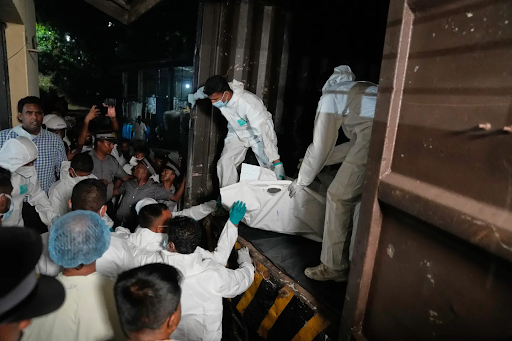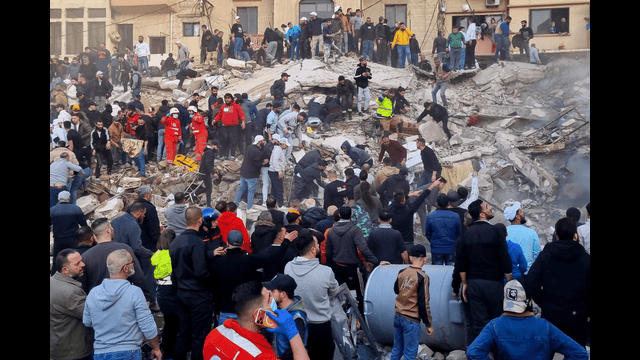
Rescue workers and residents search for survivors in the rubble of a building that collapsed in the northern city of Tripoli, Lebanon, Sunday, Feb. 8, 2026.
The death toll from a devastating Lebanon building collapse in the northern city of Tripoli has risen sharply, deepening public anger and fear. Authorities confirmed that at least 15 people lost their lives after a residential building crumbled, prompting urgent government action across the affected neighbourhood.
Rescue teams continued operations as officials warned that the tragedy could have been even worse without swift intervention.
Tragedy Strikes Tripoli’s Bab Tabbaneh Area
The collapse occurred Sunday afternoon in Bab Tabbaneh, one of Tripoli’s poorest neighborhoods.
The six-story apartment building gave way suddenly, trapping residents under concrete and debris.
Tripoli, Lebanon’s second-largest city, has long struggled with aging infrastructure and limited public services.
Local residents rushed to the site as civil defense teams began search and rescue efforts.
Survivors and families gathered around the crater left by the fallen structure.
Gunshots were fired into the air, reflecting grief, anger, and frustration among the crowd.
Rising Casualties and Injuries Reported
Lebanon’s state-run National News Agency confirmed Monday that the death toll reached 15.
At least eight others were injured during the collapse.
Civil defense officials reported that one injured person suffered a gunshot wound amid the chaos.
Emergency crews worked through the night to recover victims.
The scale of destruction made rescue efforts difficult and emotionally taxing.
Authorities said identifying victims remains an ongoing process.
A City Familiar With Structural Failures
Building collapses in Tripoli are not uncommon, though rarely this deadly.
Poor construction standards and lack of maintenance have plagued the city for decades.
Residents have repeatedly warned about unsafe buildings and government neglect.
This Lebanon building collapse sparked particular outrage due to the high number of casualties.
Many locals argue the disaster was preventable with proper oversight.
Public trust in authorities has further eroded following the incident.
Evacuations Ordered Amid Safety Fears
Following the collapse, officials moved quickly to prevent further tragedies.
Nearby buildings were evacuated over concerns they could also fail.
Engineers assessed structural risks across the surrounding area.
Prime Minister Nawaf Salam chaired an emergency meeting on Monday.
National and local officials reviewed safety reports during the session.
The government ordered the evacuation of 114 buildings deemed structurally unsafe.
The evacuations will take place gradually over the next month.
Authorities aim to minimize disruption while ensuring resident safety.
Families were urged to cooperate with relocation plans.
Government Promises Action and Support
After the meeting, Salam addressed journalists with assurances of accountability.
He pledged a full investigation into the cause of the Lebanon building collapse.
Legal action will be taken against anyone found responsible.
The Higher Relief Committee will oversee next steps once evacuations are completed.
Buildings that can be reinforced will undergo urgent repairs.
Structures considered beyond repair will be demolished.
To support displaced families, the government announced financial assistance.
Evacuated households will receive a housing allowance for one year.
Officials said the measure aims to ease the immediate burden on affected residents.
Public Anger and Calls for Accountability
Despite official assurances, public anger remains high in Tripoli.
Many residents see the collapse as a symbol of long-standing neglect.
Calls for stricter building regulations have grown louder.
Community leaders are demanding transparent investigations and lasting reforms.
They warn that without action, similar tragedies could follow.
For now, Tripoli mourns its dead while bracing for uncertain days ahead.