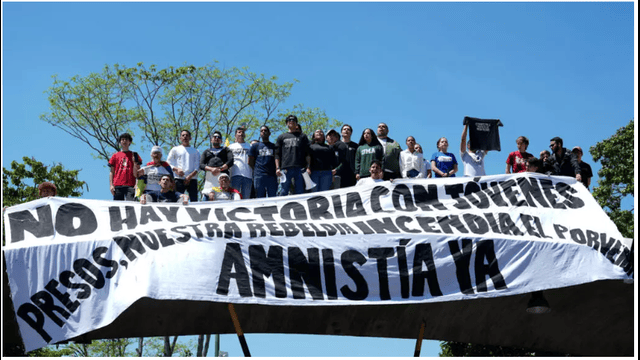
People attend a student-led march to call for the release of political prisoners in Caracas, Venezuela on February 12, 2026.AFP
More than 200 detainees inside Venezuela’s notorious Rodeo I prison have stopped eating, turning their own bodies into instruments of protest. Their message, shouted through concrete walls to anxious relatives outside, is simple and urgent: freedom must be for everyone — not a selected few.
The hunger strike erupted just a day after the country’s legislature passed a long-awaited amnesty law, a measure that was supposed to signal political relief after years of repression. Instead, for many inmates, it delivered a new wave of despair.
A Law That Frees Some — and Leaves Others Behind
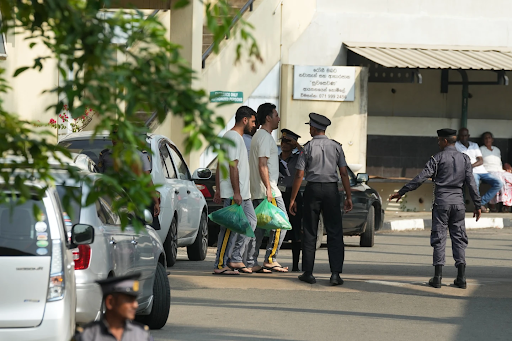
The legislation offers legal benefits to thousands of political prisoners who had previously been paroled or placed under house arrest. Authorities say more than 1,500 people have already applied, and a number of detainees have walked out of prison carrying release documents, greeted by tears, cheers and emotional phone calls to loved ones.
But inside Rodeo I, the atmosphere is very different.
Around 214 prisoners — including Venezuelans and foreign nationals — are believed to have joined the hunger strike. Many of them face charges the state classifies as terrorism or security-related offences, categories that fall outside the amnesty’s scope and have long been criticised by opposition groups as tools to silence dissent.
Families waiting outside the prison say the exclusions have shattered hopes that the law would bring collective relief.
Voices From Behind the Walls
Throughout the weekend, chants of “Freedom!” and “Release us all!” echoed from inside the prison compound, reaching relatives gathered beyond the gates. For many families, the protest is the first direct sign of their loved ones’ desperation since the law was announced.
One relative described the strike as a response to feeling “abandoned” by a reform that promised reconciliation but delivered selective justice.
Even some prisoners who were freed acknowledged the growing frustration among those left behind. One former detainee said solidarity inside the prison had created an unexpected sense of brotherhood, forged through shared uncertainty and long, exhausting years of detention.
Red Cross Steps In
In a significant development, a delegation from the International Committee of the Red Cross was allowed to enter Rodeo I — the first such access to the facility. The visit is being viewed as a cautious but important step toward greater humanitarian oversight, particularly as concerns grow over the health of those refusing food.
However, the strike continues, and not all inmates are participating, underscoring the complexity of the situation inside the prison.
A Political Shift With Global Stakes
The amnesty law itself is part of a broader political transition following the dramatic capture of former president Nicolás Maduro, who is now in U.S. custody facing drug-trafficking charges. The new leadership introduced the measure under international pressure, presenting it as a path toward national reconciliation.
Critics, however, argue that the carve-outs mirror past patterns — freeing some while maintaining legal tools that can still be used against political opponents and members of the security forces accused of disloyalty.
Between Hope and Uncertainty
For the families camped outside Rodeo I, every prison gate that opens brings both celebration and renewed heartbreak. Each released prisoner is proof that change is possible — and a reminder of those still waiting.
Inside, the hunger strikers remain locked in a battle of endurance, convinced that partial freedom is not enough. Their demand is not just for release, but for recognition — that political justice cannot be selective.