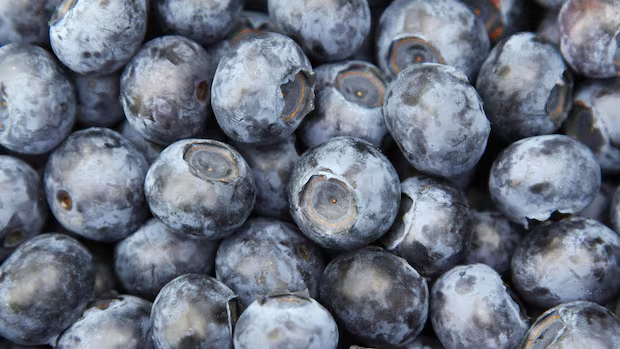
A team at Dalhousie University is examining whether customized health programs that include eating blueberries every day can support heart health in seniors. The researchers also hope their work will strengthen the case for doctors to prescribe healthy foods, making nutritious options more affordable and easier to access. CBC
Jim Grove has developed a strong appreciation for blueberries. The 67-year-old Halifax resident now eats a full cup every day as part of a medical study. “I'm up to 35 pounds now, I think, in blueberries. That's what I’ve eaten since the start,” he said while preparing his daily smoothie at home.
Grove recently completed a round of physical and mental tests. Researchers asked him to perform balance and flexibility checks, answer questions about daily tasks like banking, and complete memory challenges such as counting backwards and naming animals in one minute. After the assessment, a research co-ordinator handed him a fresh supply of frozen Nova Scotia wild blueberries for the next two weeks.
Study Links Food, Strength and Heart Health
Grove participates in a clinical trial at Dalhousie University. Researchers want to find out whether daily blueberries, combined with 30 grams of protein powder and personalized exercise sessions three times a week, can improve frailty and heart health in older adults.
The project, known as STRONG, will include 240 participants aged 65 and older. Half of them will follow the full program, which includes blueberries and guided workouts. The other half will continue their usual routines. Researchers will check in every three months for one year and conduct a final follow-up a year later.
Dietitian Leah Cahill, who leads the study, believes prevention should begin before illness develops. “When we think about prescribing, we usually think about someone being sick and needing a medication prescribed,” she said. “The idea of prescribing lifestyle as a way to prevent people even getting sick, that's where our hearts are.”
Cahill and her team hope strong results could support the idea that doctors one day might prescribe blueberries just like medicine.
The Rise of Food Prescriptions
The blueberry study forms part of a growing movement across Canada known as food prescribing. Doctors identify patients who struggle with food insecurity or face diet-related health risks and write prescriptions for healthy food. Patients then receive free or subsidized fruits and vegetables.

Grove, who manages Type 2 diabetes and arthritis, said he began feeling widespread aches after turning 60. Now, three months into a routine of daily blueberries and exercising three times a week, he says he has started to notice positive changes in how he feels. CBC
Interest in this approach has increased as many Canadians cope with rising food prices. Researchers have found that these programs improve fruit and vegetable intake and may help manage chronic conditions such as heart disease and diabetes. Still, experts say more evidence is needed to measure long-term impact and cost effectiveness.
Some critics question whether the approach could unintentionally leave out people without family doctors or appear overly controlling. Others suggest direct financial support might offer a simpler solution.
Early Signs of Success
In parts of Alberta and Ontario, small-scale programs already operate. A community health centre in Guelph reports that severe food insecurity among its clients has dropped significantly since launching a food prescription program in 2019. Health markers linked to diabetes and heart disease have also improved.
Program leaders stress that stable funding remains a challenge. Most initiatives rely heavily on grants rather than permanent government support.
A Personal Change for Grove
Grove lives with Type 2 diabetes and arthritis. He recalls turning 60 and feeling his body slow down. Three months into the blueberry program, he already feels stronger.
Regular workouts and daily fruit have become part of his routine. He believes small improvements now could help him remain healthier as he ages.
Researchers will continue tracking participants over the next year. They hope the findings will clarify whether something as simple as a cup of blueberries each day could help seniors stay stronger for longer.