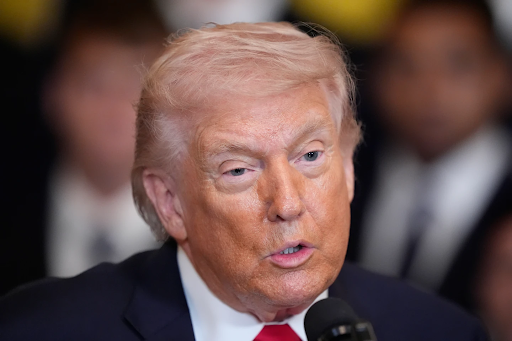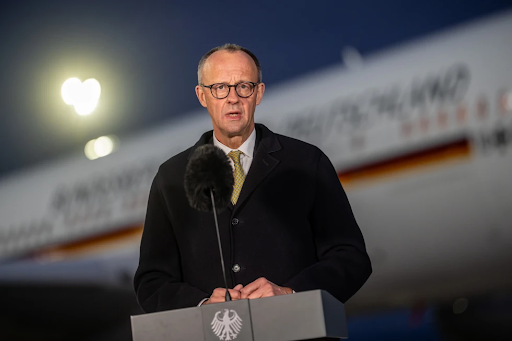
Germany China visit highlights key talks on trade balance and Ukraine war diplomacy during high-level meetings in Beijing.
Germany’s new leader arrived in Beijing seeking balanced trade relations and diplomatic support on Ukraine.
The German leader's visit to China comes during growing global economic tension and shifting geopolitical alliances.
It also reflects Europe’s wider effort to engage China while protecting domestic industries and supply chains.
Beijing Welcomes Strategic Dialogue
Chinese officials framed the German leader's visit as an opportunity for cooperation and stability.
State media stressed that both nations share responsibility for supporting global supply chains and multilateral economic systems.
China also signalled opposition to protectionism and economic pressure in international trade disputes.
The visit follows several recent high-level diplomatic trips to Beijing by global leaders.
China is strengthening partnerships while facing pressure from U.S. tariff policies and global institutional disputes.
Trade Imbalance Raises German Concerns
Economic tensions remain central to the German leader’s China visit agenda.
Germany recorded a sharp increase in imports from China last year.
Imports rose nearly nine percent, reaching more than 170 billion euros.
At the same time, German exports to China declined significantly.
Exports dropped almost ten percent, falling to just over 81 billion euros.
This widening imbalance has alarmed German manufacturers and policymakers.
European officials fear cheaper Chinese goods could threaten industrial jobs across the continent.
Heavy export flows have already intensified competition in several manufacturing sectors.
Europe Pushes for Industrial Investment
European governments want stronger investment commitments from Chinese companies.
They hope new factories across Europe will support local employment and stabilize supply chains.
Such investments could also reduce dependence on imported finished products.
Another major issue involves China’s industrial overcapacity in key manufacturing sectors.
Oversupply in electric vehicles and solar panels has driven global prices sharply downward.
European producers argue that he pricing pressure creates unfair market conditions.
Calls to Reduce Market Barriers
During the German leader's visit to China, officials also addressed access restrictions affecting foreign businesses.
German leadership wants fewer regulatory barriers in the Chinese domestic market.
European companies continue to report licensing hurdles and investment limitations.
Germany’s leader emphasized the need for fair competition rules and transparent market conditions.
He noted that export controls, excess production, and access restrictions distort international competition.
Resolving these issues, he argued, would benefit both economies long-term.
Ukraine War Remains Key Diplomatic Topic
Beyond trade, security concerns shaped the German leader's visit discussions.
Germany hopes China can help support diplomatic steps toward ending the Ukraine war.
Berlin views Beijing’s influence as potentially important in future negotiations.
China has maintained a complex position throughout the conflict.
It has called for peace talks while avoiding direct condemnation of Russia.
European leaders continue urging stronger Chinese engagement in peace initiatives.
Part of a Wider Global Strategy
The German leader's visit reflects Europe’s broader balancing strategy toward Beijing.
European governments seek cooperation in trade, climate policy, and global security.
However, they also aim to protect domestic industries from market disruption.
Germany remains Europe’s largest economy and a major industrial exporter.
Its relationship with China therefore, carries major consequences for the wider European Union.
Any progress in trade fairness or diplomatic cooperation could shape future EU-China policy.
Expectations for the Coming Months
Officials from both sides described the talks as constructive but complex.
Negotiations on trade access and industrial cooperation are expected to continue.
Diplomatic discussions on Ukraine may also expand through future international forums.
For now, the German leader's visit signals renewed engagement rather than confrontation.
Both countries appear eager to maintain economic ties while addressing growing strategic disagreements.
If successful, the discussions could influence global trade stability and future diplomatic alignment.