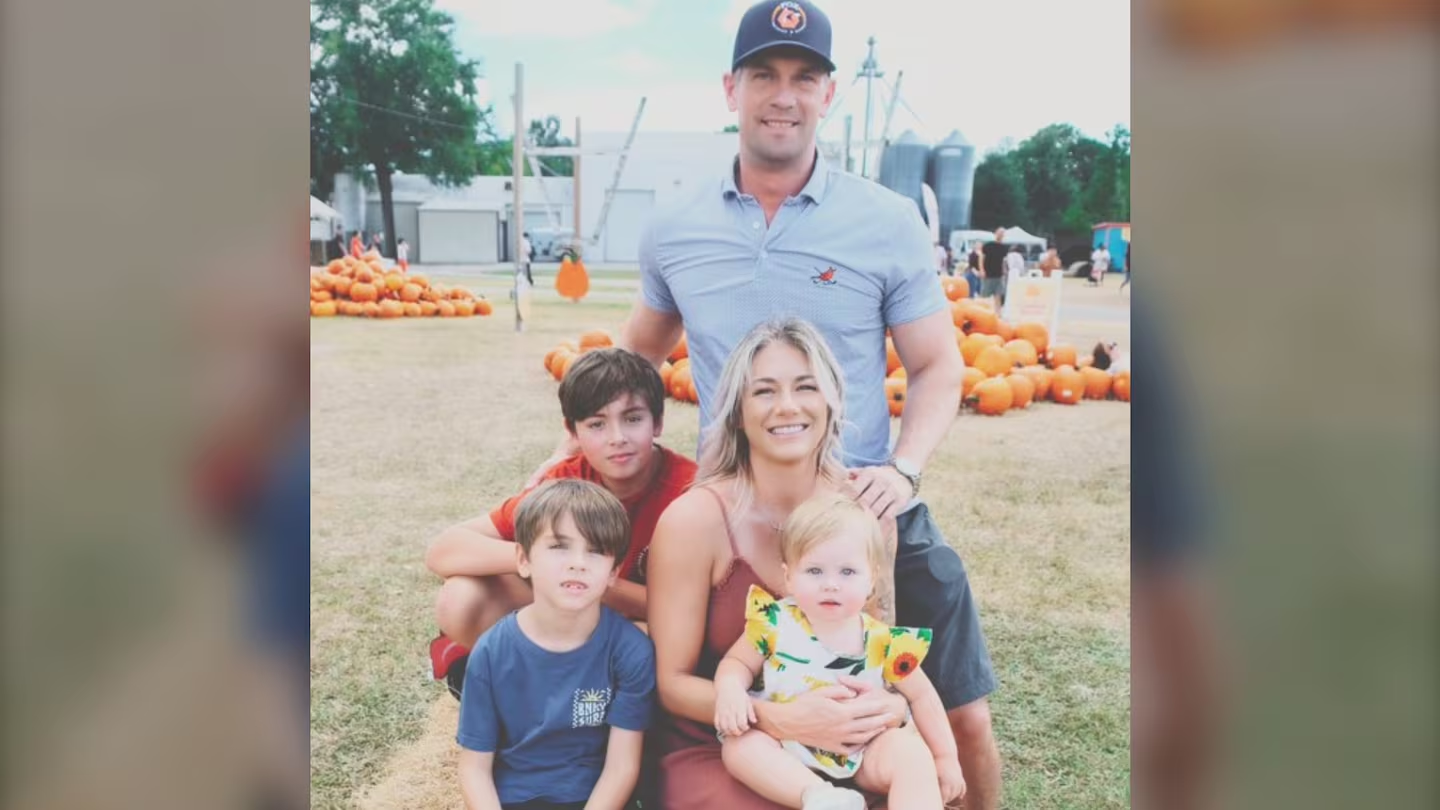
Curtis and Kayla are pictured with his two sons and their young daughter. (Family photo provided)
A Canadian man held in a U.S. immigration detention centre has spoken publicly about his experience, describing difficult living conditions and the emotional strain of being separated from his family.
Curtis Wright, 39, remains at the South Texas ICE Processing Center, located southwest of San Antonio. He has spent nearly four months in custody.
“None of it has been enjoyable. The separation from my family has been miserable,” Curtis said during an interview from the facility.
Detained After Airport Stop
Curtis, who was born in Edmonton, holds permanent resident status in the United States. He works in the oil and gas industry and earned a business degree. Authorities detained him in early November after officials flagged him at George Bush Intercontinental Airport in Houston as he returned from a work trip to Mexico.
His parents say the detention relates to a drug possession conviction from more than 20 years ago, when Curtis was still in high school.
“They went on the computer and found a misdemeanor that he had been charged with 22 years ago when he was 17 years old,” his father, Jim Wright, said. He added that officials told his son, “we can withhold you and incarcerate you until you’re able to appear before an immigration judge.”
The family says the old case involved a Xanax tablet found in Curtis’ vehicle. His record also includes a past impaired driving charge and another misdemeanor connected to a firearm registered to his wife. His father says Curtis stopped drinking alcohol years ago and has renewed his permanent residency without issue since those incidents.
Family Struggles With Separation
Curtis’ fiancé, Kayla Thomsen, says the detention has turned their lives upside down. The couple shares an 18-month-old daughter. Curtis also has two sons from a previous marriage.
“Our whole world has been flipped upside down. I had this perfect life with this amazing man, and then all of a sudden, he’s just gone,” Thomsen said.
She described how their daughter wakes up asking for her father and carries photos of him.
“He’s the provider for this family,” Thomsen added.
Curtis’ mother, Bonnie Wright, said the uncertainty weighs heavily on her.
“I really do have a hard time sleeping,” she said. “It just keeps going over in my mind, over and over again.”
Claims of Poor Conditions
Curtis alleges the detention centre suffers from poor hygiene and low-quality food.
“The general hygiene conditions of the facility are pretty awful,” he said. “It’s run down, there’s mold, dirt, grime everywhere.”
He also claimed limited food and water during the early days of his detention.
“The food is horrendous. It’s something I don’t think my dog would take a second sniff at,” Curtis said. “I don’t drink water here without boiling it first. It’s finding ways to not stay sick.”
His father questioned how detainees receive treatment compared to convicted prisoners.
“If you were in jail for life, for murder, you’d be treated better,” Jim said.
The family believes harsh conditions pressure detainees to leave the United States voluntarily.
Changing Views on Enforcement
Curtis said his time in detention altered his understanding of immigration enforcement.
“Before I came in here, I was of the mind that they were doing what they said they were doing, where they were focusing on the worst of the worst, criminals and murderers,” he said. “What I’ve come to understand since I’ve been in here is that’s the exact opposite of the people that I’ve met and seen.”
He described fellow detainees as individuals trying to support their families and build stable lives.
During his time in custody, Curtis has taught English to other detainees and helped some purchase basic supplies.
Legal Fight Underway
Curtis’ family has filed a habeas corpus application in U.S. federal court, arguing that his detention violates his constitutional rights. They hope the court will release him while he continues his immigration case from home in Texas.
The family has also started an online fundraiser to cover legal costs and help others inside the facility.
“Humans are not supposed to behave like this,” Thomsen said. “It’s baffling to me and it’s affecting not only Curtis, but so many others around him. He’s a scholar of a man. He really is.”