Sri Lanka transfers more than 200 IRIS Bushehr sailors to Colombo after the Iranian vessel reports engine trouble amid rising Indian Ocean tensions.
Sri Lanka began transferring more than 200 sailors from the Iranian vessel IRIS Bushehr to shore on Friday after the ship requested assistance while anchored outside the country’s waters. The move comes at a tense moment in the Indian Ocean, just days after a U.S. submarine sank the Iranian warship IRIS Dena near Sri Lanka’s coast.
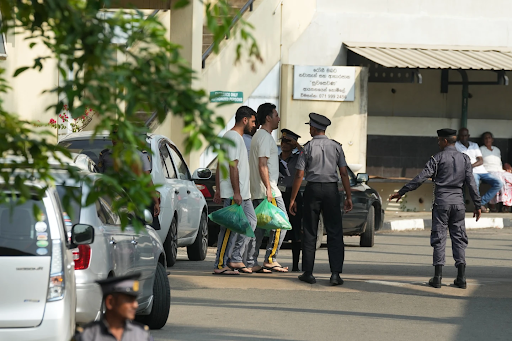
Authorities said the disembarkation of the sailors started early Friday as part of a coordinated humanitarian and security response. The sailors are first being brought to the port of Colombo before the vessel itself is moved to another location for further handling.
Sri Lanka Responds to Assistance Request from IRIS Bushehr
According to Sri Lanka Navy spokesperson Commander Buddhika Sampath, the transfer of sailors from the IRIS Bushehr is currently underway. Once ashore in Colombo, the crew members will undergo medical examinations and immigration procedures.
After these initial checks, the sailors will be transported to the naval base at Welisara, located roughly 20 kilometers north of Colombo. Officials confirmed that some crew members will remain aboard the vessel to assist Sri Lankan authorities in navigating it to the eastern port of Trincomalee.
Sri Lankan President Anura Kumara Dissanayake explained that the decision to take control of the IRIS Bushehr followed discussions with Iranian officials and the ship’s captain. One of the vessel’s engines had reportedly failed, prompting the request for assistance and the need to move the ship safely into port.
Aftermath of the IRIS Dena Sinking Intensifies Regional Tensions
The situation surrounding the IRIS Bushehr unfolded shortly after the sinking of the Iranian warship IRIS Dena earlier this week. A U.S. submarine attacked and sank the vessel off Sri Lanka’s coast on Wednesday, an event that has drawn global attention because such submarine strikes against surface warships are rare in modern conflicts.
The IRIS Dena had recently taken part in multinational naval exercises hosted by India before sailing into international waters on its return journey. India’s Defense Ministry said the exercises involved naval forces from at least 74 countries, including the United States.
After receiving a distress signal from the warship, the Indian Navy launched search and rescue operations. Two aircraft and a sailing training vessel were deployed to locate survivors. However, Sri Lankan naval units had already initiated rescue operations by the time India’s response began.
Rescue Efforts and Rising Diplomatic Reactions
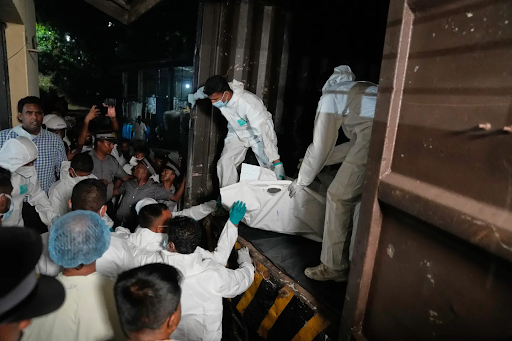
Sri Lankan naval forces managed to rescue 32 sailors following the attack and also recovered 87 bodies from the sea. Iranian Foreign Minister Abbas Araghchi said the IRIS Dena had been carrying nearly 130 crew members, although ships of that class usually carry around 140 personnel.
Araghchi strongly condemned the sinking, calling it an “atrocity at sea” and warning that the United States would “bitterly regret” the action. His statement reflects growing diplomatic tensions as the wider conflict involving Iran increasingly stretches beyond the Middle East.
Sri Lanka Navigates Neutrality Amid Regional Conflict
As Sri Lanka manages the situation involving the IRIS Bushehr, its government has emphasized a neutral and humanitarian approach. President Dissanayake stated that the country must carefully balance international maritime law, humanitarian obligations, and its longstanding policy of non-alignment.
He also highlighted the human cost of the ongoing conflict while addressing reporters and later posting a message on social media. “No civilian should die in wars,” he wrote, stressing that every life must be treated with equal value.
For Sri Lanka, positioned along major maritime routes in the Indian Ocean, the situation underscores how geopolitical tensions can quickly reach its waters. By assisting the IRIS Bushehr while maintaining neutrality, the country aims to uphold international conventions while avoiding alignment with any side in the growing conflict.
As the sailors are processed and the vessel is moved to Trincomalee, Sri Lankan authorities will continue monitoring developments closely. The episode highlights how regional security dynamics are shifting, placing strategically located nations like Sri Lanka at the center of unfolding global tensions.