Ap Photo/ Mahesh Kumar.
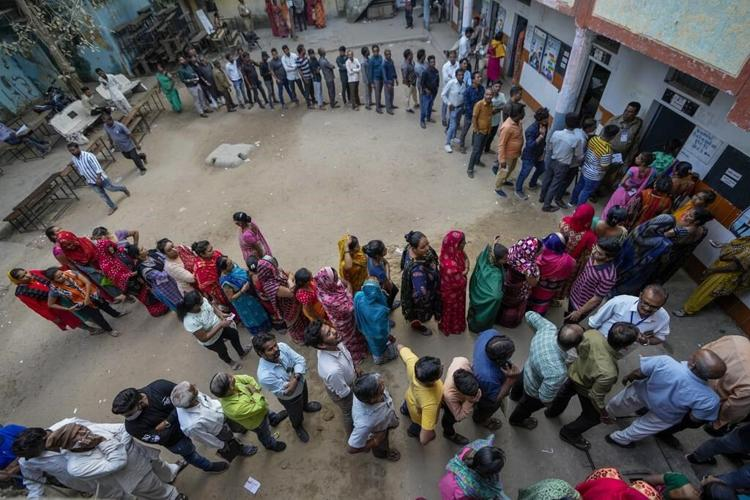
India is gearing up for its national elections, spanning 44 days from April to June. Nearly 970 million eligible voters, representing over 10% of the global population, will cast their ballots. Prime Minister Narendra Modi seeks a third term, facing opposition alliances. The electoral process's extensive duration is due to India's vast size and logistical challenges.
Since gaining independence from British rule, India has conducted elections of varying durations. In 1951-1952, the process lasted nearly four months, while it took just four days in 1980. The current election, the second-longest, will unfold over 44 days. With 969 million registered voters, India's electorate surpasses the combined population of the 27 EU member states. The inclusion of 18 million first-time voters and 197 million individuals in their 20s underscores the election's magnitude.
Voting for 543 parliamentary seats occurs in seven phases across India's 28 states and eight federal territories. Each phase spans one day, beginning on April 19 and concluding on June 1. While some states conduct voting in a single day, others, like Uttar Pradesh, will vote over seven days due to their large populations.
Critics argue that the prolonged election timeline favors Prime Minister Modi and his Bharatiya Janata Party (BJP). The extended duration facilitates extensive campaigning, particularly in regions where the BJP faces challenges. However, electoral authorities stress the importance of ensuring every voter's access to polling booths within a 2-kilometer radius.
The Election Commission of India oversees the electoral process, employing 15 million election officials and security personnel to reach every voter. Officials embark on arduous journeys, traversing diverse landscapes by foot, boat, and even horseback. In 2019, polling officers trekked over 480 kilometers for four days to enable a single voter in a remote hamlet in Arunachal Pradesh to cast their ballot. Additionally, the installation of a polling station at an altitude of 15,256 feet in the Himalayas highlights the election's logistical challenges.
Polling stations are set up in remote locations, including a wildlife sanctuary in Kerala and a shipping container in Gujarat. Security is a paramount concern, leading to the deployment of tens of thousands of federal security forces alongside state police to prevent violence and ensure safe transportation of officials and voting machines. Despite past incidents of violence, the electoral process has become relatively peaceful in recent years due to heightened security measures.
The multiphase nature of India's elections is essential for logistical and security reasons. The diverse geographical terrain, spanning rivers, mountains, and jungles, necessitates extensive security force movements. Election officials pledge to go the extra mile to ensure a smooth voting process for all citizens.