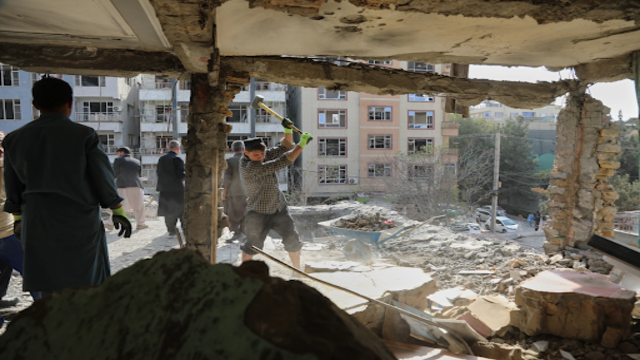
Residents remove debris from a house damaged by Wednesday’s two drone strikes, in Kabul, Afghanistan, Thursday, Oct. 16, 2025. Associated Press
Afghanistan’s Taliban government on Thursday accused Pakistan of carrying out two drone strikes in Kabul. The attacks occurred just hours before the two neighbors announced a ceasefire.
The ceasefire, declared on Wednesday, followed days of deadly clashes along the Afghanistan-Pakistan border. These confrontations killed dozens and injured hundreds in both countries.
The announcement of the truce offered at least a temporary pause in the most serious clashes since 2021. That year, the Taliban regained power in Afghanistan after the collapse of the Western-backed government.
Drone Strikes Target Civilian Areas
Khalid Zadran, a spokesman for Kabul police, confirmed the strikes hit the city on Wednesday afternoon. He said a civilian house and a local market were damaged.
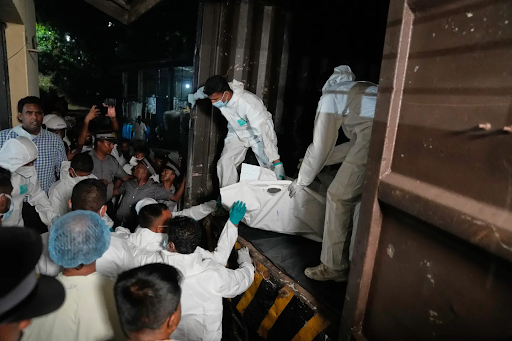
Hospital officials reported at least five deaths and dozens of injuries. Victims suffered shrapnel wounds, blunt force trauma, and burns, according to Emergency, a nongovernmental surgical center.
Initially, Taliban spokesman Zabihullah Mujahid described the incident as an oil tanker explosion. Later, the government blamed Pakistani drone operations.
Cross-Border Violence Escalates
Tensions between Afghanistan and Pakistan have intensified since October 10. Both nations accused each other of armed provocations. Pakistani forces claimed they were targeting militant hideouts across the border.
Pakistani officials, speaking anonymously, said dozens of militants had crossed into Mohmand district in northwest Khyber Pakhtunkhwa province. Security forces reportedly shot and killed many of them.
Ceasefire Brings Temporary Relief
The ceasefire on Wednesday came after appeals from major regional powers. Officials hoped to prevent the situation from destabilizing the region further. The violence threatens to provide space for groups like the Islamic State and al-Qaida to resurge.
UNAMA, the United Nations Assistance Mission in Afghanistan, welcomed the truce. The agency reported no overnight fighting, but key border crossings remained closed on Thursday.
Civilian Toll Mounts
UNAMA said cross-border clashes this week killed 37 civilians and wounded 425 in Afghan provinces including Paktya, Paktika, Kunar, Khost, Kandahar, and Helmand. Earlier confrontations had caused at least 16 more civilian casualties.
“UNAMA calls on all parties to bring a lasting end to hostilities to protect civilians and prevent further loss of life,” the mission stated.
Pakistan’s Stance and Border Issues
Pakistan has not released civilian casualty figures. Islamabad regularly accuses Afghanistan of harboring militants, claims the Taliban deny.
The two countries share a 2,611-kilometer (1,622-mile) border, the Durand Line, which Afghanistan has never officially recognized. This disputed border has long fueled tension between the nations.
Regional Stability at Stake
The recent flare-up highlights fragile peace in the region. Both sides now face pressure to uphold the ceasefire. Analysts warn that further clashes could threaten regional security and aid militant groups seeking to exploit the chaos.
As Kabul and Islamabad navigate this tense moment, international observers continue to urge dialogue. A lasting peace remains uncertain, but the truce offers a critical window to prevent further civilian suffering.