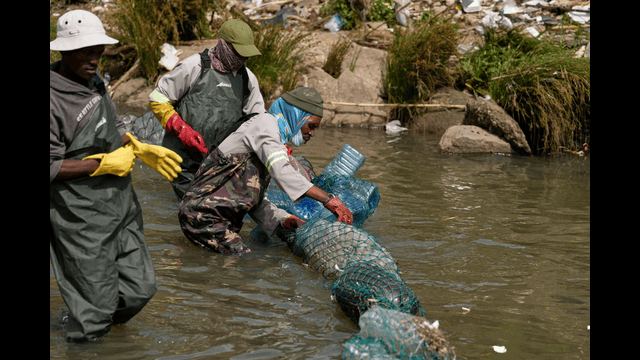
Volunteers wearing wetsuits untangle a long garbage net on the Jukskei River in South Africa, Nov 12, 2025.
Africa is hosting its first-ever G20 summit, with world leaders gathering in Johannesburg this weekend. As the spotlight turns to South Africa, the nation is using this moment to push a powerful message: poor countries need stronger global support against worsening climate disasters.
In Johannesburg’s oldest township, Alexandra, the urgency is visible. Volunteers in wetsuits dive into the polluted Jukskei River, repairing damaged trash-trapping nets before the next storm hits. Without these nets, flooding could devastate homes in the low-lying settlement within minutes.
Climate Change Deepens Inequality
Alexandra sits just steps away from Sandton, the richest square mile in Africa. Yet its 500,000 residents face frequent flooding that shuts bridges and leaves children stranded from school.
“The flooding is a huge hazard,” said Semadi Manganye, co-founder of the Alexandra Water Warriors.
Global experts warn that climate disasters are hitting poor nations hardest. “The ravages of the climate are directly linked to inequality,” said Binaifer Nowrojee, president of the Open Society Foundations. Poor countries, she added, are forced to choose between climate action and economic survival.
The World Bank highlights the widening gap: from 2010–2020, the poorest nations suffered eight times more climate disasters than they did between 1980 and 1990.
Deadly Storms Push Southern Africa to the Brink
Southern Africa has endured some of the world’s most destructive weather events in recent years. Cyclone Idai in 2019 devastated Mozambique, Malawi, and Zimbabwe, causing an estimated $2 billion in damage. To put that into context, Malawi’s entire GDP is just $12 billion.
Last year’s El Niño-driven drought hit local agriculture and small-scale farmers, leaving already vulnerable communities even poorer.
Climate Financing Takes Center Stage at G20
At this G20 summit, climate financing is expected to dominate discussions. Although wealthy nations promised at last year’s U.N. climate summit to pool $300 billion annually by 2035, experts argue that developing nations need closer to $1 trillion every year by 2030.
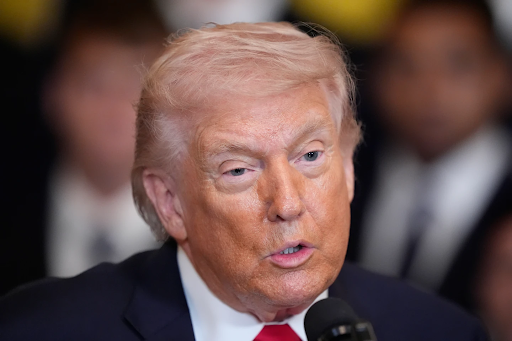
Yet hopes for strong action face a major obstacle: The United States is boycotting the summit, protesting former President Donald Trump’s unfounded claims about racial persecution in South Africa. With one of the world’s largest emitters absent, reaching consensus on climate measures will be challenging.
South Africa’s Internal Struggles Exposed
While pushing the world for more climate support, South Africa also faces scrutiny at home.
The Alexandra Water Warriors, active since 2021, are planting trees, clearing river garbage, and improving local climate resilience. But these volunteers confront systemic problems seen across the country—poor housing, aging infrastructure, and extreme inequality.
A new Amnesty International report warns that as many as 5 million South Africans in informal settlements lack proper services and are increasingly exposed to climate hazards. Many are forced to live in flood-prone areas near rivers because they have no alternatives.
In June, deadly floods in the Eastern Cape killed more than 100 people. While President Cyril Ramaphosa blamed climate change, local officials emphasized that the tragedy was worsened by unsafe housing and failing infrastructure.
Building Climate Resilience Through Community Work
Despite the challenges, community-led initiatives offer a glimmer of hope. Nearly 3,000 people now work with the Alexandra Water Warriors and similar programs. They receive small monthly stipends from a public-private fund backed by South Africa, Canada, and other supporters.
“When the 25th comes, we smile,” said member Ntombi Maponya, referring to stipend day. The program began with just 250 people in 2022 and continues to expand.
Economist Vera Songwe believes climate resilience is not just survival—it is a path to economic growth. “Green, sustainable and resilient growth is actually much faster growth,” she said during an event on debt and development ahead of the G20 summit.
A Defining Moment for Africa at G20
With global leaders gathering on African soil for the first time, South Africa is determined to use the G20 platform to highlight climate inequality, demand stronger financial commitments, and showcase local resilience efforts.
For communities like Alexandra, where climate risks touch daily life, the world’s response at this summit could shape their future.