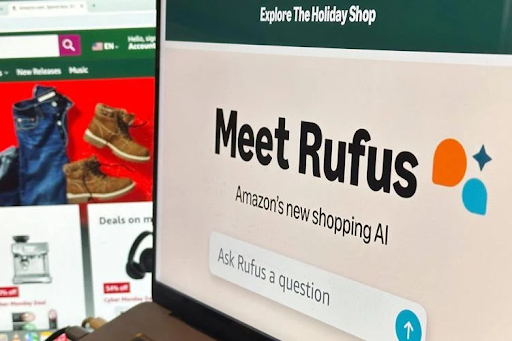
Amazon’s generative AI-powered shopping assistant, Rufus, on a monitor, Dec. 01, 2024. AP Photo
The 2025 holiday season is unfolding with a new star attraction. Artificial intelligence is reshaping how people search, compare, and buy gifts, and retailers are betting big on its potential. Major brands and tech leaders are rolling out faster, smarter, and more intuitive AI tools to capture consumer attention—and a bigger slice of online sales.
AI-powered shopping remains new for many buyers. Yet the latest tools from Amazon, Walmart, Google, and OpenAI promise personalized advice, real-time price insights, and even autonomous purchases through simple conversations.
Salesforce estimates that AI will influence about $73 billion in global spending during the peak holiday week. That marks a sharp rise from last year, driven by tools that guide shoppers from search to checkout with fewer steps.
Still, analysts say AI’s impact will grow slowly. Not every retailer offers sophisticated tools yet, and many shoppers remain cautious. But experts believe comfort and adoption will increase as more brands join the race.
Smarter Searches Replace Old-School Browsing
The biggest shift is happening in how people find gifts. New AI search tools are replacing the traditional hunt through filters and keywords.
ChatGPT now includes a research mode that delivers customized buying guides using reviews, product details, prices, and past chats. It works best for complex items like gadgets, appliances, or beauty tools.
Amazon’s Rufus has also matured. It remembers personal details, like the number of children in a household or shared hobbies, making its recommendations feel more tailored.
Google’s upgraded AI Mode search takes this further. Users can type natural-language questions, such as what sweater to wear in New York in January, and receive instant, detailed suggestions. The tool draws from 50 billion product listings and can generate comparison charts for price, features, and reviews.
Retail leaders say this marks a new era for online commerce, with AI answering questions that once required countless clicks.
New Price-Tracking Tools Level the Field
Shoppers have long relied on tools like Honey or CamelCamelCamel. This season brings deeper, built-in alternatives.
Amazon introduced a 90-day price history tracker and added alerts that notify buyers when a product drops into their budget range. Google’s upgraded price tracker now factors in specifics like size and colour. Microsoft’s Copilot also entered the market with its own tracker.
Experts say these tools will push retailers toward more competitive pricing as consumers discover them in larger numbers.
AI Takes Over Checkout
The final leap is AI-driven buying. Companies are racing to help customers move from discovery to purchase without switching platforms.
ChatGPT now supports instant checkout for select Shopify brands and Etsy sellers. A recent partnership with Walmart extends this feature, letting ChatGPT users buy almost anything from Walmart in one click, except fresh food.
Target’s integration allows shoppers to build a multi-item cart inside ChatGPT, though checkout redirects to the Target app.
Amazon and Google are testing “agentic AI” that can complete purchases automatically. Rufus can now auto-buy items when prices fall, while Google’s “buy for me” option uses Google Pay to finalize orders across partner stores.
Google has also introduced an AI calling tool that phones local stores to check product availability, with businesses free to opt out.
As AI gets smarter, retailers expect shoppers to rely more on these autonomous helpers—turning holiday shopping into a faster, more intuitive experience than ever before.