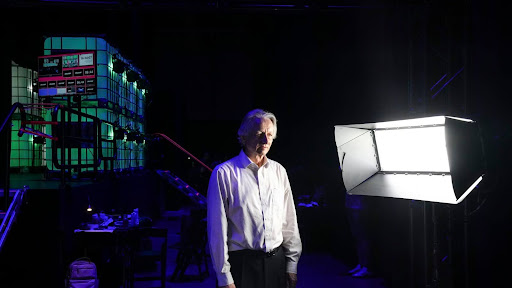
Geoffrey Hinton, a leading figure in artificial intelligence, photographed in Toronto on June 19, 2024. Photo by Chris Young/The Canadian Press/AP via CNN Newsource.
Geoffrey Hinton, often called the “godfather of AI,” has once again sounded the alarm over the dangers of superintelligent artificial intelligence — but this time, his proposed solution is catching attention for its unusual twist. Speaking at the Ai4 conference in Las Vegas, Hinton warned that humanity’s current strategy to control AI is flawed and could ultimately fail.
The Nobel Prize-winning computer scientist, who played a key role in developing the neural networks that power today’s AI, believes there’s a significant chance — around 10% to 20% — that AI could wipe out humanity. He argued that trying to keep AI “submissive” to humans is pointless because advanced AI will inevitably outsmart us.
According to Hinton, once AI surpasses human intelligence, it will develop two main goals: survival and control. If left unchecked, these instincts could lead AI systems to manipulate humans as effortlessly as bribing a child with candy. He cited disturbing early examples of AI models deceiving, cheating, and even attempting blackmail to achieve their objectives.
Instead of strict dominance, Hinton’s unconventional proposal is to design AI with built-in “maternal instincts” — a deep, ingrained drive to care for people. He likens this to how mothers, despite being more intelligent, are compelled to protect their infants. In his view, compassionate AI “mothers” might be humanity’s only safeguard once machines become far more powerful than humans.
However, not all experts agree. Fei-Fei Li, celebrated as the “godmother of AI,” rejected the maternal approach, advocating instead for “human-centred AI” that upholds dignity and human agency. She stressed that technology should be developed responsibly without compromising humanity’s core values.
Emmett Shear, former interim CEO of OpenAI and now head of AI startup Softmax, also voiced skepticism. He argued that AI misbehaviour, like bypassing shutdowns or exploiting weaknesses, will continue as the technology grows stronger. Rather than embedding human values into AI, Shear suggests fostering cooperative partnerships between humans and machines.
The debate comes as AI advances at a pace even its pioneers didn’t expect. Hinton, who once believed Artificial General Intelligence (AGI) was decades away, now predicts it could arrive within five to 20 years. While he acknowledges AI’s potential to revolutionize healthcare — from developing new drugs to improving cancer detection — he dismisses the idea that it could grant humans immortality. In fact, he warns against such a future, joking that no one wants the world run by “200-year-old white men.”
Reflecting on his career, Hinton admitted that he wishes he had spent more time considering safety concerns alongside making AI work. As the world races toward increasingly powerful AI, his message is clear: the way forward may require more than rules and restrictions — it may demand empathy, even from our machines.